
Small Business SEO Guide: Drive Organic Traffic & Growth
Nearly half of all Google searches (46%, by the figure most often cited) carry local intent, and most independent businesses never appear for them. Someone types "emergency plumber near me" or "accountant in Austin," scans three map listings, and calls one. If your business isn't in that set, the customer never learns you exist.
That gap is the case for small business SEO. A neighborhood bakery, a two-partner law practice, or an HVAC contractor can't outspend a national chain on ads, but each can outrank that chain for the searches that matter most: the ones made by people within driving distance who are ready to buy. Search engine optimization rewards relevance, proximity, and trust, and local companies are often better placed to earn all three.
The timing matters too. Search results keep shifting toward map packs and AI-generated summaries, which makes a consistent, well-documented local presence more valuable, not less. Businesses that build it now compound their visibility while competitors keep paying for every click.
This guide walks through SEO for small business from the ground up:
- The fundamentals: what small business SEO is and why it often returns more than paid ads
- The four pillars: how technical, on-page, off-page, and local SEO fit together
- Local visibility: Google Business Profile, citations, and reviews
- Keyword research and content: intent, long-tail terms, and local landing pages
- Technical health and link building: the foundation and the authority layer
- Measurement: the metrics that tie rankings to revenue, plus what small business SEO services cost and how to choose a partner
What Is Small Business SEO and Why Does It Matter?
Small business SEO is the practice of optimizing a local or niche company's website, Google Business Profile, and online presence so it ranks for geo-targeted, high-intent searches. The goal is not maximum traffic but the right traffic: nearby customers who are ready to call, visit, or buy.
Where an enterprise chases broad, high-volume terms across a country, a small business wins by being the obvious answer for a specific service in a specific place. That focus on geo-targeted traffic and hyper-relevant audience acquisition is what makes SEO for small businesses so efficient: every visitor is closer to a purchase than a general browser.
SEO vs Paid Ads: Why Organic Compounds
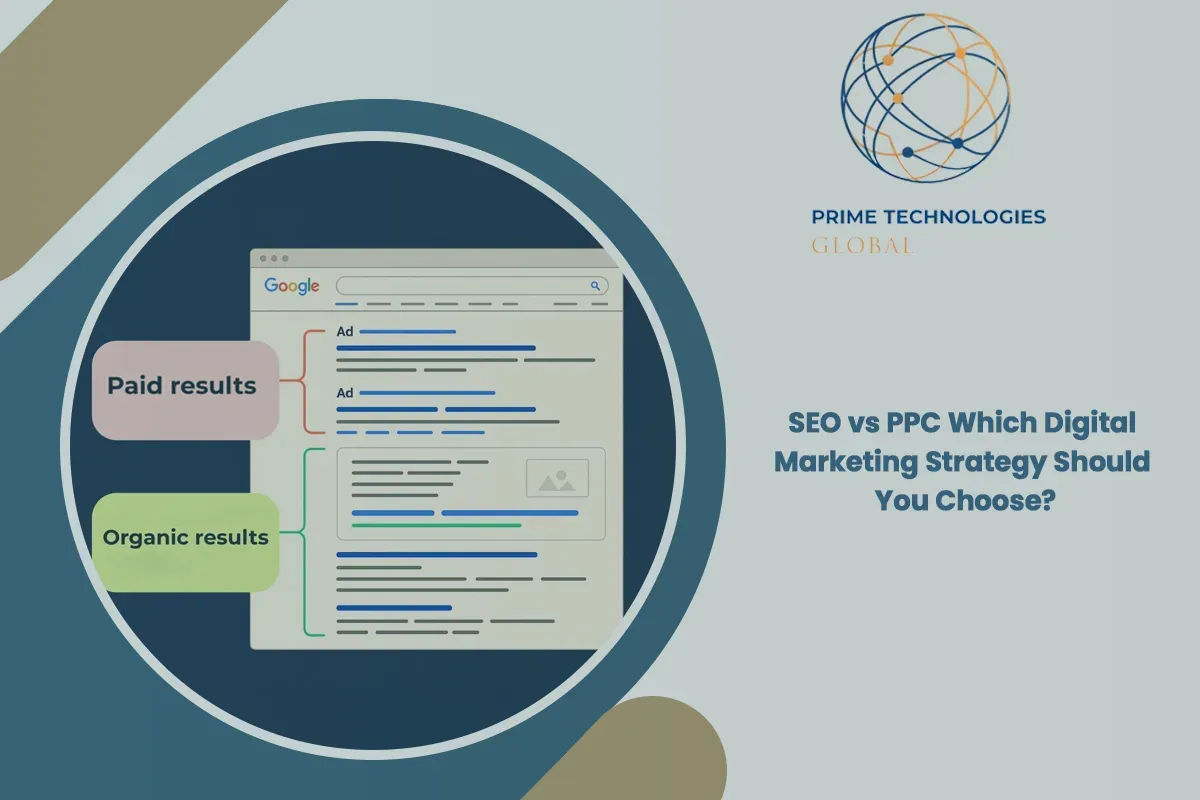
Paid search (PPC) buys immediate visibility, but it stops the moment the budget does. Organic rankings take longer to build and then keep working. A page that ranks for "emergency plumber in Tulsa" can bring in calls for years after the work to build it is done.
- Paid ads: fast launch, predictable cost per click, zero residual value once spending stops
- Organic SEO: slower start, rising returns over time, and trust that paid listings don't carry with most searchers
Most mature local businesses run both: ads to capture demand today, SEO to lower the cost of acquiring customers tomorrow. For a deeper comparison, see our breakdown of SEO vs PPC.
Key Statistics Behind the Opportunity
Three widely cited figures explain why the benefits of SEO for small business are hard to ignore:
- 46% of Google searches seek local information, according to industry data frequently attributed to Search Engine Land and HubSpot.
- 28% of local searches lead to a purchase within 24 hours, per research published by Think with Google.
- Over 70% of clicks go to organic results on the first page of Google.
Treat these as directional rather than exact; the underlying studies vary in age and methodology. The pattern is consistent, though: local searchers act fast, and they overwhelmingly click organic and map results.
Small Business SEO vs Enterprise SEO
The two disciplines share fundamentals but differ in scale, targets, and timeline.
|
Feature / Metric |
Small Business SEO |
Enterprise SEO |
|
Primary target audience |
Geo-specific, hyper-local, or specialized niche customers |
Broad national or international audience |
|
Main ranking drivers |
Google Business Profile, local citations, customer reviews, local backlinks |
Technical crawlability, domain authority, large-scale content hubs |
|
Target keywords |
High-intent, long-tail, and geo-modified terms (e.g., "plumber near me") |
Broad, high-volume seed keywords (e.g., "plumbing services") |
|
Budget and resource needs |
Lower overall capital; requires targeted execution |
Substantial budget; requires enterprise tools and dedicated engineering |
|
Time to impact |
3 to 6 months (faster local ranking potential) |
6 to 12+ months (slow corporate implementation cycles) |
The takeaway: a small team with a tight geographic focus can move faster than a large one. If you're weighing the two approaches, our guide to local SEO vs national SEO shows where each fits.
Core Pillars of an SEO Strategy for Small Business
A durable SEO strategy for small business rests on four pillars that depend on one another. A fast site with no reviews won't win the map pack. A strong Google Business Profile pointing at a slow, confusing site wastes the click. Each pillar supports the others.
|
Pillar |
What it covers |
Typical first task |
Where it shows up |
|
Crawlability, speed, mobile usability, security |
Fix mobile layout and slow pages |
Indexing, Core Web Vitals, rankings stability |
|
|
Page content, titles, headings, schema |
Rewrite service-page titles with city modifiers |
Organic listings and snippets |
|
|
Backlinks, brand mentions, digital PR |
Earn links from local organizations |
Domain trust and competitive rankings |
|
|
Google Business Profile, citations, reviews |
Claim and complete the GBP listing |
Map pack and "near me" results |
The split between on-page and off-page work is worth understanding early, because owners often over-invest in one. Our guide to on-page vs. off-page SEO explains how to balance them.

Set Business Goals Before You Set Keywords
Rankings are a means, not the result. Before touching a keyword list, decide which actions pay your bills and tie every SEO metric to one of them:
- Phone calls from the Google Business Profile or a click-to-call button
- Contact form submissions and quote requests
- Direction requests and foot traffic for storefronts
- Online orders or bookings for service and retail businesses
A dentist, for example, might define success as 20 new-patient bookings a month from organic search, then work backward to the pages, rankings, and reviews needed to get there. That target shapes everything that follows. For a framework on writing goals that hold up, see our guide to SEO objectives.
Local SEO for Small Business: Mastering Your Google Business Profile
Local SEO for small businesses is where most owners see the fastest return. It targets the map results and "near me" searches that sit above the regular organic listings, and it hinges on your Google Business Profile (GBP). If you want professional help here, our local SEO services cover setup, citations, and ongoing optimization.
How to Claim and Verify Your Google Business Profile
To claim your Google Business Profile, search your business name on Google Maps, select the option to claim it, and verify ownership with the method Google offers, such as video, phone, or postcard. Then complete every field: categories, hours, services, description, and photos. A verified, complete profile is the base requirement for map visibility.
Verification can take anywhere from minutes to a couple of weeks depending on the method, so start it before you need results.
Why NAP Consistency Matters
NAP stands for Name, Address, and Phone number. Google cross-checks these details across the web to confirm your business is real and where you say it is. Mismatches, such as "Suite 4" on one directory and "#4" on another, or an old phone number on Yelp, weakens that confidence.
Audit your listings on Google, Yelp, YellowPages, Apple Maps, Bing Places, and industry directories, then fix every variation so each one matches your GBP exactly. Our guide to local SEO citations shows how to find and clean up inconsistent listings.
How the Local 3-Pack Works
The local 3-pack is the set of three map listings Google shows for local searches. Google chooses them using three signals: relevance (how well your profile matches the search), distance (how close you are to the searcher), and prominence (how well known and trusted you are, based on reviews, links, and mentions).
You can't change distance, but you can improve relevance through accurate categories and services, and prominence through reviews and local links. For the full list of signals, read our breakdown of local SEO ranking factors.
Review Management Strategy
Reviews influence both rankings and conversions. Build a steady system rather than hoping customers remember:
- Ask at the moment of satisfaction. Send a short link by text or email right after the job is done or the purchase is made.
- Automate the request. Review-request tools or a simple CRM workflow keep the volume consistent without manual follow-up.
- Respond to every review, positive and negative. Thank happy customers by name. For complaints, acknowledge the problem, state what you will do, and move the details offline.
- Never buy or incentivize reviews. It violates Google's policies and risks suspension.
- Add review schema carefully. Mark up genuine reviews on your own pages, but note that Google does not show self-serving review stars for local businesses in most cases, so use it for clarity, not as a promised rich result.
A structured approach to this is covered in our guide to SEO reputation management.
Action Checklist: GBP Optimization Steps
- Choose the exact primary and secondary categories. The primary category carries the most weight, so pick the most specific one that fits ("Emergency Plumber," not just "Contractor").
- Complete hours, services, and the business description. Include special hours for holidays.
- Upload high-resolution photos of the interior, exterior, team, and finished work. Geotagging them is harmless, but fresh, authentic images matter more than metadata.
- Enable messaging and add FAQs. Answer the questions customers ask most before they have to call.
- Post Google Updates at least once a week. Share offers, events, and blog snapshots to signal an active business.
Keyword Research for Small Business SEO in Local and Niche Markets
Keyword research decides which searches your pages are built to win. For a small business, the aim is not the biggest terms but the winnable, high-intent ones: phrases where the searcher wants what you sell and where the competition is beatable.
Understand Search Intent First
Search intent is the reason behind a query. Matching it is the difference between a page that ranks and converts and one that ranks and bounces. Plumbing offers a clean example:
|
Intent type |
What the searcher wants |
Example query |
Best page type |
|
Informational |
An answer or how-to |
"how to fix a leaky faucet" |
Blog post or guide |
|
Navigational |
A specific brand or login |
"Joe's Plumbing login" |
Homepage, brand page |
|
Commercial |
To compare options |
"best plumbing company near me" |
Service page with reviews |
|
Transactional |
To buy or book now |
"emergency plumber price quote" |
Service or location page with CTA |
For most owners, commercial and transactional terms pay first. Informational posts build authority and feed the sales funnel over time.
Find Low-Difficulty, High-Intent Keywords
Here is a repeatable process for uncovering opportunities competitors overlook:
- List your services and products in the words customers use, not industry jargon.
- Expand each one with Google Keyword Planner, Semrush, or Ahrefs, and note monthly volume and difficulty.
- Favor long-tail phrases of three or more words ("water heater repair in Plano"). They have lower volume but far higher intent and less competition.
- Check the live results. If page one is full of national directories, the term is harder than the difficulty score suggests. If local businesses with thin pages rank, you have an opening.
- Mine your own data. Google Search Console shows queries where you already appear on page two; those are your quickest wins.
- Run a gap check. Find topics competitors cover that you don't, using a content gap analysis.
Build a Geo-Targeted Keyword Strategy
Local modifiers turn a generic keyword into a local one. Add city, neighborhood, and regional terms naturally: "family dentist in Frisco," "kitchen remodeler near Preston Hollow," "Dallas-Fort Worth roofing contractor." Use them in titles, headings, and body copy, and assign each target keyword to one page so your own pages don't compete.
For businesses serving several areas, build separate pages per location (covered in the next section) rather than listing every city in a footer. Our guide to semantic SEO also explains how related terms and entities help Google understand a page's topic beyond the exact phrase.
Best SEO Tools for Small Businesses
You don't need an enterprise stack. Start with the free tools and add paid ones when the work justifies the cost. For a broader comparison, see our roundup of the best SEO tools.
|
Tool |
Primary use |
Key features for small businesses |
Price point |
|
Google Search Console |
Performance and indexing tracking |
Free query data, index coverage checks, mobile usability reports |
Free |
|
Google Keyword Planner |
Keyword discovery |
Search volume data from Google's advertising database |
Free |
|
Semrush |
All-in-one SEO suite |
Local map rank tracker, Keyword Magic Tool, on-page SEO checker |
Premium (paid) |
|
BrightLocal |
Local SEO management |
Citation tracker, review management, Google Business Profile audit tools |
Mid-tier (paid) |
|
Screaming Frog |
Technical site auditing |
Crawl analysis, broken link identification, meta tag audit (up to 500 URLs free) |
Freemium |
A practical stack for a one-location business: Search Console and Keyword Planner for free data, plus BrightLocal or Semrush once you're actively tracking local rankings.
On-Page SEO and Local Content Strategy for Your Small Business Website
On-page SEO is how you tell Google, page by page, what you offer and where. It is also the most controllable part of SEO for a small business website, since every element sits on pages you own. Our on-page SEO service covers the full process; the essentials follow.
Page-Level Elements to Optimize
- Title tags (50 to 60 characters): Lead with the primary keyword, add the city modifier, then the brand. Example: "Emergency Plumber in Tulsa | 24/7 Service | Smith Plumbing."
- Meta descriptions (150 to 160 characters): Summarize the page and close with a clear call to action, such as "Call today for a free quote." They don't affect rankings directly, but a stronger description earns more clicks. See our guide to meta tags for formatting detail.
- Heading hierarchy: One H1 for the page title, H2s for major topics, H3s for sub-topics. Work the primary keyword and local modifiers into headings where they read naturally.
- Internal links: Connect related pages with descriptive anchor text so visitors and crawlers can follow your site's logic. Our guide to SEO internal linking shows how to structure them.
Structure Service and Location Pages Without Duplicate Content
Businesses serving more than one city often clone a page and swap the place name. Google treats that as thin, near-duplicate content, and it rarely ranks. Instead:
- Create one unique page per service and per location that you genuinely serve, with its own URL.
- Add local proof: neighborhood references, project photos from that area, customer quotes, and the team that covers it.
- Include location-specific details: address and map for a real branch, service-area notes for a service-area business, and local FAQs.
- Link the pages together through a services hub and a locations hub, so authority flows between them.
- Skip pages for places you don't serve. Doorway pages built only to capture searches can trigger penalties.
Blogging for Small Businesses: Topic Clusters
Blog content captures customers earlier in their decision. Rather than publishing random posts, group them into clusters around each core service: one broad pillar page, supported by narrower articles that answer specific customer questions and link back to it.
A landscaping company might build a "lawn care" pillar, then support it with posts on when to aerate in North Texas, how to treat brown patches, and what a lawn care contract should include. Each post targets a question real customers ask, and together they signal topical authority. For help producing this at scale, explore our content marketing services.
Schema Markup (Structured Data)
Schema markup is code that labels your content so search engines can parse it precisely. For local companies, the most useful types are:
- LocalBusiness: name, address, phone, hours, service area
- Organization: brand details, logo, social profiles
- Product or Service: what you sell and key attributes
- FAQPage: question-and-answer content
A candid note on FAQ markup: it still helps machines understand your page, but Google now shows FAQ rich results only for a limited set of sites. Add it for clarity, not because you expect expanded listings. Our schema markup guide walks through implementation, and you can validate your code with Google's Rich Results Test.
Technical SEO Essentials for Small Business Websites
Technical SEO makes sure search engines can crawl, understand, and trust your site, and that visitors don't leave before it loads. A smaller site is easier to get right than a sprawling enterprise one, so this is often the cheapest ranking gain available. Our technical SEO services and guide to what technical SEO is go deeper.
Mobile-First Indexing
Google predominantly uses the mobile version of your site to index and rank it, and most local searches happen on phones. Check that text is readable without zooming, buttons are easy to tap, and no content is hidden or missing on mobile. Responsive design, where one layout adapts to every screen, is the simplest approach. Read more in our guide to mobile-friendly website design.
Core Web Vitals
Core Web Vitals measure real-world page experience. Aim for the "good" threshold on each:
|
Metric |
What it measures |
"Good" threshold |
Common fix |
|
Largest Contentful Paint (LCP) |
How fast the main content loads |
2.5 seconds or less |
Compress images, upgrade hosting, use a CDN |
|
Interaction to Next Paint (INP) |
How quickly the page responds to taps and clicks |
200 milliseconds or less |
Reduce heavy JavaScript, remove unused plugins |
|
Cumulative Layout Shift (CLS) |
How much the layout jumps while loading |
0.1 or less |
Set image dimensions, reserve space for ads and embeds |
Test your pages with Google's PageSpeed Insights and the Core Web Vitals report in Search Console. Our guides to Core Web Vitals and page speed and SEO explain the fixes in detail.

Site Architecture and Internal Link Structure
Keep the hierarchy shallow and logical: Home, then Category or Service, then Sub-service. A visitor, and a crawler, should reach any important page within three clicks of the homepage. Use clear URLs (/services/water-heater-repair), a simple navigation menu, and an XML sitemap submitted through Search Console. Our checklist for an SEO-friendly website covers the structure in full.
SSL and Security
Serve every page over HTTPS. Browsers flag insecure sites with warnings that scare off visitors, and Google treats HTTPS as a trust signal. Redirect all HTTP URLs to their HTTPS versions, fix mixed-content warnings, and keep your CMS and plugins updated to avoid hacks that can wipe out rankings overnight.
Off-Page SEO: Link Building and Brand Prominence
Backlinks remain one of Google's strongest trust signals. For a local company, a handful of relevant links from respected local sources often outweighs dozens of generic ones. Our off-page SEO service and guide to link building strategies cover the full toolkit.
Local Backlink Strategies
Local links come from being visibly part of your community, and most cost time rather than money:
- Partner with local charities and ask to be listed as a supporter on their site.
- Sponsor a regional sports team or event. Sponsor pages usually link to the sponsor.
- Join the local Chamber of Commerce and trade associations, which publish member directories.
- Earn local press coverage by announcing a milestone, a new hire, or a community project to local reporters.
- Create a resource worth citing, such as a local cost guide or a neighborhood checklist.
Digital PR and Guest Blogging
Pitch your expertise to industry publications and local news sites. A roofing contractor who explains how storm damage claims work can land a quote or guest post that no directory listing can match. Lead with a useful angle and real data rather than a promotional pitch. Our guide to digital PR explains how to build the outreach.
Reclaim Unlinked Brand Mentions
Some sites already mention your business without linking to it. These are the easiest links you'll ever earn:
- Search for your business name in quotes, plus variations of the owner's name.
- Filter for pages that don't link to your site.
- Email the editor with a short, friendly request to add the link, and thank them for the mention.
Set up Google Alerts for your brand name so new mentions reach you as they appear.
Measuring, Tracking, and Scaling Your Small Business SEO ROI
SEO earns its budget only when you can show what it produces. Track a short list of metrics that connect visibility to revenue, and review them monthly.
KPIs to Track
|
KPI |
Where to find it |
What it tells you |
|
Organic traffic growth |
Google Analytics 4 (GA4) |
Whether overall search visibility is rising |
|
Non-branded impressions and rankings |
Google Search Console |
Whether you're gaining ground on terms where people don't already know you |
|
Organic phone calls |
GBP Insights, call tracking |
How many searchers actually contact you |
|
Web form submissions |
GA4 conversion events |
Which pages and keywords produce leads |
|
Direction requests |
Google Business Profile |
Foot-traffic intent from map results |
Set up GA4 conversion events for form fills, clicks on phone numbers, and bookings before you start. Without them, you can see traffic but not value.

Iterate: Update, Audit, Expand
Rankings reward upkeep. Build a light recurring routine:
- Monthly: Review Search Console queries, add missing keywords to existing pages, respond to new reviews, and post to your GBP.
- Quarterly: Refresh your best-performing pages with current information, and run a technical crawl for broken links and slow pages.
- Twice a year: Re-audit citations for NAP errors and review your competitors' new content and links.
Expect early movement in the first 3 to 6 months, particularly in local results, with compounding gains after that. If a digital marketing plan includes SEO alongside other channels, track each channel separately so you can see which one is paying off.
Small Business SEO Services: Packages, Pricing, and How to Choose a Partner
You can do much of this yourself, especially the Google Business Profile, review requests, and basic on-page fixes. Many owners reach a point where time becomes the constraint and bring in small business SEO services to carry the technical, content, and link work.
What Affordable SEO Services for Small Business Typically Include
A solid SEO package for small business bundles the recurring work that moves rankings. Expect most of the following:
- A baseline SEO audit and keyword plan
- Google Business Profile setup and ongoing management
- Citation building and NAP cleanup
- On-page optimization and new content each month
- Technical fixes and site speed work
- Link building and review-generation support
- Monthly reporting tied to calls, leads, and sales
Typical SEO Package Tiers
Pricing varies by market competition and scope. The ranges below are approximate monthly figures commonly seen for small business engagements, not quotes. Our guides to SEO packages and how much SEO costs break the numbers down further.
|
Package tier |
Typical scope |
Approximate monthly range |
Best for |
|
Local starter |
GBP optimization, citations, basic on-page, reporting |
$500 to $1,500 |
Single-location, low-competition markets |
|
Growth |
Starter scope plus monthly content, link building, technical fixes |
$1,500 to $3,000 |
Businesses in competitive local markets |
|
Competitive |
Growth scope plus multi-location pages, digital PR, conversion work |
$3,000 and up |
Multi-location or high-value-customer businesses |
How to Choose the Best SEO Company for Small Business
The best SEO companies for small business share a few traits you can check before signing:
- Transparent scope. You can see what is delivered each month, in writing.
- Reporting tied to revenue, not only rankings and traffic.
- Relevant case studies from businesses of your size and type, with real figures.
- No guaranteed rankings. Nobody controls Google. Treat any promise of a number-one position as a warning sign.
- Clean link practices. Ask how they earn links, and avoid anyone selling bulk packages.
- You own everything: your site, analytics, and Business Profile stay in your accounts.
Work with a dedicated small business SEO consultant if you only need strategy and oversight, or a full SEO company for small business if you want execution handled for you. Our roundup of the best SEO agencies and our guide to hiring a technical SEO consultant can help you compare.
Mistakes Small Business Owners Make When Using SEO
Most failed campaigns trace back to a short list of avoidable errors:
- Skipping the Google Business Profile or leaving it half-finished
- Inconsistent NAP data across directories
- Targeting keywords that are too broad, such as "lawyer" instead of "personal injury lawyer in Omaha"
- Copying one page for every city, which creates thin, duplicate content
- Ignoring mobile and speed, where most local visitors arrive
- Neglecting reviews, both asking for them and answering them
- Quitting too early. SEO usually takes 3 to 6 months to show clear results, and many owners stop just before it works
- Measuring only traffic, not calls, leads, or revenue
Avoiding these puts you ahead of most local competitors before you've built a single link.

Grow Your Business With Prime Technologies Global
Running a business and running an SEO program at the same time is a lot to carry. At Prime Technologies Global, our digital marketing and web development team builds tailored SEO services, technical optimizations, and local SEO campaigns designed to turn search traffic into measurable revenue.
Ready to outrank your competitors in local search? Contact Prime Technologies Global today for a custom small business SEO roadmap built around your market, your goals, and your budget.
FAQ’s
Is SEO Dead or Evolving in 2026?
SEO is evolving, not dying. Search now includes AI-generated summaries, map packs, and voice results alongside classic listings, but all of them draw on well-structured, trustworthy, locally relevant content. The fundamentals still decide who gets surfaced, and clear expertise matters more than ever.
The practical shift is toward being the source that both people and AI systems cite. That means accurate business data, original expertise, strong reviews, and pages that answer questions directly. Our guides to answer engine optimization, generative engine optimization, and AI search optimization explain how to adapt.
Is SEO Worth It for a Small Business?
Yes, for most local and service businesses. SEO puts you in front of customers who are actively searching for what you sell, and the gains keep compounding after the work is done. It pays off best when you track calls and leads and give it at least six months.
It is a weaker fit for a business with no website, no capacity for new customers, or a need for sales within days. In those cases, start with paid ads or fix the website and operations first, then layer in SEO. Our comparison of SEO vs. PPC can help you decide.
How to Do SEO for Small Business?
To do SEO for a small business, claim and complete your Google Business Profile, research local high-intent keywords, optimize each service page, fix mobile and speed issues, build local backlinks, collect reviews, and track calls and leads. Repeat the cycle monthly as results come in.
How Much Should SEO Cost for a Small Business?
Most small businesses pay roughly $500 to $3,000 per month for ongoing SEO, depending on competition and scope. One-time projects, such as an audit or a site cleanup, often run from several hundred to a few thousand dollars. Treat these ranges as approximate.