
SEO vs PPC: Which Digital Marketing Strategy Should You Choose?
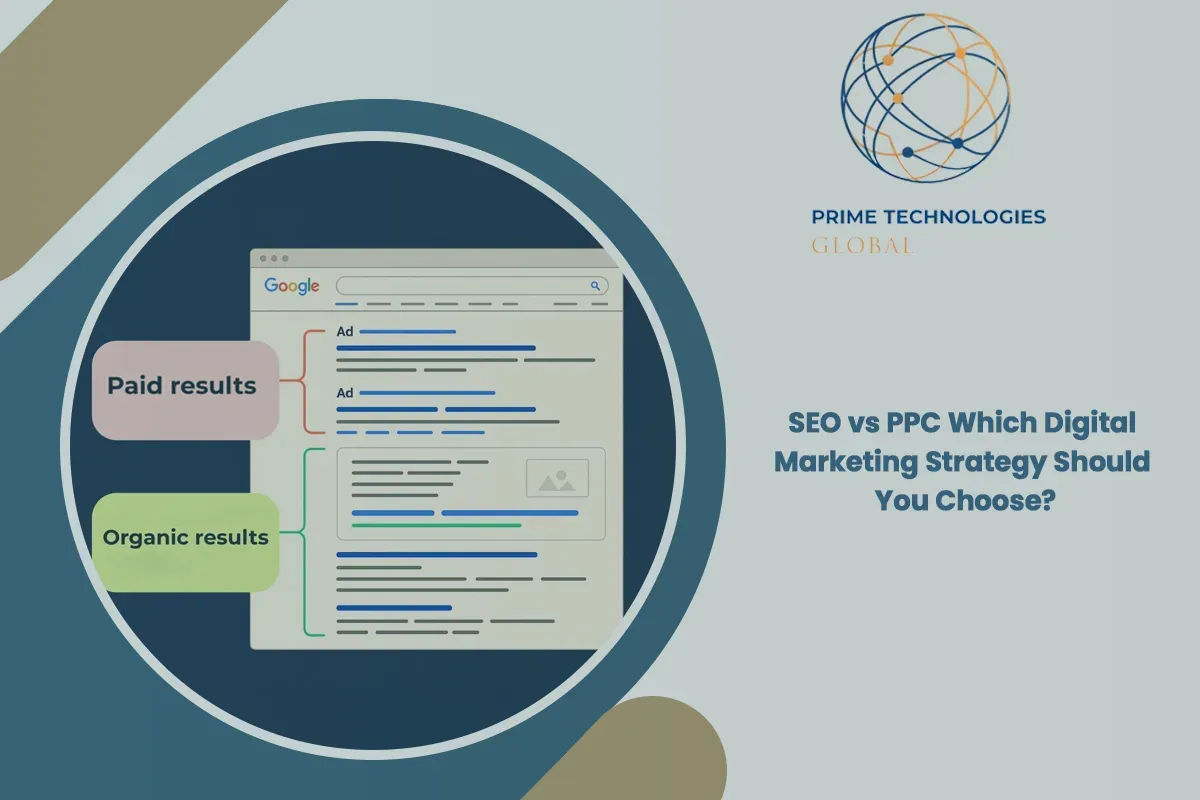
Every business that wants search traffic eventually faces the same budget question: pay for clicks today, or invest in rankings that pay back later? When a potential customer types a query into Google, you can earn your spot on the results page or buy it. Each path works. Each path also fails when you pick it for the wrong reasons.
SEO vs PPC in one sentence: SEO (search engine optimization) earns organic rankings through content, technical health, and authority, so traffic compounds over months, while PPC (pay-per-click advertising) buys top-of-page placement instantly and stops delivering the moment your budget does. Neither wins outright. The right choice depends on your timeline, cash flow, and how competitive your keywords are.
That tension explains why the difference between PPC and SEO trips up so many marketing managers and small business owners. Both channels target the same search engine results pages (SERPs), yet they run on different mechanics, timelines, and cost models.
Data point: Industry studies consistently show that organic listings draw the majority of clicks on search results pages, while paid search captures high-intent buyers who are ready to convert right away.
This guide breaks down what SEO and PPC each involve, compares them side by side, weighs the SEO vs PPC pros and cons, and shows how SEO and PPC working together can lift your return on investment (ROI). If you are still mapping the wider digital marketing picture, start here and zoom out later.
What Is Search Engine Optimization (SEO)?
SEO is the practice of optimizing your website's content, structure, and technical elements so it ranks higher in unpaid search results. You do not pay Google when someone clicks an organic listing. You pay with time, expertise, and consistent effort instead. If you want a deeper primer, our guide on what SEO is walks through the fundamentals.
People sometimes search for "paid SEO" and expect a shortcut. No such shortcut exists. You can pay an agency or hire an in-house team to do SEO work, but you cannot pay a search engine to rank you organically. Paying for placement is PPC, which the next section covers.
The Three Core Pillars of SEO
Strong organic performance rests on three connected pillars:
- On-page optimization: Keyword targeting, title tags, headings, internal links, and content quality that match what searchers actually want. Our on-page SEO services cover this layer, and the post on on-page vs off-page SEO shows how the two fit together.
- Technical SEO: Page speed, mobile responsiveness, crawlability, and structured data. Search engines cannot rank pages they cannot load or understand, so technical SEO services and healthy Core Web Vitals form the foundation.
- Off-page SEO: Your backlink profile and brand authority. Reputable sites linking to yours signal trust, which is why off-page SEO and smart link building strategies matter.

Why Organic Traffic Compounds
A blog post that ranks today keeps working tomorrow, next month, and next year. Each new page strengthens your site's topical authority, and each earned backlink lifts the pages around it. Paid channels reset to zero when spending stops. Successful SEO accumulates value instead.
Searchers also lean toward organic listings, which helps explain why SEO builds lasting brand trust. Analyses from Semrush and SEO.com emphasize this long-term authority effect: a brand that appears repeatedly in organic results starts to look like the safe, credible option. The tradeoff is patience. Most sites need several months before rankings translate into measurable revenue.
What Is Pay-Per-Click Advertising (PPC)?
PPC is a digital advertising model in which you bid on keywords and pay a fee each time someone clicks your ad. Google Ads is the best-known platform, but the same model runs on Microsoft Advertising and several others. Our overview of pay-per-click advertising covers the mechanics in more detail.
Here is how the auction works. When a user searches, the platform scores each eligible ad on bid amount, expected click-through rate, ad relevance, and landing page experience. The highest-scoring ads win the top positions. A smaller budget with sharper relevance can beat a bigger budget with sloppy ads.
Where PPC Delivers the Most Value
- Speed to market: Ads appear above organic results almost immediately after launch, with no waiting period for rankings to build.
- Advanced targeting: You can segment by demographics, location, device, time of day, and behavior, then raise or lower bids for each segment.
- Predictable control: Budgets, bids, and schedules respond to your changes within hours, which makes PPC easy to scale or pause.
- Clear attribution: Every click, cost, and conversion ties back to a specific keyword and ad, which simplifies SEO PPC analytics comparisons later.
Research from Mailchimp and Improvado points to the same strength: PPC provides immediate visibility, which makes it a natural fit for lead generation pushes, product launches, and short-term promotions. If you plan to hand campaigns to specialists, compare options in our guides to PPC advertising services and Google Ads management services.
PPC rewards precision, though. Weak keyword targeting or a poor landing page drains budget quickly, which is why the SEO vs PPC cost question never has a one-size-fits-all answer.

SEO vs PPC: A Side-by-Side Comparison Matrix
The fastest way to see the difference between SEO and PPC is to line them up against the factors that drive budget decisions: timeline, cost structure, click behavior, and sustainability.
|
Feature |
Search Engine Optimization (SEO) |
Pay-Per-Click Advertising (PPC) |
|
Time to Results |
Slow and compounding; typically 3 to 6+ months to show measurable ROI |
Immediate; traffic starts the moment the campaign goes live |
|
Cost Model |
Free clicks; investment goes into content, tools, and technical resources |
Paid per click; continuous budget required; costs scale with keyword competition |
|
Traffic Sustainability |
Long-term asset; traffic persists even if optimization pauses temporarily |
Temporary; traffic drops to zero when the budget stops |
|
Trust & Credibility |
High user trust; many consumers scroll past ads to click organic results |
Moderate trust; labeled "Sponsored" or "Ad," with occasional ad blindness |
|
Measurement |
Rankings, organic sessions, and assisted conversions; attribution takes longer |
Click-level cost, conversion, and return on ad spend data in near real time |
|
Best Used For |
Sustainable growth, brand authority, and reaching users at every funnel stage |
Product launches, flash sales, time-sensitive promotions, and rapid market testing |

How to Read the Matrix
Start with your timeline. A business that needs leads this month cannot wait on organic rankings, so paid search vs SEO tilts toward PPC. A business with a 12-month horizon and limited cash should lean into organic growth, because SEO costs are front-loaded but the cost per visitor falls over time.
Next, check keyword competition. Expensive, crowded keywords punish PPC budgets, while the same keywords can take months to crack organically. In those cases, targeting long-tail terms through SEO while running PPC on a handful of high-value queries often delivers the best balance.
Choose SEO first when:
- You can invest for six months or more before expecting returns
- Your buyers research extensively before purchasing
- Content, authority, and trust drive your category
Choose PPC first when:
- You have a launch, sale, or event with a hard deadline
- You need to test offers or messaging before committing to content
- Your site is new and has no authority yet

Pros and Cons of SEO
Any honest SEO vs PPC pros and cons comparison starts with what organic search does well and where it demands patience.
Pros of SEO
- Cost efficiency over time: Once a page ranks, each additional visit costs you nothing extra. Your cost per visitor drops as content ages and earns links.
- Higher user trust: Searchers tend to view organic results as more credible than ads.
- Compounding equity: Rankings, backlinks, and topical authority build on each other. A strong organic SEO foundation keeps paying dividends.
- Full-funnel reach: Informational articles capture early-stage researchers, while comparison and service pages capture buyers closer to a decision.
Cons of SEO
- Delayed gratification: Results take months, which strains teams that need pipeline now.
- Algorithm vulnerability: Core updates can shift rankings overnight, so you need a diversified content and link profile.
- Intense keyword competition: Established competitors hold the top positions for valuable terms, and displacing them takes sustained effort.
Findings summarized by Semrush and Mailchimp describe the same pattern: organic rankings reward patience and deliver a lower long-term cost per visitor, but they offer no guarantees on timing. Treat SEO as an asset you build, not a switch you flip.
If you want expert hands on that build, our SEO services team handles strategy, content, and technical execution from audit to ongoing optimization.
Pros and Cons of PPC
PPC gives you speed and control, but it charges rent for both. Here is the other half of the SEO vs PPC pros and cons ledger.
Pros of PPC
- Instant traffic: A well-built campaign can deliver qualified visitors within hours of approval.
- Granular audience segmentation: Target by location, device, demographic, search intent, or past site behavior.
- Predictable scaling: Raise the budget when a campaign performs and cut it when it does not. You stay in control of spend.
- Top-of-SERP placement: Your offer appears above organic results, even for keywords where you do not rank yet.
Cons of PPC
- Rental traffic model: Visibility lasts only as long as you keep paying. Stop spending and the traffic stops with it.
- High cost per click (CPC): Competitive niches such as legal, insurance, and finance can push CPCs high enough to squeeze margins.
- Ad fatigue: Audiences tire of the same creative, so click-through rates decline unless you refresh ads regularly.
- Ad blindness: Some users skip anything labeled "Sponsored" and head straight to organic listings.
Metrics from SEO.com and Mailchimp highlight the same budget challenge: PPC returns diminish quickly when campaigns go unmanaged. Bids drift, search terms wander off-target, and costs creep upward. That is why PPC management needs continuous attention, and why many brands compare a specialist paid search agency against building the skills in-house.
Why You Don't Have to Choose: The Power of Combining SEO and PPC
Integrating SEO and PPC for a Unified Digital Strategy
The "SEO or PPC" framing treats two complementary channels as rivals. Reframe the question as "SEO and PPC," and each channel covers the other's weak spot. PPC fills the early gap while rankings build. SEO lowers your reliance on ad spend as authority grows. That is the core logic behind SEO and PPC working together.
PPC for Keyword Validation
Before you commit months of content production to a keyword, test it. Run a small PPC campaign against high-risk terms and watch which ones convert, which ad copy earns clicks, and which messaging angles resonate. Then build your SEO content plan around proven winners instead of guesses. This approach saves content budget and shortens the path to a profitable organic strategy.
SERP Real Estate Dominance
When your brand appears in both the paid slot and the organic listing for the same query, you occupy more of the page and push competitors down. Repeated exposure also reinforces brand authority, so searchers who skip the ad often click the organic result a moment later.
Retargeting Synergy
PPC can drive first-touch visitors, and retargeting then brings them back to content nurtured through organic efforts, such as comparison guides and case studies. Strong landing pages make this loop work, so pair it with landing page optimization and professional conversion rate optimization services.
Shared Analytics Across SEO and PPC Campaigns
SEO PPC analytics become far more useful when you read them together. Paid search query reports reveal the exact phrases that convert. Organic landing page data shows which topics earn trust. Feed each channel's findings to the other, and both improve.
Cross-channel insights from Improvado and TechHaz describe the same payoff: a dual presence maximizes total click volume and stabilizes overall customer acquisition costs, because a dip in one channel no longer leaves you exposed.
A Simple Phased Approach
- Months 1 to 3: Launch PPC on your highest-intent keywords while your team audits the site and publishes foundational SEO content.
- Months 3 to 6: Use PPC conversion data to prioritize SEO topics, and begin retargeting organic visitors.
- Months 6 and beyond: Shift paid budget away from keywords where you now rank well, and redirect it to new markets and launches.
This kind of coordinated SEO and PPC management works best under one roof, with shared goals and one reporting view. Our overview of SEO and digital marketing shows how these channels slot into a broader plan.
The Bottom Line: Match the Channel to the Goal
The SEO vs PPC debate is not about crowning a single winner. It is about mapping each channel to a business goal. PPC supplies the immediate spark of traffic and leads that creates momentum. SEO builds the deep, sustainable equity that supports long-term growth and brand trust.
The highest-performing digital marketing SEO PPC frameworks blend both disciplines. Paid data sharpens organic targeting, and compounding organic growth gradually reduces dependence on ad spend. Start with your timeline, your cash flow, and your keyword competition, then let those facts set the ratio.
Ready to Build Your Search Marketing Strategy?
At Prime Technologies Global, we merge data-driven SEO architecture with optimized PPC campaigns so every dollar of your search budget works harder. Explore our SEO services and digital marketing services, or contact our digital growth team today to map out the right SEO and PPC marketing plan for your business.
Frequently Asked Questions
What is the difference between SEO and PPC?
SEO earns unpaid rankings through optimization and authority, so results arrive slowly but last. PPC buys ad placement through auctions, so results arrive instantly but end when spending ends. SEO costs time and expertise, while PPC costs a fee for every click.
What is better, PPC or SEO?
Neither is better in every situation. SEO suits businesses that want durable, low-cost-per-visit growth and can wait several months. PPC suits businesses that need immediate leads, run time-limited promotions, or want to test demand quickly. Most growing companies get the strongest results by running both and sharing data between them.
Is SEO still relevant in 2026?
Yes. People still search constantly, and organic visibility still shapes which brands they trust. Search results now include AI-generated summaries for many queries, which changes how content earns attention, but it does not remove the need for helpful, authoritative pages. Brands that publish original expertise and keep their sites technically sound remain well positioned. Our guides to AI search optimization and generative engine optimization explain how SEO is adapting.
Is PPC just Google Ads?
No. Google Ads is the largest PPC platform, but pay-per-click is a billing model, not a single product. Microsoft Advertising, social platforms such as Meta, LinkedIn, and TikTok, and marketplace ad networks also charge per click. Search ads are only one format; display, shopping, and video campaigns can run on the same model.