
Digital PR | Strategies to Drive Real SEO Growth Today
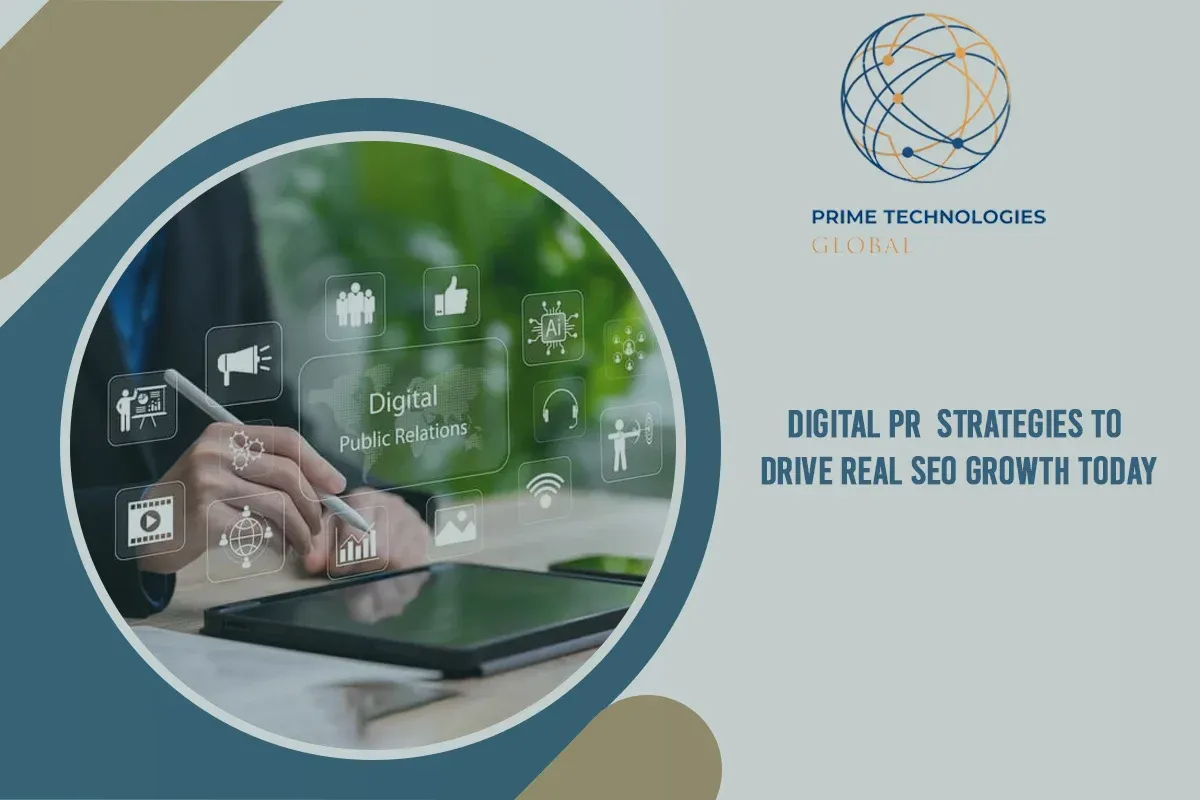
Manipulative link building is dying. Search engines have spent the past several algorithm cycles hunting down paid guest posts, link farms, and private blog networks, and the sites still leaning on those tactics are watching their rankings erode in real time. The links that still move the needle are the ones nobody had to buy: earned editorial placements from journalists who chose to cite a brand because it gave them something worth publishing.
That shift is exactly why digital PR has moved from a nice-to-have into the primary link acquisition channel for brands that plan to compete in organic search for the next decade. Done well, a digital PR strategy closes the gap between traditional public relations and technical SEO, converting newsworthy ideas into high-authority backlinks, referral traffic, and the kind of entity trust that increasingly shapes how AI Overviews and other generative search engines decide which brands to cite.
This guide breaks down what digital PR actually is, how it differs from traditional PR and legacy link building, the campaign formats that consistently earn coverage, a step-by-step execution roadmap for planning and pitching a campaign, and the metrics that prove digital PR's return on investment. Along the way, you'll see where a dedicated digital PR agency typically adds the most value versus what an in-house team can reasonably run alone.
Understanding Digital PR (And Why It Dominates Modern SEO)
So what is digital PR, exactly? Digital PR is an outreach discipline focused on securing earned editorial features, brand citations, and high-authority backlinks from prominent digital publications, news outlets, and industry blogs. Instead of asking a webmaster to insert a link, a digital PR agency gives a journalist a reason to voluntarily write about a brand voluntarily a data set, a timely reaction, or an expert source and the link follows naturally as part of that coverage.
If you're asking “what is PR in marketing” more broadly, the short answer is that PR earns third-party credibility that paid or owned channels can't fabricate on their own. Digital public relations applies that same principle to the web, with search visibility built directly into the objective.
On the SEO side, a well-run digital PR program delivers three compounding effects:
- Domain authority growth natural, high-tier editorial backlinks lift Domain Rating (DR) and Domain Authority (DA) far more efficiently than volume-based link building.
- Direct referral traffic readers click through from trusted news platforms, arriving with the credibility halo of the publication still attached.
- Entity and brand trust repeated citations across reputable outlets strengthen the brand's entity signals, which increasingly influence how it's surfaced in Google AI Overviews and other generative answer engines.
|
Feature |
Digital PR |
Traditional PR |
Legacy Link Building |
|
Primary goal |
Organic traffic, backlinks & search visibility |
Brand awareness & print/TV placement |
Pure backlink count |
|
Target outlets |
High-authority news sites, blogs, podcasts |
Newspapers, magazines, TV, radio |
Niche blogs, directories, guest posts |
|
Core metric |
DR/DA growth, organic rankings, earned links |
Reach, impressions, share of voice |
Total links acquired |

Core Formats of Successful Digital PR Campaigns
A digital PR firm that consistently lands coverage rarely relies on a single tactic. Instead, it rotates between four proven campaign formats, choosing whichever best fits the brand's data assets, timeline, and audience.
1. Data-Driven Campaigns (Original Research & Surveys)
This is the workhorse of most digital PR campaigns: commissioning proprietary surveys, mining open-source data (Census figures, Google Trends, industry filings), or repackaging internal product metrics into a fresh trend story. Journalists are constantly hunting for credible, original data points to validate an angle they already want to write a brand that supplies that data becomes the source, and the source gets the link.
2. Reactive PR & Newsjacking
Reactive PR means monitoring breaking news, regulatory changes, and pop-culture moments, then responding within hours with a relevant expert take. Journalists writing under deadline pressure need fast, credible quotes, and a brand that can turn around a sharp, specific comment before the news cycle moves on earns coverage that slower competitors miss entirely.
3. Thought Leadership & Expert Commentary
Positioning founders and C-suite executives as go-to sources for interviews, op-eds, and quoted commentary is a long-game strategy, but it compounds. Platforms like Connectively (formerly HARO), Qwoted, and Featured connect journalists directly with sources, and a digital pr service that monitors these consistently can turn a handful of well-placed quotes each month into a steady stream of earned links and social media pr mentions as coverage gets shared.
4. Visual Data & Interactive Assets
High-value infographics, dynamic maps, and interactive calculators give publications something visual to embed alongside their coverage. These assets often outlive the initial pitch, continuing to attract secondary links as other sites reference the same visualization months later.
|
What Journalists Actually Want State of the Media-style surveys (Cision, BuzzStream, and similar annual reports) repeatedly find that a large majority of journalists cite data-backed research and expert commentary as the content formats they publish most often well ahead of generic press releases. Editorial note: confirm the current year's report and exact percentage before publishing. |

Step-by-Step Execution: Planning and Pitching a Campaign
Running an effective digital pr strategy is a repeatable sequence, not a single creative burst. A digital PR company that ships coverage reliably tends to follow the same four phases on every campaign.
Phase 1: Ideation & Hook Development
- Find the intersection between the brand's genuine expertise and a topic broad enough to interest a general news audience.
- Stress-test the concept against one question: “Why now, and who cares?” If the hook can't answer both, it isn't ready to pitch.
Phase 2: Data Collection & Asset Creation
- Collect or commission the underlying data, then format it into a clean, press-ready landing page.
- Package downloadable graphics, raw data files, and a short methodology note so journalists can verify and cite the findings without extra back-and-forth.
Phase 3: Building a Focused Media List
- Identify target journalists by beat, recent coverage history, and outlet authority rather than casting a wide, generic net.
- Tools like Muck Rack, BuzzStream, and Prowly speed up list-building and help track prior interactions with each reporter.
Phase 4: Writing the Perfect Pitch Email
- Subject line: 4–8 words, stating the takeaway directly, no vague teasers.
- Body: under 200 words. Lead with the single biggest finding in paragraph one, follow with 2–4 bullet points of supporting data, and close with a clear offer of assets, interviews, or additional data cuts.

|
Pro Tip Pitch studies consistently show that subject lines built around a concrete statistic or clear takeaway earn meaningfully higher open rates than vague, curiosity-bait subject lines, which are often discarded on sight by time-pressed reporters. Editorial note: cite a specific, current pitch-performance study before publishing. |
Measuring Digital PR Success and ROI
A digital PR agency earns its retainer by tying coverage back to measurable outcomes, not vanity metrics like raw “number of placements.” Three categories of metrics matter most.
Primary SEO Metrics
- Quantity and quality of backlinks track follow links, referring domains, and the DR/DA tier of each placement, not just the total link count.
- Organic ranking movements monitor target keyword progression in the weeks after each link is indexed to connect coverage directly to rankings.
Brand & Referral Metrics
- Brand mentions track unlinked citations alongside linked ones to capture full share of voice.
- Referral traffic measures direct visitors arriving from earned media articles, segmented by outlet so you know which relationships to reinvest in.
AI Search Visibility
Earned press coverage increasingly feeds a second scoreboard: how often a brand gets cited inside AI Overviews, ChatGPT, and other generative search experiences. Because these systems lean heavily on high-authority, frequently-cited sources, a strong digital PR footprint is quickly becoming one of the more reliable levers for improving visibility inside AI-generated answers, not just traditional blue links.

Conclusion
Digital PR is no longer an optional add-on to a broader SEO program for brands serious about competing in modern search, it is the primary channel through which sustainable authority gets built. Shifting budget and attention away from transactional link requests and toward editorially earned coverage produces backlinks search engines trust, referral traffic that converts, and a brand presence that's genuinely difficult for competitors to replicate, because it can't simply be purchased.
The brands that treat digital PR as a structured, repeatable discipline not a one-off campaign are the ones compounding these gains quarter over quarter, while competitors still relying on legacy link building watch their results plateau.
Are you ready to earn tier-one media coverage and dominate search rankings the sustainable way? Building an effective digital PR strategy takes technical SEO expertise, creative content development, and real media relationships and that combination is exactly what Prime Technologies Global brings to every engagement.
As a full-service digital marketing and SEO agency, we design and execute end-to-end digital pr services, from data-driven campaign ideation through media outreach and performance reporting, paired with the technical SEO and web development work that makes every earned link count. Partner with Prime Technologies Global today and turn your digital PR program into a measurable growth engine.
Frequently Asked Questions
Is PR being replaced by AI?
No AI tools are changing how PR professionals research, draft, and monitor coverage, but they aren't replacing the core function of PR: building genuine relationships with journalists and creating stories worth covering. AI can speed up data analysis, drafting, and media list research, but the pitching, relationship management, and news judgment that earn actual placements still require human expertise. If anything, as more content becomes AI-generated, editorially verified human-sourced coverage becomes more valuable, not less.
Is PR a high paying job?
PR salaries vary widely by role, seniority, and specialization. Entry-level positions typically start modestly, while experienced digital PR strategists, agency directors, and in-house communications leaders at larger organizations can earn significantly more, particularly when their work is tied to measurable SEO and revenue outcomes. Specialized digital PR roles that blend media relations with SEO expertise often command a premium over generalist PR positions because that skill set is harder to hire for.
What are 7 types of PR?
Commonly cited categories include: media relations (securing press coverage), digital PR (earned coverage focused on backlinks and search visibility), crisis communications (managing reputational threats), internal communications (employee-facing messaging), public affairs (government and policy-focused relations), community relations (local and stakeholder engagement), and social media PR (managing brand reputation and earned mentions across social platforms). Many agencies and in-house teams blend several of these functions rather than treating them as fully separate disciplines.
Which digital PR agency is the best?
The right digital PR agency depends on your industry, budget, and goals. Rather than a single universal answer, look for a track record of earned coverage in outlets relevant to your niche, transparent reporting tied to SEO metrics (not just placement counts), and a process that combines data-driven campaign ideation with real media relationships. Prime Technologies Global specializes in building digital PR programs that connect earned coverage directly to organic search performance for clients across technology, insurance, and other competitive niches.