
SEO vs SEM: Key Differences, Costs & How to Combine Both
Every marketing budget meeting ends up at the same fork: pay for traffic that arrives tomorrow, or invest in organic growth that compounds over the next twelve months. That is the real SEO vs SEM decision. Get it wrong and you either rent clicks you stop owning the day you stop paying, or wait half a year for results while competitors capture your demand.
The core difference: SEO (search engine optimization) earns free, unpaid visibility by improving your content, technical health, and authority. SEM (search engine marketing) buys visibility through paid search ads, usually pay-per-click auctions on Google Ads.
In 2026 the trade-off is sharper than ever. Google AI Overviews answer many queries before a user clicks, zero-click searches keep eating organic traffic, and AI-powered bidding such as Performance Max and Smart Bidding changes what every paid click costs. The businesses winning right now are not choosing one channel. They are sequencing both against a clear budget and timeline.
This guide covers what SEO and SEM actually are (and how to spot each on a results page), a side-by-side comparison, the pros and cons of each, a decision matrix with budget splits, five ways to make SEO and SEM work together, and answers to the questions buyers ask most. If you want the narrower organic-versus-ads comparison, our breakdown of SEO vs PPC goes deeper on the paid side.
What Is SEO and SEM? Core Definitions & SERP Anatomy
SEO earns unpaid search visibility through optimization, while SEM buys paid visibility through ad auctions. Think of it as owning versus renting: SEO builds an asset, SEM rents attention for as long as you fund it.

What Is Search Engine Optimization (SEO)?
Search engine optimization is the practice of improving a website so it ranks higher in unpaid results and gets cited in AI-generated answers. It works because search engines reward relevance, authority, and a fast, trustworthy page experience. A complete program rests on four pillars:
- On-Page SEO: content quality, keyword targeting, headings, meta tags, and internal links.
- Off-Page SEO: backlinks, digital PR, and brand mentions that signal authority. See our link building strategies.
- Technical SEO: crawlability, site speed, Core Web Vitals, and schema markup.
- Local SEO: Google Business Profile, citations, and regional search visibility.
A full-service SEO program coordinates all four, because weakness in one caps the results of the others.

What Is Search Engine Marketing (SEM)?
Search engine marketing is paid search advertising: you bid on keywords, and you pay when someone clicks your ad. Platforms such as Google Ads and Microsoft Advertising run an auction every time a query is typed. Your position depends on Ad Rank, which weighs your bid against expected click-through rate, ad relevance, and landing page experience.
The term has shifted over time. Years ago, SEM was an umbrella label covering both SEO and paid search. Today it almost universally means paid search alone, which is why "SEO vs. SEM" is a fair comparison. Strong execution usually comes from disciplined Google Ads management or a specialist paid search agency that tests continuously.
How to Identify SEO vs SEM on a Search Engine Results Page (SERP)
The fastest test: if a result is labeled "Sponsored," it is SEM; if it earned its position, it is SEO. Here is how each SERP element breaks down:
- Sponsored text ads: Paid. They sit above and below the organic results.
- Shopping carousels: Mostly paid product listing ads. Free merchant listings exist too, so look for the Sponsored label.
- AI Overviews: Not ads. They summarize and cite organic sources, which makes them a Generative Engine Optimization target, though Google also places ads alongside them.
- Organic listings, featured snippets, and the local pack: Earned through SEO.
SEO vs SEM: The Key Differences Side-by-Side
SEO is slower, cheaper per click over time, and compounds; SEM is faster, pay-as-you-go, and stops the moment spend stops. The table below compares both across the seven factors that matter most to budget owners.

|
Factor |
SEO (Organic) |
SEM (Paid Search) |
|
Core Mechanism |
Earn rankings through relevance, authority, and technical quality |
Bid in an ad auction and pay for placement |
|
Cost Structure |
Upfront and ongoing investment in content, links, and technical work; no per-click fee |
Cost-Per-Click (CPC) plus management fees; spend scales with traffic |
|
Time to Results |
Typically 3 to 6 months for traction, longer in competitive niches |
Hours to days after launch |
|
Sustainability & ROI |
Compounds over time; traffic persists when spend slows; lowers blended CAC |
Ends when the budget ends; ROAS is judged campaign by campaign |
|
Click-Through Rate (CTR) |
Strong on informational queries, but pushed down by ads and AI Overviews |
Strong on high-intent commercial queries where ads own the top of the page |
|
Targeting Granularity |
Targets keywords and intent; limited control over who sees you |
Targets keyword, location, device, time of day, audience, and remarketing lists |
|
Testing & Agility |
Slow feedback; changes take weeks to show in rankings |
Fast A/B tests of ads, bids, and landing pages within hours |
Cost is where most comparisons mislead. SEM looks expensive per lead because every click is itemized. SEO looks cheap because its costs are front-loaded and harder to attribute. Our guide to how much SEO costs shows why a fair comparison uses blended Customer Acquisition Cost (CAC) across 12 months, not the first month's invoice.
Key Takeaway: Pick the channel by time horizon. If you need a pipeline this quarter, SEM delivers it. If you need a lower CAC next year, organic SEO is the asset that gets you there.
Pros and Cons of SEO vs SEM
SEO wins on durability and long-term cost, SEM wins on speed and control. Each has a real weakness the other covers, which is why the strongest search programs use both.
Advantages and Limitations of SEO
SEO delivers the lowest long-term cost per visit and builds lasting authority, but it is slow and never guaranteed.
Advantages
- Compounding returns: A page that ranks keeps earning traffic without a per-click fee.
- Built-in credibility: Users trust earned results more than ads, and AI engines favor authoritative sources when choosing what to cite.
- Lower blended CAC: As rankings mature, each incremental visit costs less.
- Full-funnel coverage: One content system can capture research, comparison, and purchase-intent searches.
Limitations
- Slow ramp-up: Meaningful traction usually takes months, which strains teams that need pipeline now.
- No guarantees: Algorithm updates and competitor moves can shift rankings overnight.
- Zero-click erosion: AI Overviews answer some queries on the results page, so winning visibility increasingly means earning citations through AI search optimization, not just blue links.
- Harder attribution: Organic influence often shows up as assisted conversions rather than last-click wins.
Advantages and Limitations of SEM
SEM delivers immediate, highly targeted, measurable traffic, but costs rise with competition and the traffic vanishes when the budget stops.
Advantages
- Instant visibility: Campaigns can drive qualified clicks within hours of approval.
- Precision targeting: Control who sees your ad by keyword, location, device, schedule, and audience.
- Clear ROAS math: Spend, clicks, and conversions are tracked in one place, so Return on Ad Spend is easy to calculate.
- Prime SERP real estate: Ads occupy the top of the page on commercial queries, often above every organic result.
Limitations
- Rising CPCs: Competitive keywords get more expensive as more advertisers bid.
- Automation risk: Smart Bidding and Performance Max optimize toward the conversions you define. Weak conversion tracking gets amplified, not fixed.
- Zero residual value: When spend stops, so do the clicks.
- Management overhead: Efficient accounts need constant testing, which is why many brands rely on PPC advertising services.
SEO vs SEM Decision Matrix: Which Strategy Should You Choose?
Choose SEM when you need results within weeks, choose SEO when you can invest for 6 to 12 months to lower acquisition costs, and split the budget when you have both pressures. Your stage, margins, and sales cycle decide the ratio.
When to Prioritize SEO
Prioritize SEO when your sales cycle is long, your category is trust-driven, or paid clicks are too expensive to scale. It fits best when:
- Buyers research before they buy: Educational content captures demand early and builds familiarity.
- CPCs are high: In costly niches, ranking organically is the only way to scale profitably.
- Trust decides the sale: Regulated or high-stakes categories such as healthcare and law firms reward earned authority.
- You serve a local market: Map and local pack rankings turn nearby searches into calls and visits.
- Resources are limited: A focused small business SEO plan can outperform a thin ad budget over time.
When to Prioritize SEM
Prioritize SEM when speed, testing, or time-boxed demand matters more than long-term cost. It fits best when:
- You are launching: A new site has no authority yet, so ads fill the gap while rankings build.
- Demand is seasonal: Holiday sales and events need traffic now, not in six months.
- Lead value is high: If one customer is worth thousands, paying for the click is easy to justify.
- You need fast data: Ad tests reveal which offers, messages, and keywords convert before you commit to content.
- Big brands own page one: When established players dominate organic results, ads can win visibility sooner.
Paid traffic is only as good as the page it lands on, so pair SEM with landing page optimization before scaling spend.
Budget & Timeline Allocation Guide (Comparison Table)
Use these splits as starting points, then rebalance as your data matures.
|
Business Scenario |
Recommended Focus |
Budget Allocation Split |
Primary Goal |
|
New Startup / Product Launch |
SEM-led, with an SEO foundation |
70% SEM / 30% SEO |
Validate demand and collect conversion data fast |
|
Established Brand Scaling ROI |
Balanced, managed on blended CAC |
50% SEM / 50% SEO |
Lower CAC and own more SERP real estate |
|
Bootstrapped / Long-Term Growth |
SEO-led, with SEM on top-converting terms |
80% SEO / 20% SEM |
Build compounding organic traffic |
|
Seasonal / Event Promotion |
SEM-led, with SEO support pages |
80% SEM / 20% SEO |
Capture time-bound demand while it exists |
Pro Tip: Treat the split as a moving dial. A practical rule of thumb is to shift 5 to 10 percentage points from SEM to SEO each quarter as organic conversions grow, while keeping SEM on your highest-margin, highest-intent keywords.
How SEO and SEM Work Together: 5 Integrated Growth Strategies
SEO and SEM work best together when each channel feeds the other with data, audiences, and SERP coverage. These five workflows turn that idea into repeatable practice, and they are the core of any serious SEO and digital marketing plan.
1. Use SEM Data to Validate High-Converting SEO Keywords
Paid search shows which keywords convert in weeks, while organic testing takes months. Run ads on your target terms for two to four weeks, then export the search terms report. Rank keywords by conversion rate and revenue per click, not search volume. Build your content roadmap from the winners, and use content gap analysis to find the topics your competitors rank for that you have not covered yet. You invest in organic content only where demand has already proven it pays.
2. Dominate SERP Real Estate with the "Double-Listing" Effect
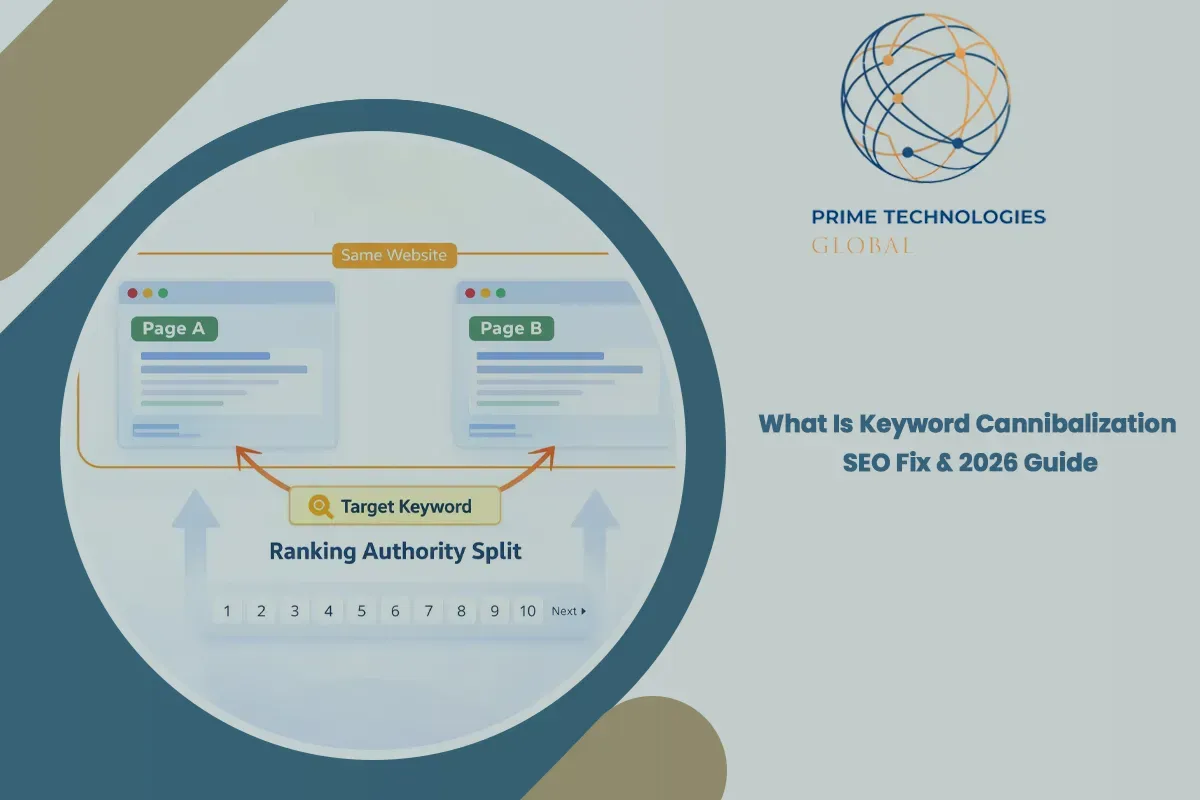
Appearing in both an ad and an organic result for the same query takes up more of the page and reinforces trust. The risk is paying for clicks you would have earned anyway. Test it: pause ads on terms where you already rank first for a few weeks, then compare total clicks and conversions. Results vary by brand and query, so keep ads where they add incremental volume. If you run dedicated ad landing pages, keep them out of the index so they do not compete with your organic pages. Our guide to keyword cannibalization explains how that overlap happens.
3. Retarget Organic SEO Visitors with Paid SEM & Display Ads
Most organic visitors leave without converting, and remarketing brings them back at a lower cost than cold traffic. Build audiences by intent: blog readers get educational offers, while pricing and product page visitors get demo or purchase offers. This is targeted advertising applied to traffic you already earned, so the SEO investment keeps working after the first visit.
4. Apply Winning PPC Ad Copy to Boost Organic Meta CTR
Ads are fast headline experiments, and the winners tell you what searchers click. When one ad headline beats the others on click-through rate, reuse its angle in your organic title tags and meta descriptions. Higher organic CTR sends stronger engagement signals and brings more visitors from the same ranking position. Professional SEO copywriting can systematize this loop so every ad test improves organic snippets.
5. Use SEM to Bridge the Visibility Gap During SEO Ramp-Up
New content takes months to rank, and SEM covers that period so you are never invisible. In months one to three, let ads capture demand on priority terms. As pages climb into the top three organic positions, trim bids on those terms and redirect budget to keywords where you still lack organic coverage. By month ten or later, SEM should focus on the highest-margin and most competitive queries.

Pro Tip: Import the same conversion events into Google Ads and Google Analytics 4. When both channels optimize toward revenue instead of clicks, you can compare them fairly and calculate true blended CAC.
Build a Unified Search Growth Engine
The SEO vs SEM question is really a sequencing question. SEM gives you speed, data, and control now. SEO gives you compounding traffic, credibility, and a lower blended CAC later. Brands that connect the two, sharing keyword data, ad copy, audiences, and conversion tracking, outperform brands that run them in separate silos.
The right mix depends on your stage, margins, and timeline, and it should be re-evaluated every quarter as your data matures.
Ready to stop guessing? Partner with Prime Technologies Global for integrated SEO services and paid search management that maximize search visibility, lower your blended CAC, and drive qualified revenue. Explore our full range of digital marketing services, or contact our team for a tailored SEO and SEM roadmap.
Frequently Asked Questions
What is the main difference between SEO and SEM?
SEO focuses on earning free organic traffic by optimizing website content and authority, while SEM focuses on buying immediate paid traffic through search engine ad auctions like Google Ads. SEO compounds slowly with no per-click fee, whereas SEM delivers results in days but stops when spending stops.
Is Google Ads SEO or SEM?
Google Ads is SEM. It is a paid advertising platform where businesses bid on keywords to appear in Sponsored search placements, whereas SEO involves unpaid organic optimization. Google Ads results carry a Sponsored label, and advertisers are charged when users click, which is why it is classed as paid search.
Is SEO still relevant in 2026?
Yes, SEO is more relevant than ever in 2026, though it has evolved beyond traditional blue links to include Generative Engine Optimization (GEO) for Google AI Overviews, ChatGPT, and Perplexity alongside high-intent organic search. Pages with clear answers, strong authority, and structured data earn both rankings and AI citations.
What are the four types of SEO?
The four core types of SEO are On-Page SEO (content and keyword optimization), Off-Page SEO (backlinks and brand authority), Technical SEO (site speed, crawlability, and schema), and Local SEO (Google Business Profile and regional search visibility). Together they cover what you publish, who endorses you, how your site performs, and where you are found.