
Landing Page Optimization: Guide to Higher Conversions
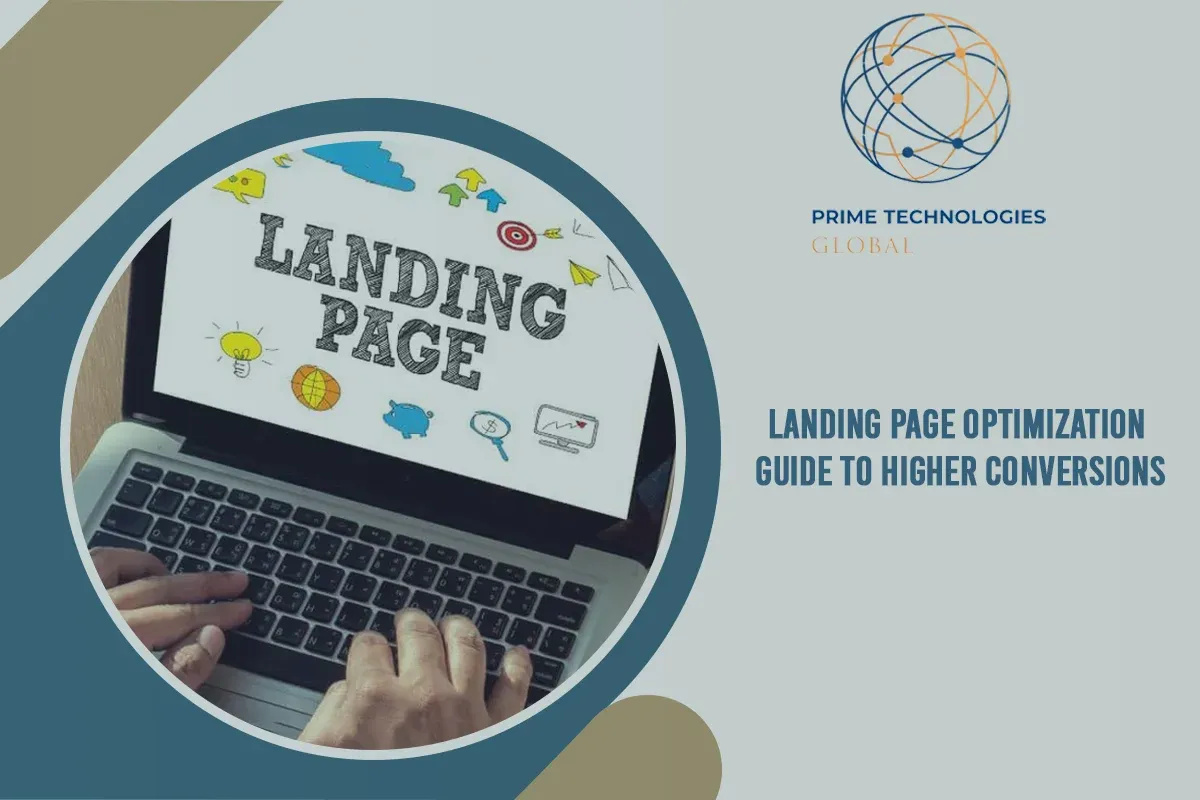
Getting people to click your ad or your search result is the easy part. Landing page optimization is what decides whether that visitor becomes a lead, a customer, or a bounce statistic. Every dollar spent on paid traffic, every hour spent ranking a page, is wasted the moment a visitor lands on a page that confuses them, loads slowly, or asks for too much before giving anything back.
This guide walks through what actually moves the needle when you optimize landing pages: page structure, copy, technical speed, and the testing process that keeps improving your numbers long after launch. Along the way we'll cover landing page best practices, the tools worth paying for, and a checklist you can run before you ever hit publish.
What Is Landing Page Optimization, and Why It Decides Where Your Ad Budget Goes
Landing page optimization (LPO) is the practice of improving a single page so a higher share of its visitors complete a specific action filling out a form, booking a call, or making a purchase. It sits inside the broader discipline of conversion rate optimization (CRO), but it's narrower and more tactical: instead of optimizing an entire site, you're optimizing one page against one goal.
The connection between page speed, message clarity, and return on investment isn't abstract. If you're driving paid social or PPC traffic to a slow, cluttered, or generic page, you're paying full price for a click and then losing most of the value on the page itself. Fixing the page is almost always cheaper than buying more traffic to compensate for a weak conversion rate.
|
Key Takeaway A landing page is not a homepage. A homepage introduces a brand with multiple paths forward. A dedicated landing page has one goal, one offer, and one call to action. Everything on the page should push toward that single outcome. |
According to Unbounce's Conversion Benchmark Report, average landing page conversion rates vary widely by industry, typically landing somewhere between roughly 2.35% and 5.31% depending on sector and offer type. HubSpot has also reported that companies see meaningfully more leads when they grow their total library of landing pages, since more targeted pages mean more precise message match for different audience segments and search intents.

The Anatomy of a High-Converting Landing Page
Visitors don't read landing pages, they scan them usually in an F-pattern or Z-pattern depending on layout. That means the placement of your headline, visuals, and call to action matters as much as the words themselves. Get the architecture right and you're working with human attention instead of against it.
Headline and Subheadline
Your H1 and subheadline have roughly three seconds to communicate your unique value proposition (UVP). If a visitor can't tell what you're offering and why it matters to them without scrolling, the rest of the page is fighting an uphill battle.
Above-the-Fold Visuals
Product screenshots, short demo clips, or contextual photography should reinforce the offer, not just decorate the page. Generic stock imagery that doesn't relate to the specific offer tends to lower trust rather than build it.
Primary Call-to-Action (CTA)
High-contrast buttons with action-oriented, value-driven copy consistently outperform generic labels. "Get My Free Strategy Plan" tells a visitor what happens next; "Submit" tells them nothing.
Frictionless Lead Forms
Every additional field is a small tax on your conversion rate. The right number of fields depends on how much lead quality you need versus how much volume you're chasing but most pages ask for more than they need.
Social Proof Elements
Client logos, trust badges, star ratings, and real testimonials all reduce the perceived risk of taking action. This is one of the fastest landing page optimization tips to implement, since most brands already have proof they simply haven't put on the page.

|
Page Element |
Weak Approach |
Optimized Approach |
|
Headline |
Company or product name only |
Specific outcome the visitor gets |
|
CTA button |
"Submit" or "Click Here" |
"Get My Free Audit" or similar value-driven copy |
|
Form |
8–10 open fields |
3–5 fields matched to lead-quality needs |
|
Hero visual |
Generic stock photo |
Product screenshot or short demo |
|
Proof |
No testimonials or logos |
Logos, ratings, and a named customer quote |
Eye-tracking research from Nielsen Norman Group consistently shows that above-the-fold content gets the majority of visitor attention, which is why the elements above need to do their job before anyone scrolls.
|
Common Mistake to Avoid Treating the landing page like a mini homepage. Adding a full navigation menu, multiple competing offers, or links away from the page gives visitors an exit ramp before they've converted. Strip the navigation and keep every path pointing at the one goal. |
Copywriting Strategies That Drive Action
The words on the page do more work than the design around them. Two principles matter most: message match and benefit-first framing.
Message match means the language on your landing page mirrors the language in the ad, email, or search result that brought the visitor there. If someone clicks an ad promising "free SEO audit" and lands on a page headlined "Digital Marketing Solutions," that gap in intent costs conversions before a single word is read.
Benefit-first framing means translating features into outcomes. A software feature like "automated reporting" only matters once it's connected to what the visitor actually cares about, saving hours each week, or catching problems before a client notices them.
Lead with the outcome, not the mechanism.
Keep microcopy near form fields plain and specific to explain why you're asking, not just what you're asking.
Use scarcity, urgency, authority, and risk reversal (guarantees) deliberately, not on every page.
|
Pro Tip Pull the exact phrases your best customers use to describe their problem from sales calls, support tickets, or reviews and test them as headline variants. Customer language usually outperforms marketing language. |
Case studies from CXL Institute have repeatedly shown that tightening message match between ad and landing page copy can improve quality scores and reduce cost-per-click (CPC), which makes copywriting one of the higher-leverage levers in landing page conversion optimization.

Mobile Responsiveness and Technical Page Speed Optimization
A page that reads beautifully on desktop and breaks on mobile is losing a majority of its potential traffic in most industries today. Designing mobile-first means starting with the smallest screen and constraint, then expanding, not shrinking a desktop layout down and hoping it holds together.
Core Web Vitals Alignment
Largest Contentful Paint (LCP) measures how quickly the main content loads, and Cumulative Layout Shift (CLS) measures how much the page jumps around while loading. Both directly affect both user experience and how the page performs in Google's ranking systems.
Asset Compression
Next-generation image formats like WebP and AVIF, along with deferring non-critical scripts, are some of the fastest technical wins available on a landing page rebuild.
Touch-Friendly UI
Large, easy-to-tap CTA buttons and responsive input forms matter more than they get credit for; a button that's easy to click on a desktop can be nearly unusable with a thumb.

|
Quick Stat Research from Google's page speed studies has found that as load time increases from one second to three seconds, the probability of a visitor bouncing rises by roughly 32%. Every second of delay is a measurable conversion cost. |
Not sure where your own landing pages are losing visitors? Prime Technologies Global offers a free website performance audit that pinpoints exactly what's costing you conversions.
A/B Testing and Analytics: How to Keep Improving After Launch
Optimizing a landing page isn't a one-time project you finish and move on from. It's an ongoing cycle of forming a hypothesis, testing it, and acting on the result.
A/B testing compares two versions of a page against one variable at a time, and it's the right choice for most sites. Multivariate testing checks multiple variables at once but needs significantly more traffic to reach statistical significance, so it's usually reserved for high-traffic pages.
Pair quantitative data Google Analytics 4 events tracking form starts, scroll depth, and completions with qualitative tools like Hotjar or Crazy Egg heatmaps and session recordings. The numbers tell you something is wrong; the recordings often tell you why.
- Headline variations test the value proposition itself, not just wording.
- CTA button copy and color.
- Form field length and order.
- Placement of social proof and visuals.
|
Case in Point A common testing mistake is calling a result before it's statistically significant. Most teams aim for a 95% confidence interval before concluding a test ending early on a promising-looking variant is one of the most frequent ways teams optimize for noise instead of a real lift. |
Landing Page Optimization Checklist
Run through this landing page optimization checklist before any page goes live, and again any time you launch a new campaign against it:
- Headline communicates the offer in under 3 seconds
- Message matches the ad, email, or search result that drives traffic
- One primary CTA, repeated but never contradicted by a second offer
- Form fields trimmed to what's actually needed
- Social proof visible above or just below the fold
- Mobile layout tested on an actual device, not just a browser resize
- Page load time checked against Core Web Vitals benchmarks
- Analytics and heatmap tracking installed before launch, not after
- A/B test plan defined, including the sample size needed for significance
Landing Page Optimization Tools Worth Using
The right landing page optimization tools depend on your budget and traffic volume, but most stacks pull from four categories:
|
Category |
Example Tools |
What It's For |
|
Page builders |
Unbounce, Instapage, Leadpages |
Building and publishing pages without a full dev cycle |
|
Heatmaps & recordings |
Hotjar, Crazy Egg |
Seeing where visitors scroll, click, and drop off |
|
A/B testing |
Optimizely, VWO, Google Optimize alternatives |
Running controlled experiments on page variants |
|
Analytics |
Google Analytics 4, Looker Studio |
Tracking conversions, funnels, and traffic sources |
None of these tools optimize a page by themselves; they surface the data that tells you what to fix. The strategy still has to come from someone reading that data against the page's actual goal.
Turn Your Landing Pages Into a Growth Engine with Prime Technologies Global
Landing page optimization isn't a checklist you complete once it's a discipline of measuring how real visitors behave, refining the message, and tightening the technical experience around them. Teams that treat it as an ongoing process, rather than a one-time launch task, are the ones who keep seeing their conversion rate climb quarter over quarter.
That's the work Prime Technologies Global does for clients every day. From full landing page redesigns to advanced technical optimization and end-to-end web strategy, the team builds pages engineered around data, not guesswork. If your traffic is strong but your conversions aren't matching it, the page itself is usually where the answer is hiding.
Ready to see what's costing you conversions? Request your free website performance audit from Prime Technologies Global and get a clear, prioritized plan for improving landing page optimization on the pages that matter most to your revenue.
Frequently Asked Questions
What is landing page optimization?
Landing page optimization is the process of improving a single, focused web page, usually one tied to a specific ad, email, or campaign so that a higher percentage of visitors complete the intended action, whether that's filling out a form, requesting a quote, or making a purchase.
What are SEO optimized landing pages?
An SEO optimized landing page is built to rank in organic search while still converting visitors once they arrive. That means using the target keyword naturally in the title, headline, and body copy, writing a clear meta description, structuring content with proper headings, and keeping technical factors like page speed and mobile responsiveness in good shape all without sacrificing the persuasive copy and layout that drive conversions.
How to do SEO as a beginner?
Start with keyword research to understand what your audience is actually searching for, then structure a page around one primary keyword and a handful of related terms. Focus early effort on clear title tags and headings, genuinely useful content, internal linking between related pages, and basic technical health, fast load times and mobile-friendly design. Track results in Google Search Console and adjust based on what's actually driving clicks and rankings, rather than guessing.
Which software is best for landing pages?
There isn't a single best option, it depends on your needs. Unbounce and Instapage are strong for marketing teams that want to build and test pages without engineering help. Leadpages tend to suit smaller businesses on tighter budgets. For teams that already have development resources, a custom-built page with a dedicated CRO and analytics stack often outperforms a template, since it can be tailored precisely to the offer and audience.