
Email Marketing and SEO: Driving Traffic and Conversions
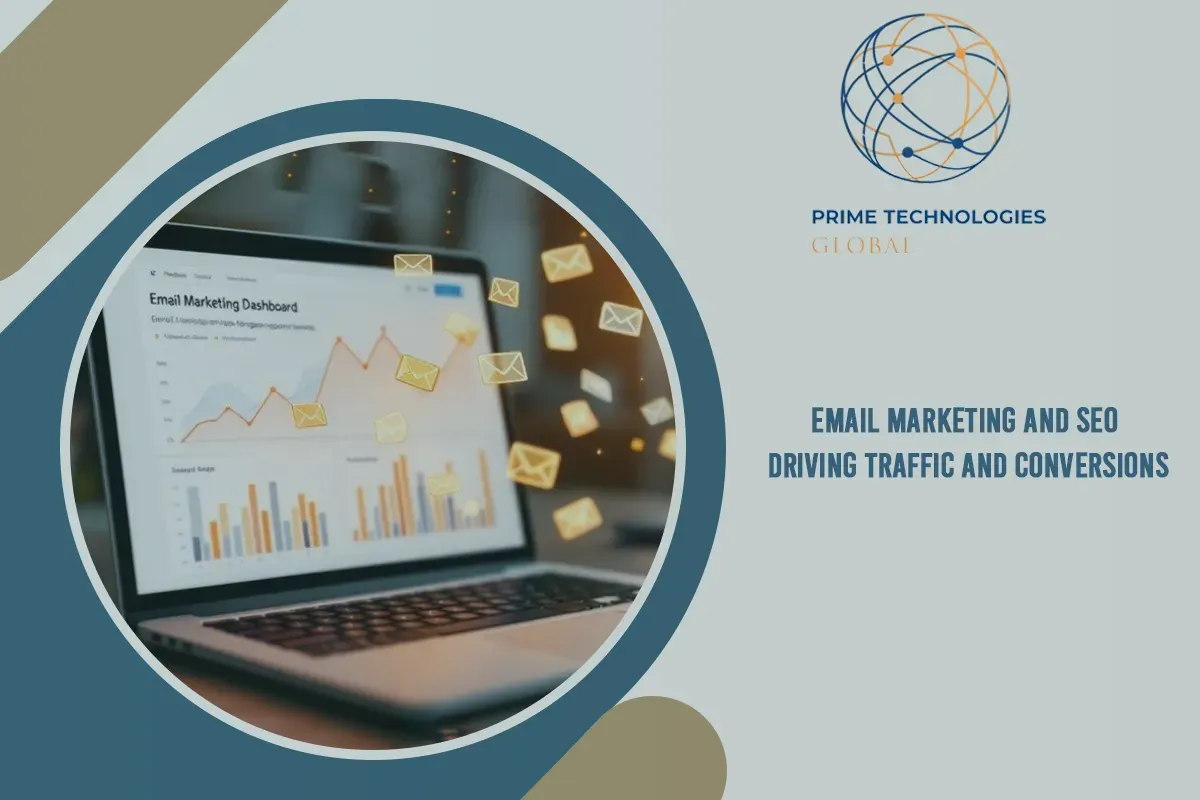
Email marketing and SEO work best as one connected system, not two separate budgets. SEO earns you high-intent visitors, and email turns those visitors into subscribers, repeat readers and buyers. Keeping the two in silos caps your digital growth.
The cost of that split is real. Most organic visitors leave and never return, and most newsletters send traffic to pages that were never built to rank. Both channels leak value.
The fix is a feedback loop. Search brings in new audiences, your list brings them back, and the resulting engagement tells you which topics deserve more SEO investment.
This guide shows you how to build that loop. It covers five SEO concepts every marketer needs, what an integrated B2B campaign looks like, six ways the channels support each other, a practical execution framework, the metrics to track, and the answers to the questions marketers ask most.
Quick answer: Email marketing is not a direct Google ranking factor, but it supports SEO by driving qualified traffic, sharpening topic selection and exposing your content to people who can link to it. SEO, in turn, feeds your email list with high-intent subscribers.
5 Important SEO Concepts Every Marketer Should Know
SEO (search engine optimization) is the practice of making your pages easy for search engines to find, understand and rank. Search engines work in three steps: they crawl pages by following links, index what they find, and rank results by relevance and quality for each query.
Organic search still matters at the top of the funnel. Google controlled roughly 90% of global search traffic as of April 2026, according to a Higoodie analysis. One 2026 marketing ROI roundup puts average SEO returns at about $8.48 per $1 spent over three years for B2B companies. Treat that figure as a directional benchmark, since methods differ between studies.
These are the five concepts that matter most for SEO basics and for any campaign that pairs search with email.
1. Keyword research and search intent
Keyword research finds the phrases your buyers type. Search intent explains why they type them. A query like "what is email marketing in SEO" is informational, while "SEO agency pricing" is commercial.
Match every page to one intent. That same intent map later decides which email sequence a new subscriber receives.
2. On-page optimization
On-page SEO covers title tags, headings, meta descriptions, internal links and the way a page answers the query. Lead with a clear answer, then add depth. Pages built this way are also easier for AI search engines to quote.
3. Technical SEO
Technical SEO makes sure search engines can reach and read your site. That means fast load times, mobile-friendly design, clean URLs, a sitemap and correct canonical tags. Technical flaws quietly cap the traffic your emails and content can ever generate.
4. High-quality backlinks
Backlinks from relevant, trusted sites remain one of the strongest authority signals. Quality beats volume. A few links from respected industry publications outweigh dozens from low-value directories.
5. User engagement signals
Search engines want pages that satisfy visitors. Clear structure, fast loading and genuinely useful content keep people reading and exploring. These are the same behaviors a well-run email program encourages.
|
SEO concept |
What it controls |
Where email helps |
|
Keyword research and intent |
Which topics you target |
Subscriber clicks reveal topics worth ranking for |
|
On-page optimization |
How well a page answers a query |
Email tests show which headlines and angles resonate |
|
Technical SEO |
Crawling, speed, indexing |
Email landing pages reuse the same fast, clean templates |
|
Backlinks |
Authority and trust |
Newsletters reach writers and curators who link out |
|
Engagement signals |
Whether visitors stay and explore |
Subscribers arrive with context and read deeper |

What Is an Email Marketing and SEO Campaign in B2B Strategy?
An integrated email marketing and SEO campaign is a single plan in which search content attracts and qualifies visitors, and email nurtures them toward a decision. Both channels share one keyword strategy, one content calendar and one measurement framework.
This matters most in B2B, where the buying process is long and involves several people. A buyer rarely converts on the first visit. They search, read, leave, compare vendors and come back, often across many weeks.
Integrated marketing connects those touchpoints. SEO handles the discovery moments, and email keeps your brand present between them. Industry roundups consistently rank newsletters among the most effective B2B thought-leadership channels. One 2026 compilation reports that 54% of marketers use newsletters for this purpose.
Email is also the cheaper channel to scale once you own the audience. Litmus and DMA data cited across 2026 industry roundups put average returns at roughly $36 to $42 for every $1 spent. Your list is an owned asset that does not depend on an algorithm.
Mapping search intent to email workflows
The practical core of a unified campaign is matching search intent to a nurture path. The visitor's entry query tells you what they need next.
|
Search intent |
Example query |
Entry content |
Email workflow |
|
Informational |
"what is email marketing in SEO" |
Guide or glossary page |
Welcome series that teaches core concepts and links to related guides |
|
Commercial investigation |
"seo vs email marketing for B2B" |
Comparison or framework post |
Case studies, checklists and a soft consultation offer |
|
Transactional |
"seo audit services" |
Service page or audit form |
Fast follow-up, proof points and a direct booking link |
Build one workflow per intent, not one generic sequence for everyone. Segmentation by entry page is simple to set up and one of the most reliable ways to lift relevance.

Content: The Connection Between Email Marketing and SEO
Is email marketing a part of SEO? No. They are separate disciplines with separate levers. Email marketing is not a direct ranking factor, and placing keywords in an email will not move your rankings.
What the two share is content, audience and data. That shared foundation is why the strongest SEO and email marketing programs treat them as partners. Industry coverage from Search Engine Journal and others frames the benefit the same way: email influences SEO indirectly, through traffic, engagement and exposure.
3 ways SEO supports email marketing
- Data-driven subject lines. Keyword research shows the exact words your audience uses. Use high-volume, high-intent phrasing to shape subject lines and preview text, then confirm with an A/B test. Search demand alone does not guarantee a good email topic, so let open and click data have the final say.
- List building through search. Your pillar pages and top-ranking posts attract visitors who are already interested. Offer a relevant lead magnet, such as a template, checklist or benchmark report, and convert that traffic into subscribers. This is the core of email lead generation with SEO: search finds the audience, email keeps the relationship.
- Audience intent alignment. The queries that bring people to your site reveal their pain points. Use them to build segmented sequences, so a reader who arrived from a pricing query never receives a beginner's tutorial.
3 ways email marketing supports SEO
- Engagement from the right audience. When you send subscribers to a new post, you generate immediate, relevant visits. Treat this as a way to give strong content early momentum and useful behavioral data. Google has not confirmed that email clicks improve rankings, so measure the effect rather than assume it.
- Amplified link potential. Your list includes bloggers, journalists and newsletter curators. When they see a strong study or guide, some will cite it. Backlinks are the most direct way email can influence SEO, because they are a confirmed authority signal.
- Content validation. Test topics with your subscribers before committing to a large SEO build. High click-through on a topic is a strong signal that the full guide is worth producing and optimizing.
Email marketing vs SEO: how they compare
Email marketing vs SEO is the wrong framing, because each covers the other's weak spot.
|
Factor |
SEO |
Email marketing |
|
Core job |
Discovery of new audiences |
Retention and conversion of known audiences |
|
Audience ownership |
Rented from search engines |
Owned list |
|
Speed of results |
Slower, compounds over months |
Faster, effective from the first send |
|
Main risk |
Algorithm and AI-search changes |
List fatigue and deliverability |
|
Best combined use |
Feeds the list with high-intent visitors |
Returns readers, tests topics and earns links |
How to Use Email Marketing and SEO for B2B Growth: What's Your Optimization Strategy?
This is how to do email marketing in SEO in practice. The framework below turns your best-ranking content into an engine that feeds both channels.
Step-by-step: repurpose ranking posts into email sequences
- Pull your top organic pages. Use Search Console to list pages with steady impressions and clicks.
- Group them by intent. Separate beginner guides, comparison pages and decision-stage content.
- Turn each group into a sequence. A guide becomes a 3-to-5 email welcome series, with each email covering one section and linking to the full post.
- Add a clear next step. End each email with one action, such as reading a related guide or booking a consultation.
- Automate and review. Launch the sequence, then update it quarterly as rankings and offers change.
Repurposing saves production time and keeps your messaging consistent across channels. It also gives new subscribers a reason to visit the pages you want to rank.

Publish web-archived newsletters the right way
A web archive of past newsletters can bring in organic traffic, but it can also create duplicate content if the same text lives on several URLs.
- Use a self-referencing canonical tag on each archive page, or point it to the original article if the content is republished from your blog.
- Write a unique title and meta description for every archived issue.
- Add context around the issue. A short intro and relevant internal links make the page worth indexing.
- Skip thin archives. If an issue adds little value on its own, keep it out of the index.
Optimize lead capture without hurting speed
Aggressive forms can lower both conversions and rankings. Place them with the reader in mind.
|
Placement |
Best use |
Watch out for |
|
Inline form |
Mid-article, next to the relevant content |
Keep the form lightweight and load scripts asynchronously |
|
Slide-in |
After the reader has scrolled or spent time on the page |
Make it easy to close, especially on mobile |
|
Exit-intent pop-up |
Desktop visitors about to leave |
Avoid full-screen overlays on mobile, which can frustrate users and may conflict with Google's guidance on intrusive interstitials |
|
End-of-post form |
Readers who finished the content |
Pair it with a matching lead magnet |
Test each placement for page speed and mobile usability before rolling it out sitewide. A form that slows the page costs you rankings and subscribers at the same time.

Keep the 60/40 balance in your emails
A common guideline is to make roughly 60% of your emails value-first and 40% promotional, which keeps subscribers engaged and protects sender reputation. Treat it as a guide rather than a law, and judge it by your own click and unsubscribe data.
Email Marketing and SEO Metrics: Tracking Engagement for Better Results
You cannot improve a combined program you cannot measure. A 2026 email statistics roundup citing Litmus reports that only about 12.5% of companies feel they measure email ROI adequately, and 36% do not measure it at all. Clean tracking is a real competitive edge.
Track email traffic accurately with UTM parameters
Without UTM parameters, email clicks can show up as direct traffic in Google Analytics 4 (GA4). Add them to every link in every campaign so the channel gets proper credit.
|
Parameter |
What it records |
Example value |
|
utm_source |
Where the click came from |
newsletter |
|
utm_medium |
The channel type |
|
|
utm_campaign |
The specific campaign |
seo-guide-launch |
|
utm_content |
Which link or variant was clicked |
header-cta |
Keep naming consistent and lowercase. Never add UTM parameters to internal links on your own site, because doing so can overwrite the original traffic source.
The metrics to watch
SEO metrics to track:
- Organic sessions: the volume of visits from search.
- Keyword rankings: positions for your target and secondary keywords.
- Dwell time (engagement time in GA4): how long visitors stay with the content.
- Backlinks earned: new referring domains pointing to your content.
Email metrics to track:
- Open rate: useful as a directional signal, though privacy features can inflate it.
- Click-through rate (CTR): the most reliable measure of subscriber interest.
- Unsubscribe rate: an early warning on frequency and relevance.
- On-page conversions: sign-ups, demo requests or downloads after the click.
Read the two sets together
The value comes from comparing them. If an email topic earns a high CTR, create or strengthen the matching SEO page. If a ranking page gets traffic but few sign-ups, test a different lead magnet or form placement. Let each channel's data steer the other's next move.
Final Thoughts
Email marketing and SEO are strongest as a pair. SEO brings in new, high-intent visitors, and email brings them back, nurtures them and shows you which topics deserve more investment.
Here is what to take away:
- Email is not a ranking factor, but it supports SEO through qualified traffic, topic validation and link opportunities.
- SEO feeds your list when pillar pages carry relevant lead magnets.
- Search intent should drive your email segments, so every subscriber gets a sequence that fits why they arrived.
- Clean UTM tracking and paired metrics let each channel inform the other.
- Removing the silo improves engagement and lets each channel's data make the other stronger, which is how combined programs beat either channel running alone.
Scale Your Digital Growth with Prime Technologies Global
At Prime Technologies Global, we help businesses design and run unified digital marketing systems that maximize search visibility, streamline content creation and drive long-term revenue growth. Whether you need an SEO overhaul, automated email workflows or a complete digital performance strategy, our team is equipped to deliver.
Contact Prime Technologies Global today to request your comprehensive digital marketing audit.
Frequently Asked Questions
What is email marketing in SEO?
Email marketing in SEO means using email campaigns to support your search strategy. Email is not a direct ranking factor, but it drives qualified visits to your content, validates topics, and exposes your work to people who can link to it. In return, SEO supplies the high-intent visitors who become subscribers.
Is SEO dead or evolving in 2026?
SEO is evolving, not dead. Google still handles the large majority of search traffic, but AI Overviews and chat-based search are reducing clicks on some informational queries. The winning approach in 2026 is helpful, well-structured content, strong technical foundations and visibility in both traditional and AI search. An owned email list also protects you from traffic swings.
Can a beginner do SEO?
Yes, a beginner can do SEO. Start with three basics: research the phrases your audience searches, write one page per intent with a clear answer up front, and keep your site fast and mobile-friendly. Add email capture early so each new visitor has a way to return.
What is the 60/40 rule in email?
The 60/40 rule in email has two common meanings. In content strategy, it suggests about 60% value-first content and 40% promotional content. In email design, it suggests roughly 60% text and 40% images to reduce spam-filter risk and improve readability. Both are guidelines, not strict limits.