
B2B Website Design | Build a High-Converting Website

B2B website design is the practice of structuring layout, information architecture, and technical performance around how buying committees research and vet vendors, not how a single shopper makes an impulse purchase. Done well, it turns a static brochure site into a 24/7 sales asset that qualifies leads before a rep ever picks up the phone.
Most business-to-business sites still fall short of that standard. Cluttered navigation, vague positioning statements, and slow-loading pages push serious buyers toward competitors before the first conversation even happens. Buyers now complete most of their research independently, so a site that fails to build trust quickly loses the deal quietly, with no phone call to explain why.
This guide walks through the structural differences between B2B and B2C design, the UX architecture that maps to a real buyer journey, the layout and trust-signal patterns that convert, the technical foundations search engines reward, and the step-by-step process a B2B web design agency follows to execute a redesign without losing existing search equity.
B2B vs B2C Website Design: Understanding the Structural Differences
Business-to-business transactions look nothing like consumer purchases. Sales cycles stretch across weeks or months, price points run higher, and the final decision rarely rests with one person. A buying committee, not a single browser with a credit card evaluates the offer, which changes what the website has to do.
Consumer design optimizes for a fast, emotional, single-transaction decision. B2B web design and development instead optimizes for an extended, trust-driven, educational process that has to satisfy several stakeholders with different priorities at the same time.
This is where information architecture for committees comes in. An enterprise website architecture needs distinct paths for the executive sponsor evaluating ROI, the technical buyer stress-testing functionality, and the end user who has to live with the tool daily. A single generic homepage message cannot serve all three.
Conversion benchmarks reflect this complexity. Average B2B site conversion sits in the 2%–5% range, well below high-performing B2C funnels, because the path from first visit to signed contract runs through more approval layers. A well-built site does not shortcut that process; it makes each stage of it faster and more legible.
Core UX Architecture: Mapping the Strategic Buyer Journey
B2B UX Design: Crafting Intuitive Navigation and Content Paths
The hero section has roughly five seconds to earn attention. In that window, it needs to state the value proposition, name the target audience, and surface the primary differentiator all above the fold, with no scrolling required to understand what the company does and who it does it for.
Generic top-navigation menus ("Solutions," "Resources," "About") ask visitors to do the translation work themselves. Buyer-centric navigation organized by role, industry, or solution does that work for them, which is a hallmark of experienced b2b website designers.
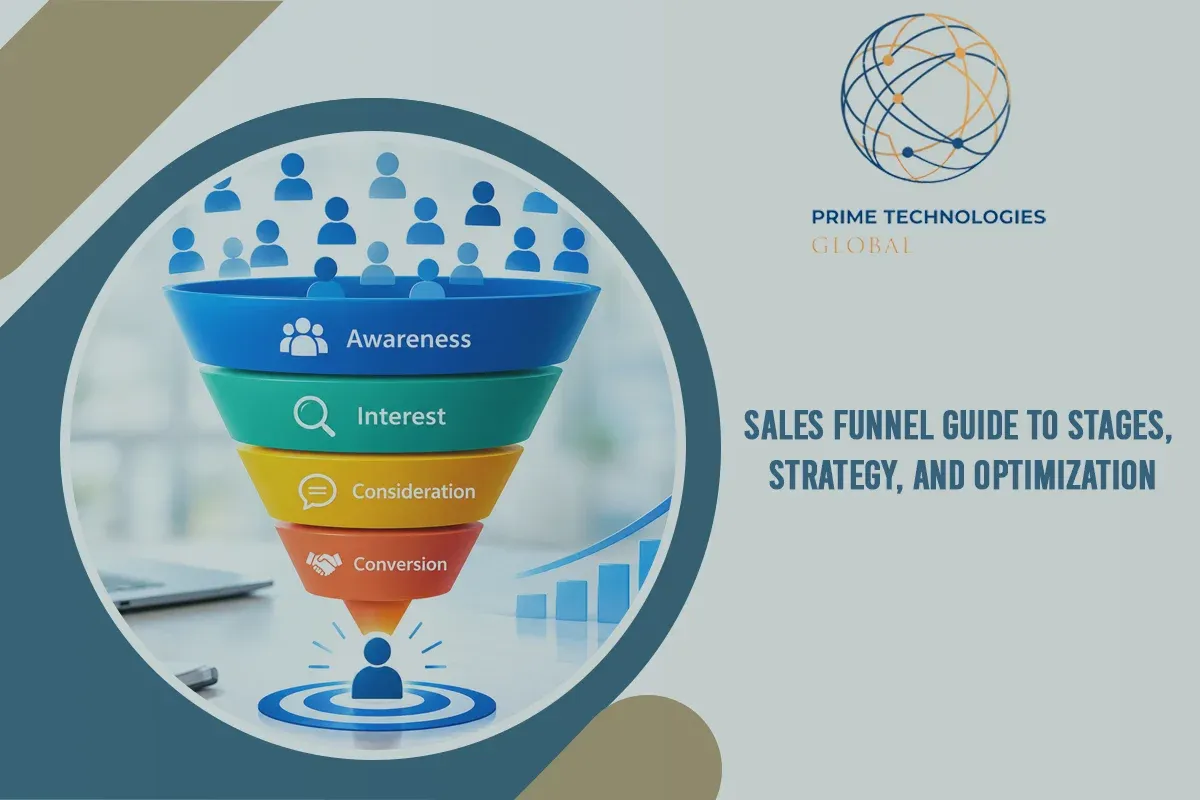
Funnel Alignment Across the Buyer Journey
- Top of funnel: Resource centers, blog content, and industry reports for visitors still defining the problem.
- Middle of funnel: Solution pages, product walkthroughs, and whitepapers for buyers comparing approaches.
- Bottom of funnel: ROI calculators, demo requests, and detailed case studies for buyers ready to shortlist vendors.
Best Practice Checklist
- Cap top-level navigation at six items or fewer.
- Use a sticky header so high-intent CTAs stay reachable at every scroll depth.
- Replace walls of text with scrollytelling and interactive content cards to hold attention.

High-Converting Layouts and Trust-Building Elements
A B2B web design agency typically anchors the page around a hero-plus-trust-banner structure, since credibility signals placed immediately after the pitch reduce hesitation before a visitor scrolls further:
|
HERO SECTION Value Proposition Headline + Sub-headline |
|
Primary CTA: Request a Demo Secondary CTA: View Live Sandbox |
|
TRUST BANNER Client Logos | Industry Accreditations | Certifications (SOC 2, GDPR) |
Trust signals belong directly alongside decision points, not buried on a separate "About" page. Client logos, industry accreditations, and security certifications such as SOC 2 and GDPR compliance reassure a risk-averse buyer at the exact moment they are deciding whether to keep reading.
Case studies work best structured as an impact framework problem, strategy, measurable result rather than a loose quote. This structure gives every stakeholder on the buying committee a scannable answer to "did this work for a company like mine?"
Research from BrightLocal and HubSpot on embedded social proof consistently shows that trust signals placed near a decision point reduce hesitation more than the same signals isolated on a dedicated page. (Verify current source and figures before publishing.)

Technical Foundations: SEO, Speed, and Accessibility
Core Web Vitals and Load Speed
Page speed affects both search rankings and lead retention. A Largest Contentful Paint under 2.5 seconds is the general target every additional second of load time gives a serious buyer one more reason to bounce to a competitor's B2B website development company instead.
Semantic SEO and Content Hierarchy
Clean H1–H3 structure and schema markup (Organization, Product, and FAQ schema) help search engines and AI answer engines parse the page correctly, which matters as much for generative search summaries as it does for traditional rankings.
Mobile-First Responsive
Complex data tables and product comparison grids need to reflow cleanly on mobile. Buying-committee members increasingly review vendor sites on a phone between meetings, so a desktop-only layout quietly loses part of the audience.
Accessibility Compliance (WCAG 2.1 AA)
High-contrast color pairings, screen-reader-compatible markup, and full keyboard navigation are not optional extras; they widen the audience a site can actually serve and reduce legal exposure for the business commissioning the work.
Where B2B Web Design Agencies Focus Technical Effort
|
Technical Area |
What It Covers |
Why It Matters |
|
Core Web Vitals |
LCP, CLS, INP performance scores |
Directly tied to rankings and bounce rate |
|
Schema markup |
Organization, Product, FAQ JSON-LD |
Improves snippet and AI-answer visibility |
|
Mobile responsiveness |
Fluid grids, reflowed data tables |
Committee members browse on mobile between meetings |
|
Accessibility |
WCAG 2.1 AA contrast and navigation |
Expands reach and reduces compliance risk |

The Redesign Process: From Discovery to Continuous Optimization
1. Discovery and Audit
Establish baseline metrics before any design work starts. A thorough audit reviews current analytics, session recordings, heatmaps, and existing keyword rankings to find drop-off points and preserve SEO equity the current site has already earned.
2. Positioning and Architecture
Align sales and marketing on shared goals before wireframing. This step defines buyer personas, resolves internal disagreements about positioning, and turns those decisions into wireframes built around user intent rather than internal org charts.
3. Modular Component Design
A scalable design system reusable content blocks, callouts, and cards lets the marketing team publish new pages later without opening a developer ticket for every change. This is one of the clearest differences between a one-off site build and a true b2b web design and development partnership.
4. Testing, Launch, and Iteration
Cross-browser testing, careful 301 redirect mapping, and post-launch A/B testing on key landing pages close out the process. A redesign does not end at launch; the highest-performing sites keep testing headlines, CTA placement, and page structure well after go-live.

Building a Website That Works as Hard as Your Sales Team
A modern B2B website is not a static project with a fixed end date, it is an evolving asset that scales alongside the business behind it. Grounding the build in strategic buyer paths, credible trust signals, disciplined SEO, and solid technical performance turns ordinary site visitors into a qualified sales pipeline, and it keeps working long after the initial launch.
Prime Technologies Global designs and builds custom, high-performance websites for complex B2B models. Whether the goal is a full enterprise architecture overhaul, a conversion funnel rebuild, or stronger organic search visibility, our team delivers strategy and execution built to scale. Visit Prime Technologies Global to schedule a strategic digital consultation.
FAQ’s
What are the 4 types of B2B?
B2B business models generally fall into four categories: producers who sell raw materials or components to other manufacturers, resellers who distribute finished goods without altering them, governments and institutions that procure at scale through formal contracts, and industry associations or cooperatives that facilitate transactions among member businesses. Most companies working with a B2B website design agency fall into the producer or reseller category.
How much does it cost to create a B2B website?
Cost varies widely with scope. A template-based small business site can run a few thousand dollars, while a custom enterprise build from a full-service B2B web design firm with custom UX research, a modular component system, and ongoing CRO typically runs from the low five figures into six figures for large, multi-persona sites with heavy integration needs. Get a scoped quote based on page count, integrations, and content volume rather than relying on a flat industry average.
What is the 95/5 rule for B2B?
The 95/5 rule, drawn from B2B buying research popularized by the Ehrenberg-Bass Institute, holds that roughly 95% of a market's potential buyers are not actively in-market at any given moment; only about 5% are ready to buy right now. The implication for website design is that most traffic needs brand-building, top-of-funnel content rather than a hard sales pitch, since the majority of visitors are not yet ready to convert.
What is a B2B design?
B2B design refers to the visual and structural design choices made for business-facing products and websites, encompassing UX architecture, information hierarchy, and visual branding aimed at professional buyers rather than individual consumers. It prioritizes clarity, credibility, and efficient information delivery over the emotional or impulse-driven cues common in B2C design.