
AI in Social Media: The Future of Content & Marketing
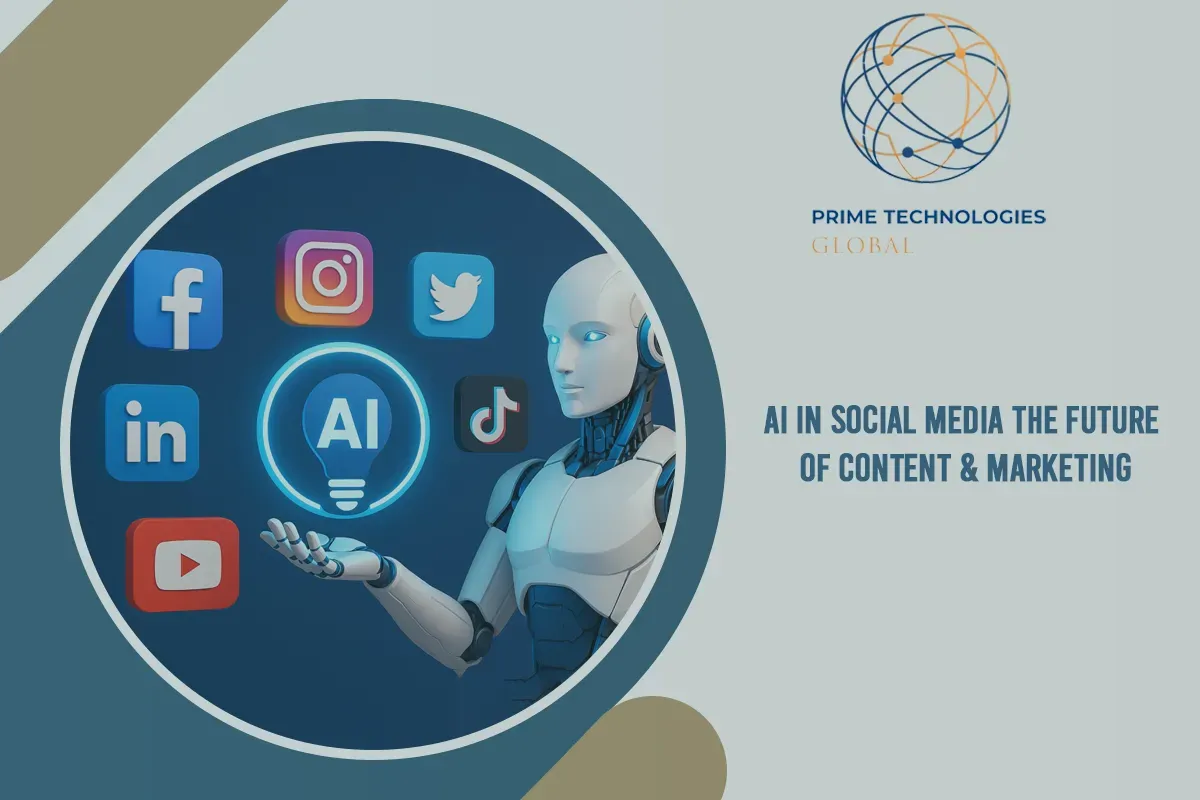
AI in social media has moved from experiment to core infrastructure. Algorithms decide what most people see. Generative tools draft the captions, cut the videos, and resize the graphics. Machine learning shifts ad budgets toward winning audiences while your team sleeps.
But hitting "generate" is not a strategy. Brands that use AI for bulk posting lose reach and trust. Brands that build a system around it win.
This guide explains how artificial intelligence in social media works, where AI social media marketing delivers measurable gains, and where it fails. You will get real examples of AI in social media, the tools behind them, and a framework for scaling output without losing your brand voice.
It is written for social media managers, agency owners, and growth teams who need one answer: how do you use AI for social media marketing and keep it human?
What Is AI in Social Media and How Did It Evolve?
AI in social media is the use of machine learning, natural language processing, and generative models to rank content, create posts, target ads, and analyze audience behavior. It started with spam filters and now powers feeds, ad delivery, and creative production across every major platform.
From simple filters to generative intelligence
Early AI on social platforms was narrow. Spam filters, photo tagging, and "people you may know" lists relied on basic classification. Scheduling tools came next, but they only automated decisions humans had already made.
Three shifts changed that:
- Deep learning recommendation engines replaced chronological feeds with personalized ones.
- Natural language processing let software read sentiment, intent, and context at scale.
- Generative models began producing the captions, images, and videos themselves.
The modern AI stack in social media
Today, artificial intelligence and social media are tied together at five layers. Each layer touches a different part of your strategy.
|
Layer |
What AI does |
Real example |
|
Recommendation |
Ranks content for each user |
TikTok For You, Instagram Reels, YouTube Shorts |
|
Ad delivery |
Automates audience, placement, and budget |
Meta Advantage+ |
|
Content creation |
Drafts copy, images, and video |
ChatGPT, Canva, Runway, Midjourney |
|
Social listening |
Tracks sentiment, trends, and crises |
Brandwatch, Sprout Social, Hootsuite |
|
Moderation |
Flags spam, abuse, and policy violations |
Platform-built classifiers |

How big is the AI in social media market?
The AI in social media market is growing fast, but analyst estimates vary with how each firm defines scope. Most place the 2025 market between roughly $2.6 billion and $4.1 billion, with forecast growth of 24% to 37% a year.
|
Research firm |
2025 value |
Forecast |
CAGR |
|
IMARC Group |
$2.59 billion |
$19.06 billion by 2034 |
24.1% |
|
Global Market Insights |
$3.4 billion |
$24.2 billion by 2034 |
28.1% |
|
Fortune Business Insights |
$4.12 billion |
$70.53 billion by 2034 |
37.11% |
Adoption backs up the forecasts. HubSpot's 2026 social media report found that 94% of social media marketers use AI in their workflows. Sociality.io's 2026 survey reported that 89.7% use it weekly and 64.1% use it daily.
How Is AI Used in Social Media Content Creation?
AI content creation for social media covers ideation, captions, images, video editing, voiceovers, and resizing. Teams use large language models and generative tools to produce drafts fast, then edit for brand voice. AI supplies speed. Humans supply judgment, taste, and accountability.
Where AI for social media saves the most time
HubSpot's survey of 1,100+ marketers lists the top uses: ideation and brainstorming (42.9%), captions and short text (41.5%), and image generation (38.35%). Video is the next frontier.
Here is how teams apply it:
- Copy and ideation: Language models draft channel-specific captions, hooks, and thread outlines. They also map trending angles to your audience.
- Visual production: Tools like Midjourney, Adobe Firefly, and Canva generate and resize graphics for every placement.
- Short-form video: Runway, CapCut, and similar tools cut clips, add captions, and reformat footage for Reels, Shorts, and TikTok.
- Repurposing: One webinar becomes a dozen clips, quote cards, and carousels.
- Trend detection: AI scans rising audio, hashtags, and topics so you can act within 24 to 72 hours.
Benefits of AI in social media content workflows
The benefits of AI in social media come down to three gains:
- Speed: Drafts that took hours take minutes.
- Volume: Teams test more hooks, formats, and variants per campaign.
- Consistency: Brand rules can be built into every prompt.
None of these gains matter if the content sounds like everyone else's.
Keep a human in the loop
The data shows teams already know this. Sociality.io found that 78.4% of marketers apply moderate or extensive edits to AI-generated content before publishing.
Treat AI output as a first draft from a fast junior writer. It has no lived experience, no brand memory, and no accountability.
Use this four-step workflow for AI social media marketing:
- Brief: Give the model your audience, goal, voice rules, and banned phrases.
- Draft: Generate three to five variants per post.
- Edit: Add a real opinion, number, or customer story. Cut generic lines.
- Test: Publish variants and measure saves, shares, and watch time, not only likes.

AI in Social Media Algorithms and Predictive Analytics
Yes, AI runs social media algorithms. TikTok, Instagram, and YouTube use deep learning models to predict what each person will watch, like, or share, then rank content to match. Predictive analytics in marketing applies the same logic to timing, budgets, and audiences.
How AI-driven feeds decide what to show
Platforms do not publish their ranking weights. Public documentation and creator testing point to the same families of signals:
- Watch time and replays
- Shares and saves
- Comments and follows
- Content similarity to what a user already engages with
- Context, such as device, language, and time of day
The practical lesson: optimize for retention and shares. Likes alone carry less weight in how AI on social media ranks your post.
Predictive analytics and ad automation
AI also reallocates ad budgets in real time. It shifts spend toward audiences and creatives that convert, then drops the rest.
Meta's Advantage+ shopping campaigns show both the upside and the catch. Meta reports an average 17% drop in cost per action and a 32% lift in return on ad spend compared with standard campaigns. However, Wicked Reports analyzed 55,661 campaigns and found that new-customer acquisition cost in Advantage+ rose from $257 to $528 between May 2024 and May 2025. The automation appeared to favor last-click conversions.
Track new-customer CAC separately from blended ROAS. Platform-reported wins can hide rising acquisition costs.
|
Task |
Manual approach |
AI-driven approach |
Metric to watch |
|
Audience targeting |
Interest and lookalike lists |
Broad targeting with machine-learned segments |
New-customer CAC |
|
Budget allocation |
Weekly manual shifts |
Real-time reallocation |
CPA and ROAS |
|
Posting time |
Fixed schedule |
Predicted from follower activity |
Reach and engagement rate |
|
Creative testing |
Two or three A/B variants |
Dozens of variants rotated automatically |
Hook rate and CTR |

How to use AI for social media trend detection
Trend tools scan rising sounds, hashtags, and topics across platforms. Use them in three steps:
- Shortlist trends that match your audience and category.
- Filter for brand fit before you create anything.
- Publish fast, then measure whether the trend lifted reach or only vanity metrics.
AI Social Media Analytics and Social Listening
AI social media analytics tracks sentiment, topics, share of voice, and performance across millions of posts in real time. Social listening tools flag negative spikes early, so teams can respond before a complaint becomes a crisis. Human analysts still review high-stakes alerts.
What AI social listening does beyond keywords
Keyword alerts only tell you a brand was mentioned. Modern social listening tools read the mention.
|
Capability |
What AI does |
Action it triggers |
|
Sentiment analysis |
Scores emotion and context, including mixed or sarcastic posts |
Escalate angry customers to support |
|
Topic clustering |
Groups posts into themes as they emerge |
Brief content on rising questions |
|
Crisis early warning |
Detects abnormal spikes in volume and negative sentiment |
Alert comms and brand-safety teams |
|
Competitive intelligence |
Tracks rival mentions, campaign reception, and share of voice |
Adjust positioning and spend |
|
Influencer discovery |
Finds creators whose audiences match your buyers |
Build outreach lists |
Tools in this space include Brandwatch, Sprout Social, Hootsuite, Talkwalker, and Meltwater. Sentiment models still misread irony, slang, and mixed-language posts. Verify any alert that could trigger a public response.

Turning analytics into decisions
AI social media analytics is only useful when it changes what you publish or fund. Build a weekly loop:
- Pull the top and bottom ten posts by saves, shares, and watch time.
- Ask AI to cluster what the winners share: hook, format, length, topic.
- Turn each pattern into a test for next week.
- Review sentiment on the same posts to catch backlash hiding behind high reach.
Examples of AI in social media
If you wonder how AI is used in social media today, these examples cover most of it:
- Feed recommendations: TikTok For You and Instagram Reels rank videos per user.
- Ad automation: Meta Advantage+ picks audiences, placements, and creative combinations.
- Chatbots and DM automation: Brands answer common questions in Messenger and Instagram DMs.
- Auto-captions and translation: YouTube, TikTok, and LinkedIn generate captions that widen reach.
- Content moderation: Classifiers detect spam, hate speech, and policy violations at scale.
- Brand monitoring: Listening platforms surface sentiment shifts and emerging crises.
Risks of AI in Social Media: Ethics, Disclosure, and Authenticity
The main negative effects of AI in social media are generic content, misinformation, deepfakes, privacy exposure, and audience distrust. Brands reduce these risks with human review, clear disclosure, verified facts, and written AI usage rules. Ignoring them costs reach, reputation, and legal safety.
The negative effects of AI on social media
- Generic voice: Unedited AI posts sound alike. Audiences scroll past them.
- Hallucinated claims: Models invent statistics, quotes, and product details with full confidence.
- Deepfakes and impersonation: Synthetic video and voice can fake executives, creators, and customers.
- Privacy exposure: Pasting customer data into public AI tools can breach consent and data-protection rules.
- Copyright uncertainty: Ownership of AI-generated assets and the data behind them remains contested.
- Algorithmic opacity: Automated ad systems can look efficient while acquisition costs climb.
- Feed pollution: Mass-produced, low-effort AI content crowds out original work.
Disclosure and platform policies
Major platforms now ask for transparency about synthetic content. Meta applies AI labels to detected or disclosed AI-generated media. YouTube requires creators to disclose realistic altered or synthetic content. TikTok asks creators to label realistic AI-generated content. Policies change often, so check each platform's current rules before you publish.
Fake reviews and undisclosed endorsements add legal risk. Regulators, including the U.S. Federal Trade Commission, treat AI-written testimonials presented as genuine customer reviews as deceptive.
Your AI governance checklist
- A human edits every AI draft before it publishes.
- A written AI usage policy covers staff, freelancers, and agencies.
- Every statistic, quote, and product claim is fact-checked against a source.
- No customer personal data enters public AI tools.
- Realistic synthetic media follows each platform's disclosure rules.
- Brand-safety and sentiment alerts are reviewed weekly.
- Reports track new-customer CAC and incrementality, not only platform-reported ROAS.
Build an AI Social Media Strategy That Scales
A strong AI social media strategy starts with goals, adds AI where it saves measurable time, and keeps humans in charge of voice and decisions. Audit your workflow, pilot one use case, measure results, then scale what works.
- Audit: List every recurring task: ideation, drafting, design, scheduling, reporting, community replies. Mark the slowest ones.
- Pilot: Pick one task, such as caption drafting or trend research. Run it for 30 days.
- Measure: Compare hours saved and performance against a manual baseline. Include new-customer CAC for paid work.
- Govern: Write down who edits, who approves, and what data never enters an AI tool.
- Scale: Add the next use case only after the first one proves its value.
Final Thoughts
Artificial intelligence now drives feeds, ad delivery, content production, and audience analysis. Teams that treat it as a fast assistant inside a clear system gain speed without losing their voice. Teams that treat it as an autopilot publish more and earn less.
The winning formula is simple. Use AI for scale, data, and speed. Use people for taste, judgment, and trust.
Put AI in Social Media to Work With Prime Technologies Global
Knowing how AI in social media works is the first step. Building a system that delivers measurable growth is the hard part.
Prime Technologies Global helps businesses turn AI into results. Our team designs AI-assisted content workflows, data-driven social media strategies, and scalable digital systems built for measurable ROI.
Ready to build an AI social media strategy that scales without sounding generic? Contact Prime Technologies Global today and turn this guide into a growth plan for your brand.
Frequently Asked Questions
How is AI being used in social media?
AI ranks feeds, automates ad targeting, drafts captions and images, edits video, powers chatbots, moderates content, and analyzes sentiment. Marketers use it daily for ideation, scheduling, and reporting. Platforms use it behind the scenes to decide what each person sees.
What will AI do to social media?
Expect more AI-generated content, more personalized feeds, and more automated replies and publishing. Expect stricter labeling rules too. As synthetic content grows, original human perspective becomes a competitive advantage. Agentic AI is still early: Salesforce's 2026 survey found only 13% of marketers using it.
What are the negative effects of AI on social media?
The biggest risks are generic content, misinformation, deepfakes, privacy breaches, biased or opaque algorithms, and eroding audience trust. Human editing, fact-checking, disclosure, and a written AI policy reduce most of them.
What are the 5 most popular AI platforms?
The most widely used general AI assistants are ChatGPT, Google Gemini, Claude, Microsoft Copilot, and Perplexity. For social media work specifically, teams also rely on Canva, Hootsuite, and Sprout Social. Rankings shift quickly, so test tools against your own workflow.