
Software Development Life Cycle: The Complete 2026 Guide
Most engineering teams don't fail because their developers can't code. They fail because nobody mapped the work before the work started. A missed requirement surfaces in week eleven instead of week one. A database schema gets rebuilt twice because nobody validated it against the actual use case. The fix isn't more talent, it's a software development life cycle that every stakeholder, from the founder to the junior dev, actually follows.
The software development life cycle (SDLC) is the structured framework that takes a product from a rough idea to a stable, maintained release and back through the loop again. It's not bureaucracy for its own sake. It's the difference between a six-month build that ships on budget and a “we'll know it's done when it's done” project that quietly doubles its runway.
This guide breaks down every stage of the software development lifecycle, compares the methodologies teams actually use to run it (Agile, Waterfall, DevOps, Scrum, Kanban), and shows you where most SDLC implementations quietly fall apart. You'll walk away knowing exactly which phase your team is weakest in and what to fix first.
What Is the Software Development Life Cycle (SDLC)?
The software development life cycle is a structured process used across the software industry to plan, build, test, and maintain high-quality applications. Every reputable answer to “what is software development life cycle” comes back to the same core idea: software gets built in defined, repeatable stages instead of one continuous improvisation.
The goal of any SDLC framework is simple to state and hard to execute: meet or exceed what the customer actually needs, while staying inside the time and cost estimates the business committed to. That second half the budget and the calendar is where most projects quietly come apart.
And the data backs up just how often that happens. The Standish Group's long-running CHAOS Report, the most cited benchmark study on IT project outcomes has repeatedly found that only around 31% of software projects finish as full successes (on time, on budget, with all promised features), while roughly half land in “challenged” territory and the remainder are cancelled outright. “Challenged” is the polite industry term for over-budget, over-schedule, or stripped of half its planned functionality.
That gap between projects with a disciplined framework and projects without one is precisely why the software development lifecycle exists as a formal discipline rather than a nice-to-have. It forces decisions about scope, architecture, and ownership to happen before they get expensive to reverse.

The 7 Core Phases of the SDLC
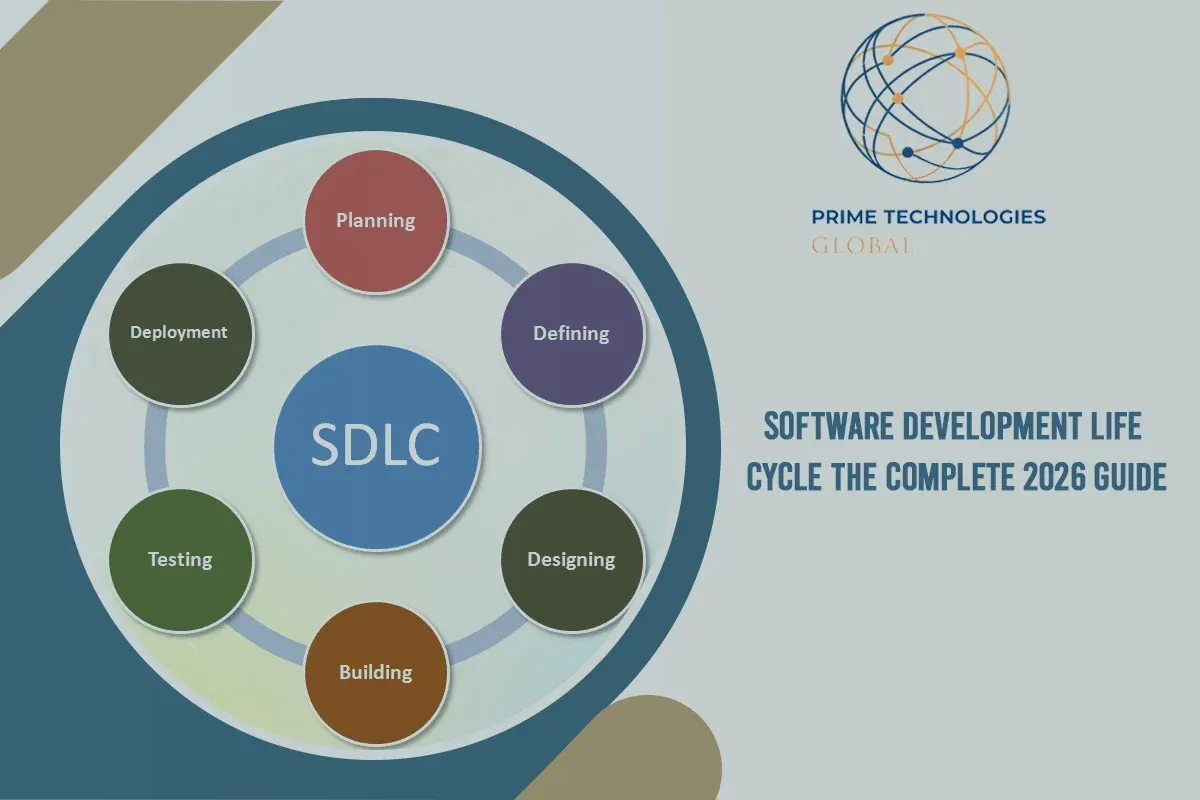
Every variation of the software development life cycle stages traces back to the same seven-step backbone. Different teams compress or rename steps depending on methodology, but the underlying software development life cycle process doesn't change. Here's the full breakdown.
1. Requirement Analysis & Planning
This is where the business case gets built, not just the tech spec. Stakeholders, product owners, and engineering leads sit down to define scope, surface constraints, and run a feasibility study against budget and timeline. Skip this step, or rush it, and every later phase inherits the ambiguity.
2. Defining Requirements (SRS)
Verbal alignment isn't documentation. This phase converts stakeholder input into a formal Software Requirement Specification (SRS) document, the single source of truth that engineering, QA, and design all build against. Good SDLC documentation at this stage prevents the single most common cause of late-stage rework: a feature getting built to the wrong spec.
3. Design & Architecture
With the SRS locked, architects translate requirements into system design: database schema, service architecture, API contracts, and UI/UX wireframes. A hypothetical: a fintech startup skips proper schema design to save two weeks, then spends six weeks mid-build migrating to a structure that actually supports multi-currency transactions. The two weeks saved cost twelve.
4. Software Development (Coding)
This is the phase most people picture when they hear “software development,” but it's only one of seven. Developers write code against the approved design, using whatever languages and frameworks the architecture phase specified. The smoother phases 1–3 went, the less this phase turns into improvisation. This stage is also the heart of most software development life cycle example walkthroughs you'll find online but treating it as the whole story is exactly how teams underestimate timelines.
5. Testing & Quality Assurance (QA)
Unit tests catch broken functions. Integration tests catch broken connections between systems. User acceptance testing (UAT) catches the gap between “technically correct” and “actually usable.” Skipping any one of the three doesn't speed up delivery; it just moves the bug discovery from your QA team's desk to your customer's inbox.
6. Deployment (Launch)
The release moves from staging into production. In mature pipelines, this is automated and incremental canary releases, feature flags, blue-green deployments specifically so a bad release doesn't take down the entire product for every user simultaneously.
7. Operations & Maintenance
The lifecycle doesn't end at launch, it loops. Bug fixes, security patches, performance tuning, and feature iteration based on real usage data all live here. This is also the phase that feeds back into phase one for the next release cycle, which is why practitioners increasingly talk about the software development cycle as a loop rather than a line.

Popular SDLC Methodologies: Choosing the Right Framework
The seven phases are constant. How a team moves through them is not and that's where SDLC methodologies come in. Picking the wrong one is one of the fastest ways to sabotage an otherwise well-planned project.
Agile Software Development Life Cycle
The agile software development life cycle breaks the seven phases into short, repeating sprints typically one to four weeks instead of running them once, sequentially, across the entire project. Best fit: startups and product teams where requirements will keep evolving after launch. The software development life cycle agile approach trades predictability for adaptability, which is exactly the trade most early-stage products need.
Waterfall
Linear and sequential: each phase must fully complete before the next begins. Best fit: regulated industries (healthcare, finance, aerospace) with fixed scope and compliance requirements where re-opening an “approved” phase has real legal cost.
DevOps / DevSecOps
Less a phase-by-phase model and more a continuous loop. Continuous integration and continuous delivery (CI/CD) compress the gap between “code is written” and “code is live,” with security checks baked into the pipeline rather than bolted on at the end.
Scrum / Kanban
Both operate under the agile SDLC umbrella but structure the work differently. Scrum runs fixed-length sprints with defined roles (Scrum Master, Product Owner). Kanban uses a continuous-flow visual board with no fixed sprint boundary work moves when capacity allows, not on a calendar.
|
Framework |
Speed |
Flexibility |
Risk Tolerance |
|
Agile |
High |
High |
High |
|
Waterfall |
Low |
Low |
Low |
|
DevOps / DevSecOps |
Very High |
High |
Moderate |
|
Scrum |
Moderate–High |
High |
High |
|
Kanban |
High |
Very High |
High |

Why SDLC Matters: Key Benefits for Engineering Teams
A formal SDLC isn't a process for its own sake. It's a direct lever on cost, predictability, and team health three things that compound across every release cycle a team runs.
- Enhanced visibility: A defined lifecycle gives developers and executive stakeholders the same map. Status updates stop being subjective and start being checkpoint-based.
- Cost control and predictability: Bugs caught during the design phase cost a fraction of what the same bug costs after production deployment; the remediation cost climbs at every phase the defect survives undetected.
- Better resource management: Realistic scope boundaries, set during the planning phase, are what prevent the kind of unbounded “just one more feature” crunch that burns out engineering teams.
Common Pitfalls in SDLC Execution (and How to Avoid Them)
Knowing the framework on paper and running it well under deadline pressure are different skills. These are the three failure patterns that show up most often once a project is actually underway.
Scope Creep
Loose requirement definitions in phase one don't disappear; they resurface in phase four as “can we just also add...” requests. The fix isn't saying no to every new idea; it's having a documented SRS specific enough that new requests are visibly new requests, not ambiguous extensions of what was already approved.
Communication Silos
QA finding a defect three days before launch isn't usually a testing failure, it's a communication failure that happened weeks earlier. The contrarian is worth sitting with: more status meetings rarely fix this. Shared documentation and joint phase sign-offs do.
Neglecting Documentation
Undocumented decisions become undocumented legacy code, and undocumented legacy code is what makes future scaling slow and expensive. SDLC best practices consistently point back to the same habit: document the why behind a technical decision while the context is still fresh, not six months later when someone's trying to reverse-engineer it from git history.

Conclusion
Mastering the software development life cycle isn't about memorizing seven boxes on a diagram. It's about recognizing that every shortcut taken in requirements or design shows up later, at a higher cost, in coding, testing, or production. Teams that run a disciplined SDLC process whichever methodology they choose consistently ship faster and with fewer post-launch fires than teams that treat planning as overhead.
Building production-grade software doesn't happen by improvising through each phase and hoping QA catches what planning missed. It happens with the right partner running the lifecycle end-to-end.
Prime Technologies Global specializes in turning complex software visions into market-ready realities. Our engineering teams run optimized SDLC frameworks from requirement analysis through long-term maintenance to deliver custom software built for your actual business goals, not a generic template.
Ready to streamline your development process? Partner with Prime Technologies Global to build software that scales.
FAQ’s
What are the 7 phases of SDLC?
The seven phases are requirement analysis and planning, defining requirements (SRS), design and architecture, software development (coding), testing and quality assurance, deployment, and operations and maintenance. Together they form the complete software development life cycle process, from initial idea through ongoing post-launch support.
What are the 5 phases of the software development life cycle?
A five-phase version condenses the same work into: planning, design, implementation (development), testing, and deployment with maintenance. Teams using a leaner SDLC framework often fold requirement-gathering into planning and combine deployment with ongoing maintenance into a single operational phase.
Is SDLC still relevant?
Yes, the underlying discipline behind SDLC is arguably more relevant now, not less, because AI-assisted coding tools have made the actual writing of code faster without making requirements gathering, architecture decisions, or QA any less necessary. Modern teams running Agile or DevOps SDLC methodologies aren't abandoning the lifecycle; they're compressing it into faster, more frequent cycles.
What are the 4 phases of SDLC?
A four-phase summary typically groups the lifecycle into planning and analysis, design, implementation (which includes both coding and testing), and deployment and maintenance. It's a simplified lens for explaining the software development phases to non-technical stakeholders, not a different framework.