
Email Segmentation: Strategy Guide to Higher Open Rates
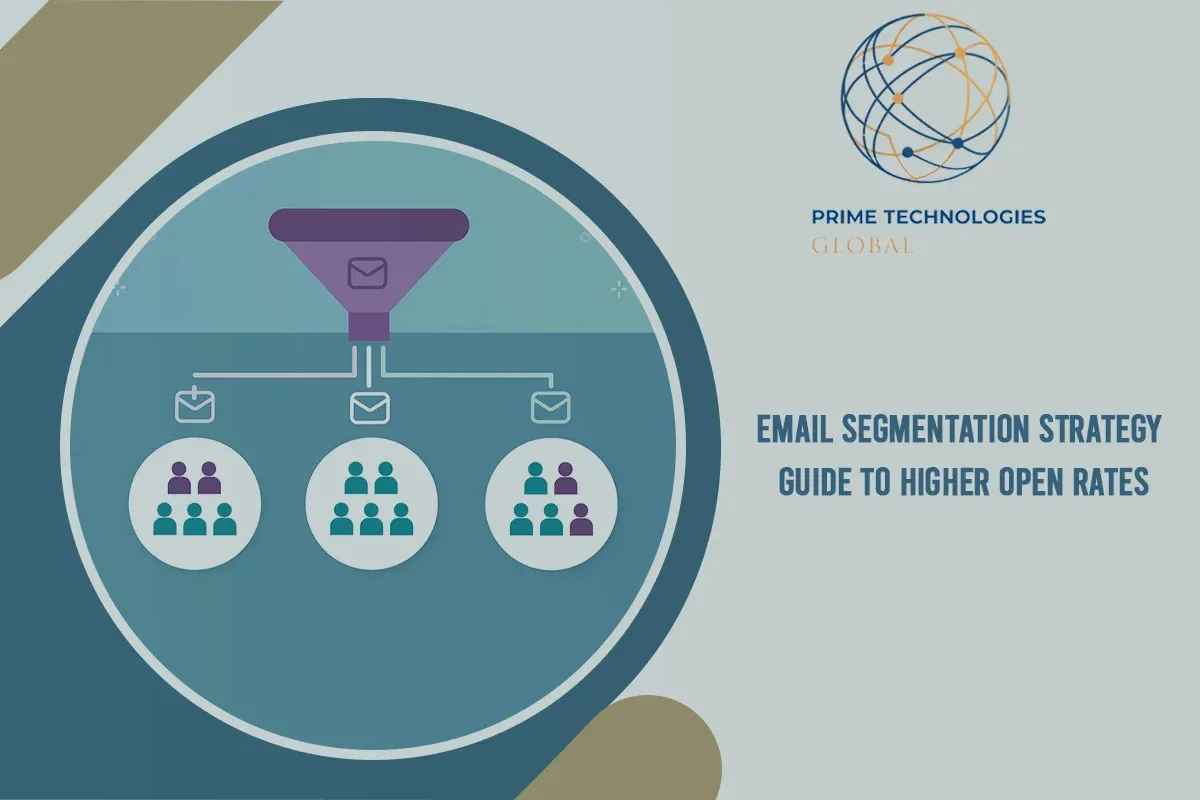
Batch-and-blast email is dead weight. Every subscriber who opens a generic broadcast and finds nothing relevant to them is one step closer to the unsubscribe button and one signal closer to your domain landing in the spam folder. Email segmentation solves this by dividing your list into targeted sub-groups based on shared behavior, demographics, and interests, so every send earns its place in the inbox.
If your open rates are stuck below 20% and your best copy still isn't converting, the problem usually isn't the email it's who's receiving it. Segmented campaigns generate 760% more revenue than non-segmented campaigns, according to research from the Data & Marketing Association cited by Campaign Monitor, and marketers who segment consistently report stronger open and click performance across the board.
This guide covers what email segmentation is and why it drives inbox placement and revenue, the five essential segment types every brand needs, a step-by-step implementation process, six high-converting segmentation strategies you can launch this week, and how to keep a segmented program compliant and healthy for the long run.
What Is Email Segmentation?
Email segmentation is the practice of dividing your subscriber list into smaller, targeted groups based on shared characteristics such as demographics, purchase behavior, or engagement history so each group receives content relevant to them instead of one generic broadcast.
At its core, email list segmentation moves your program from broad messaging to personalized communication. Instead of one newsletter for everyone, a segmented email marketing strategy sends the right message to the right audience at the right moment in their lifecycle.

Static vs Dynamic Segments
Static segments are fixed lists built around a point-in-time event for everyone who attended a webinar last quarter, for example. Dynamic segments update automatically as subscriber behavior changes, such as "browsed Product Category X in the last 7 days." Most advanced email segmentation programs lean on dynamic segments because they stay accurate without manual list maintenance.

The Data That Powers Segmentation
Two data types feed an effective email marketing audience segmentation model:
- Zero-party data: information a subscriber volunteers directly, through preference centers, quizzes, or onboarding surveys.
- First-party data: behavioral signals you observe, including website activity, purchase history, and email engagement.
|
Pro Tip Pair a short preference-center survey at signup with passive behavioral tracking. Zero-party answers tell you what a subscriber says they want; first-party behavior confirms what they actually do and the two rarely match perfectly. |
Understanding what email segmentation is matters because it's the foundation of lifecycle marketing. A personalization tag like {First_Name} makes an email feel individual; structural segmentation makes it relevant and relevance, not a first name, is what earns the click.
The ROI of Email List Segmentation: Key Benefits and Metrics
Segmentation improves deliverability, engagement, and revenue simultaneously: Internet Service Providers reward high engagement with better inbox placement, subscribers stay on your list longer, and targeted upsell sequences reach buyers exactly when they're ready to purchase again.
- Why is segmentation important in email marketing? Because every major performance metric opens, clicks, unsubscribes, and revenue per recipient moves in your favor once messages match audience intent.
- Higher engagement rates: Relevant subject lines and offers drive stronger open and click-through rates than one-size-fits-all sends.
- Improved deliverability: Gmail and Outlook weigh engagement heavily when scoring sender reputation, so higher open rates keep future campaigns out of spam.
- Fewer unsubscribes and spam complaints: Sending fewer, better-targeted emails keeps subscribers satisfied and slows list churn.
- Maximized customer lifetime value: Segmented upsell and cross-sell sequences reach existing buyers at the moment they're most likely to purchase again.
The table below summarizes how the metrics that matter most typically shift once a list moves from unsegmented broadcasts to targeted, behavior-based sends.

|
Metric |
Typical Unsegmented Benchmark |
Typical Segmented Improvement |
|
Open Rate |
Industry average, often below 20% |
Meaningfully higher open rates on relevant sends |
|
Click-Through Rate (CTR) |
Baseline CTR |
Up to 100% higher CTR on segmented campaigns |
|
Unsubscribe / Complaint Rate |
Higher churn from irrelevant content |
Lower churn as relevance increases |
|
Revenue Per Recipient (RPR) |
Flat, undifferentiated revenue per send |
Substantially higher RPR from targeted offers |
The 5 Core Types of Email Segmentation
The five core types of email segmentation are demographic, geographic, behavioral, psychographic/interest-based, and lifecycle (RFM) segmentation. Behavioral segmentation typically delivers the highest ROI because it targets subscribers based on what they actually do, not just who they are.
1. Demographic Segmentation
Variables include age, gender, occupation, income level, company size, and job title for B2B lists. A common email segmentation example: recommending men's versus women's product lines, or tailoring B2B copy differently for C-suite readers than for individual managers.
2. Geographic Segmentation
Variables include location, climate, time zone, and local events or regulations. Weather-triggered promotions, winter coats to a cold-climate segment, swimwear to a warm-climate one and send-time scheduling by local time zone both fall under this type.
3. Behavioral Segmentation
Variables include past purchase history, on-site browsing behavior, content downloads, email engagement frequency, and cart abandonment. This is generally the highest-ROI segment because it reacts to real intent signals, such as triggering an automated sequence when a subscriber views a pricing page three times in one week.
4. Psychographic and Interest-Based Segmentation
Variables include personal interests, values, brand preferences, and survey responses captured as zero-party data. An outdoor retailer, for instance, might segment its email marketing audience into "Hikers," "Campers," and "Runners" to send gear recommendations that actually match each subscriber's activity.
5. Lifecycle and RFM Segmentation
RFM stands for Recency, Frequency, and Monetary value. Variables include new subscribers, active customers, VIP or high-spend buyers, and dormant or at-risk customers. A VIP-exclusive preview and a win-back discount for a dormant lead are both lifecycle plays built on the same underlying data.

How to Segment Your Email List: A Step-by-Step Guide
To segment your email list, audit your data collection methods, clean and normalize your database, define your highest-value customer personas, configure automated tagging and workflows in your ESP or CRM, and continuously test and refine each segment's performance.
Step 1: Audit Your Current Data Collection
Capture zero-party data through sign-up forms, interactive quizzes, and onboarding surveys. Confirm that website tracking pixels and analytics are correctly integrated with your Email Service Provider (ESP) or CRM so behavioral data actually reaches your segments.
Step 2: Clean and Normalize Your Email Database
Remove invalid addresses, hard and soft bounces, and long-unengaged contacts before you segment. Standardize custom fields job titles, country names, product categories so filter logic doesn't silently break on inconsistent data.
Step 3: Define Your High-Priority Customer Personas
Identify the three to five buyer personas that drive roughly 80% of revenue. Every subsequent segment should map back to one of these personas rather than existing for its own sake.
Step 4: Configure Automated Workflows and Tagging
Set up event-based triggers for example, "Purchased Product X" applies a Customer_ProductX tag and moves the contact into a dedicated nurture workflow. This is where email segmentation tools do the heavy lifting, applying tags and routing contacts without manual list-pulling.
Step 5: Test, Analyze, and Iterate
Run A/B tests on segment-specific subject lines, send times, and calls to action. Treat each segment as its own mini-campaign with its own performance baseline, not a permanent, unmonitored list.
6 High-Converting Email Segmentation Strategies and Ideas
The highest-converting email segmentation strategies include cart abandonment recovery, VIP loyalty campaigns, inactive subscriber win-back flows, content-interest-based lead nurturing, post-purchase cross-sell sequences, and feedback-based re-engagement using NPS or review data.
1. Cart Abandonment Recovery Flow
Target subscribers who added items to their cart in the last 24 hours but didn't check out. Send dynamic reminders showing the exact products left behind, ideally with a time-sensitive nudge.
2. VIP Customer Loyalty Campaign
Segment buyers in the top 10% of lifetime spend and offer early access to sales, exclusive launches, or dedicated support treatment your general newsletter segment never sees.
3. Inactive Subscriber Win-Back and Sunset Series
Isolate contacts who haven't opened an email in 60–90 days. Send a "we miss you" incentive, then follow with a polite list removal if there's still no engagement protecting your sender reputation in the process.
4. Lead Nurturing by Content Interest
If a subscriber downloads an ebook on B2B SEO, route them automatically into an SEO-focused drip sequence instead of your general newsletter segmentation. Interest-based routing like this is one of the simplest newsletter segmentation ideas to implement and one of the highest-converting.
5. Post-Purchase Onboarding and Cross-Sell
Send new customers usage tips in week one, then a complementary product recommendation in week three sequencing that turns a single purchase into a longer customer relationship.
6. Feedback-Based Re-Engagement (NPS or Reviews)
Route promoters (NPS 9–10) into review-request and referral segments; send detractors (NPS 1–6) directly to customer service instead of a marketing send.
Email Segmentation Best Practices for Long-Term Success
Best practices for email segmentation include regularly purging non-responders, avoiding segments too small to manage efficiently, maintaining explicit consent under GDPR, CCPA, and CAN-SPAM, and syncing segment data across your CRM, CDP, ecommerce platform, and ad channels.
- Data hygiene and maintenance: Regularly purge chronic non-responders to protect deliverability scores.
- Avoid over-segmentation: Segments so small they're inefficient to manage rarely deliver a noticeable performance lift bigger isn't always better, but neither is excessive slicing.
- Privacy and compliance: Maintain full compliance with GDPR, CCPA, and CAN-SPAM, and always collect explicit consent before tracking or messaging a contact.
- Integration across the tech stack: Sync segment data between your CRM, Customer Data Platform, ecommerce store, and advertising channels, including custom audiences on paid social.
Turn Email Segmentation Into Your Highest-ROI Channel
Email segmentation is no longer optional overhead layered onto an existing newsletter; it's the difference between a list that quietly decays and one that compounds in value. Shifting from generic blasts to data-driven, behavior-triggered messaging is what keeps your emails opened, read, and acted on, and it's what keeps your sender reputation healthy enough to reach the inbox in the first place.
Start small. Two or three foundational segments, a welcome series, a cart-abandonment flow, and a win-back sequence will outperform a single unsegmented newsletter within weeks, and each one gives you the behavioral data needed to build the next layer of targeting. From there, scale into psychographic and RFM-based segmentation as your list and your team's bandwidth grow.
Scale Your Digital Growth with Prime Technologies Global
Building a high-performing email segmentation engine takes more than a good ESP; it takes seamless technical infrastructure, custom integration, and disciplined digital strategy execution. Prime Technologies Global delivers end-to-end IT, software development, and digital marketing solutions built to scale your operations and maximize ROI.
Our Expertise Includes:
- Custom Web & Application Development connecting your database, ecommerce storefront, and automation CRM.
- Advanced SEO & Content Strategy driving targeted, organic top-of-funnel leads straight into your email workflows.
- Enterprise Digital Transformation custom API integrations, automated data pipelines, and scalable digital platforms.
Ready to modernize your technology stack and accelerate sales growth? Partner with Prime Technologies Global to build data-driven systems that convert prospects into lifelong brand advocates.
FAQ’s
What are the 7 parts of an email?
A well-structured marketing email typically includes seven parts: the sender name, subject line, preheader text, header/logo, body copy, call-to-action (CTA), and footer (with an unsubscribe link and required compliance information). Each part plays a role in getting the email opened, read, and acted on and each can be tailored per segment.
What are the four types of email marketing?
The four broad types of email marketing are promotional emails (sales, offers, product launches), transactional emails (order confirmations, receipts, shipping updates), lifecycle or behavioral emails (welcome series, cart abandonment, win-back), and newsletter or informational emails (curated content, company updates). Segmentation strategy typically differs for each type.
What are the 5 T's of email marketing?
The 5 T's of email marketing are commonly defined as Tease (a compelling subject line), Target (send to the right, segmented audience), Teach (deliver genuine value in the body copy), Test (A/B test elements before scaling), and Track (measure performance to refine future sends). Targeting the "T" most directly tied to segmentation is often the single biggest lever for performance.
What are the best practices for email segmentation?
Core email segmentation best practices include starting with two or three foundational segments before scaling, using both zero-party and first-party data, keeping your database clean and normalized, avoiding segments too small to manage efficiently, maintaining explicit consent under privacy regulations, and continuously A/B testing subject lines, send times, and offers within each segment.