
What Is Digital Marketing? | Complete 2026 Strategy Guide
|
Quick Answer Digital marketing is any marketing activity that uses the internet or an electronic device SEO, social media, email, paid ads, content, and more to reach and convert customers. Unlike most traditional advertising, it can be tracked in real time and precisely targeted by audience, intent, and location. |
Before a customer ever talks to your sales team, they've usually searched your brand, scrolled past a competitor's Instagram ad, and skimmed a handful of reviews all without leaving their phone. That behavior shift is exactly why digital marketing has become the primary growth engine for businesses of nearly every size and industry.
In simple terms, digital marketing is the practice of promoting products or services through internet-based channels and electronic devices, search engines, social media, email, mobile apps, and websites instead of relying solely on print, broadcast, or other offline media. It's how businesses reach current and prospective customers in the places they already spend their time.
This guide covers the full digital marketing definition, breaks down the 12 core types of digital marketing, explains why companies keep shifting budget away from traditional channels, and walks through the KPIs used to prove a campaign is actually paying off.
What Is Digital Marketing? Core Concepts Explained
The digital marketing meaning goes beyond "advertising online." It's a full system for attracting strangers, turning them into leads, converting those leads into customers, and keeping those customers coming back with every step measurable.
The Digital Marketing Funnel: Attract, Engage, Convert, Retain
- Attract (Top of Funnel): Organic content, SEO, and paid ads introduce a cold audience to your brand.
- Engage (Middle of Funnel): Email, social media, and remarketing keep prospects warm while they evaluate options.
- Convert (Bottom of Funnel): Landing pages, offers, and conversion rate optimization turn interest into a sale.
- Retain: Loyalty campaigns, email nurture sequences, and customer support extend lifetime value after the first purchase.
Online Marketing vs. Traditional Marketing: Inbound and Outbound
Traditional marketing print, billboards, linear TV pushes a single message to a broad, largely untracked audience. Online marketing and internet marketing flip that model. Inbound marketing (SEO, content, organic social) earns attention by answering questions people are already searching for. Outbound marketing (paid search, display ads, cold email) actively places a message in front of a defined audience. Most effective digital marketing strategies blend both, but the deciding advantage over traditional media is the same either way: real-time interaction, precise audience targeting, and immediate performance tracking.

|
Stat Spotlight As of April 2026, 6.12 billion people, about 73.8% of the world's population, are online, according to DataReportal's Digital 2026 Mid-Year Update. That's the addressable audience digital channels can reach in ways traditional media simply can't match. |
12 Types of Digital Marketing You Need to Know
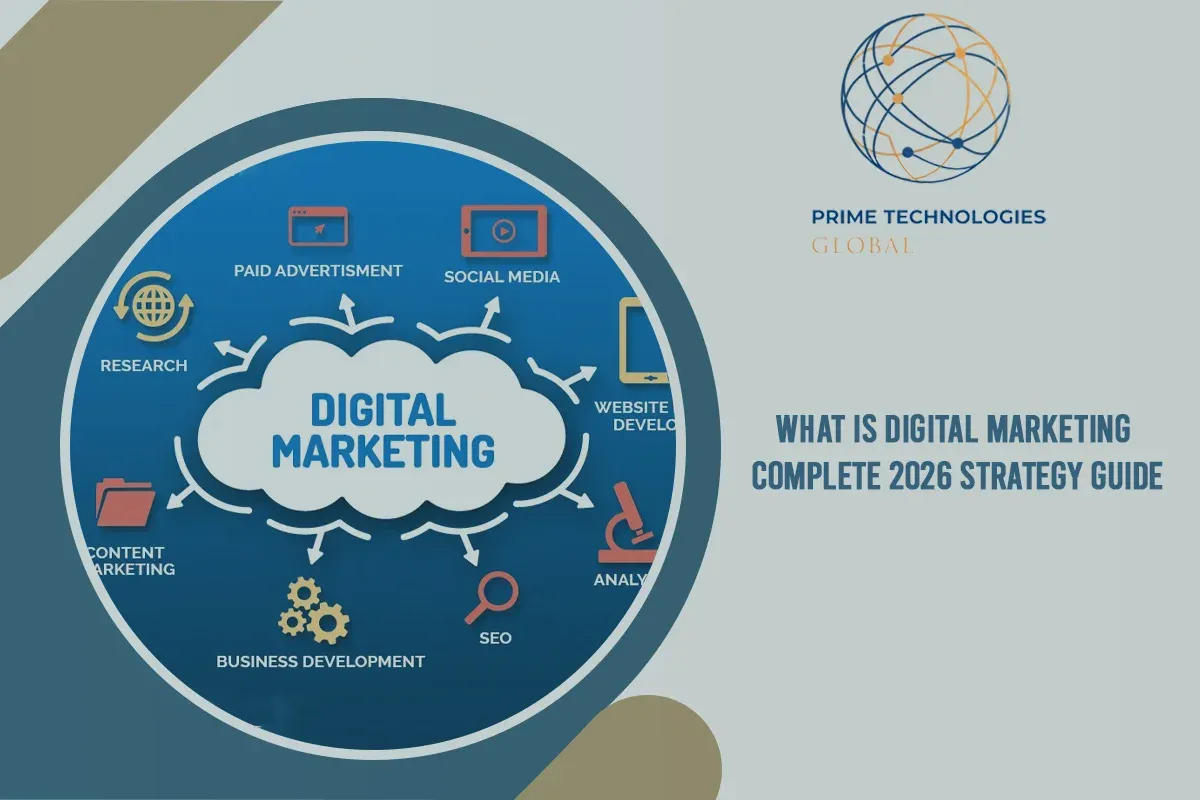
Every digital marketing strategy is built from some combination of the following channels. Together, they cover the core components of digital marketing that most teams rely on:
SEO
Focuses on ranking pages organically (unpaid) in search results. Involves three main areas: on-page (content, keywords, headers), technical (site speed, mobile-friendliness, crawlability), and off-page (backlinks, authority-building). On-page work means structuring content around the terms your audience actually searches for, using clear headers and internal linking so both readers and search engines can navigate it. Technical SEO ensures search engines can actually crawl and index your site efficiently. A fast, mobile-optimized site with clean code will consistently outrank a slower competitor with weaker infrastructure, even with similar content quality. Off-page SEO is largely about earning trust signals from elsewhere on the web, primarily backlinks from reputable sites, which search engines interpret as votes of credibility. Its payoff is slow but compounding a well-ranked page can keep generating traffic for years without ongoing spend, which makes SEO one of the few marketing channels with genuine long-term asset value rather than a cost that stops producing the moment you stop paying.
PPC
Paid placements on search engines (like Google Ads) or display networks, where you pay per click rather than per impression. This model shifts the risk toward the advertiser being able to control cost more precisely, since you're only charged when someone actually engages rather than merely seeing the ad. Bidding is typically auction-based, with placement determined by a combination of bid amount and a "quality score" that rewards relevant, well-targeted ads and penalizes poorly matched ones. Because it's immediate, it's often used to fill the gap while SEO efforts build up, or to target high-intent keywords competitors also want someone searching "buy running shoes online" is closer to purchase than someone reading a general blog post, so PPC lets brands capture that intent right at the moment of decision, even if it costs more per acquisition than organic channels over time.
SMM
Not just posting content includes organic community-building, paid social ads, and platform-specific tactics (LinkedIn for B2B, Instagram/TikTok for consumer brands). Organic social is about consistent presence and genuine interaction replying to comments, participating in relevant conversations, and building a recognizable brand voice that earns attention without paying for it. Paid social, by contrast, allows for precise audience targeting based on demographics, interests, and behaviors, and is often used to amplify content that's already performing well organically. The channel choice usually depends on where the target audience actually spends time, but it also depends on the format each platform rewards LinkedIn favors professional insight and thought leadership, while Instagram and TikTok reward visually engaging, fast-paced content, meaning the same message often needs to be reshaped rather than simply reposted across platforms.
Content Marketing
The umbrella practice of producing material (blog posts, guides, ebooks, case studies) designed to attract an audience by being genuinely useful, rather than directly pitching a product. The underlying philosophy is that by consistently solving a target audience's problems or answering their questions, a brand builds trust and authority long before a direct sales pitch ever happens. It often fuels SEO and provides material for email and social channels, functioning as the raw material that other channels repurpose and distribute a single in-depth guide might become several blog posts, a handful of social captions, and an email newsletter series. Because of this, content marketing is often described as the foundation other channels build on top of, rather than a standalone tactic.
Email Marketing
Owned communication you're not renting attention from a platform algorithm. This distinction matters because social media reach and search rankings can shift overnight due to algorithm changes outside a brand's control, whereas an email list is a direct, stable line of communication a business fully owns. Used for nurturing leads over time (drip sequences), re-engaging past customers, and driving repeat sales, email marketing is also highly segmentable; messages can be tailored based on purchase history, browsing behavior, or engagement level, making it far more personalized than most broadcast channels. Its high ROI comes from low cost per contact and direct access to an interested audience, since anyone on the list has already opted in, meaning the audience is inherently warmer than cold traffic acquired through ads.
Affiliate Marketing
A pay-for-performance model: external partners (bloggers, review sites, other businesses) promote your product and earn a commission only when they generate a sale or lead. This structure effectively outsources part of the marketing function to a network of partners who are financially motivated to perform well, since their earnings are directly tied to results rather than guaranteed. Lower risk than upfront ad spend since you pay for results, not exposure, affiliate marketing is particularly effective for products with clear, trackable conversion paths, and it scales naturally as more affiliates join and succeed, the channel grows without a proportional increase in the brand's own marketing effort or spend.
Influencer & Creator Marketing
Similar to affiliate marketing but centers on borrowed trust the audience already believes in the creator, so the brand benefits from that credibility. Unlike traditional advertising, where a brand speaks directly and is inherently viewed with some skepticism, influencer marketing works because the message is delivered by someone the audience has chosen to follow and already trusts, which lowers the psychological resistance to a sales message. Ranges from mega-influencers (broad reach) to micro/niche creators (higher engagement, more targeted audiences), with the tradeoff typically being reach versus intimacy a mega-influencer offers scale but often shallower engagement per follower, while a micro-influencer's smaller, tightly-knit audience tends to convert at a noticeably higher rate.
Mobile Marketing
Covers SMS/text campaigns, in-app advertising, push notifications, and geofencing/location-based targeting (e.g., an ad triggered when someone is near a store). What separates mobile marketing from other channels is its immediacy and personal nature: a push notification or text arrives on a device that's almost always within arm's reach, giving it exceptionally high visibility, though this also means it demands more restraint to avoid feeling intrusive. Relevant because a large share of traffic and purchases now happen on mobile devices specifically, this channel has become less of an optional add-on and more of a core requirement, since ignoring mobile-specific behavior (like shorter attention spans or location-based context) means missing how most consumers actually interact with brands today.
Video Marketing
Spans short-form (Reels, TikTok, Shorts) for quick engagement and long-form (YouTube) for depth and SEO value in its own right, since YouTube is itself a search engine. Short-form video is optimized for rapid consumption and virality, often built around trends, sound, and quick hooks within the first few seconds, while long-form video allows for deeper storytelling, tutorials, or product demonstrations that build stronger trust over a longer watch time. Video tends to have higher recall and engagement than static content, largely because it combines visual, auditory, and narrative elements simultaneously, making the message easier to absorb and remember compared to text or static images alone.
Audio & Podcast Marketing
Includes streaming ads (Spotify, podcast pre-rolls) and direct sponsorships where a host reads an ad live. Host-read ads in particular tend to outperform pre-recorded ones because they're delivered in the host's own voice and style, making them feel more like a personal recommendation than an interruption. Podcast audiences in particular are considered "captive" they're often listening attentively during commutes or workouts, which can mean stronger trust transfer than skippable video ads, since there's no mute button or skip option readily available the way there is with many digital video ads, keeping attention levels comparatively high throughout the ad's duration.
CRO
Not about driving more traffic but converting more of the traffic you already have. Involves A/B testing headlines, page layouts, button placement, forms, checkout flow, etc., with the core idea being that even small percentage improvements in conversion rate can produce significant revenue gains without spending an additional dollar on acquiring new visitors. Often the highest-leverage channel because improvements compound across every other channel driving visitors to the site a 10% lift in conversion rate benefits SEO traffic, PPC traffic, email traffic, and social traffic simultaneously, which is why many experienced marketers treat CRO as a multiplier on the effectiveness of everything else rather than a channel operating in isolation.
Marketing Automation & AI
The infrastructure layer software that handles lead scoring (ranking prospects by likelihood to convert), triggered email sequences, dynamic ad personalization, and increasingly predictive analytics. Rather than manually managing every lead or campaign individually, automation platforms use behavioral triggers such as a website visit, an email open, or a form submission to automatically move prospects through a personalized journey without requiring constant manual oversight. This is less a standalone channel and more the system that makes the other 11 run efficiently at scale, and as AI capabilities have advanced, this layer increasingly extends into generating content variations, predicting which leads are most likely to convert, and optimizing campaigns in real time based on performance data rather than relying solely on human judgment.
Digital marketing channels at a glance a quick reference for which channel fits which goal:
|
Channel |
Best For |
Primary KPI |
|
SEO |
Long-term, compounding organic traffic and authority |
Organic sessions, keyword rankings |
|
PPC / Paid Search |
Fast, intent-driven demand capture |
CPC, ROAS |
|
Social Media Marketing |
Brand awareness and community building |
Engagement rate, reach |
|
Email Marketing |
Lead nurture and repeat purchases |
Open rate, CTR, revenue per send |
|
Content Marketing |
Trust-building and top-of-funnel attraction |
Time on page, assisted conversions |
|
Video Marketing |
High-engagement storytelling and recall |
View-through rate, watch time |
|
CRO |
Turning existing traffic into more customers |
Conversion rate |

Top Benefits of Digital Marketing for Modern Businesses
Companies keep reallocating budget from traditional advertising to digital channels for five main reasons:
- Global & Hyper-Targeted Reach: Target audiences by demographics, search intent, behavior, and precise geography.
- Cost-Efficiency & High ROI: Small businesses can compete with enterprise brands without multi-million-dollar budgets.
- Measurability & Real-Time Analytics: Access performance data immediately instead of waiting months for a campaign post-mortem.
- Personalization at Scale: Deliver customized messaging using behavioral data and dynamic content.
- Improved Conversion Rates: Shorter buyer pathways and friction-free online purchasing lift conversion rates industry-wide.
|
Pro Tip Don't spread a limited budget across all 12 channel types at once. Most small and mid-sized businesses see the fastest return by mastering two or three channels typically SEO plus one paid or owned channel before expanding the mix. |
Key Performance Indicators (KPIs) in Digital Marketing
A digital marketing strategy is only as good as the data behind it. Businesses track two categories of KPIs to measure ROI and campaign health: financial/conversion metrics and traffic/engagement metrics.
Financial & Conversion KPIs
- Customer Acquisition Cost (CAC): Total spend required to acquire a single paying customer.
- Customer Lifetime Value (CLV): Total projected revenue a customer generates over the full business relationship.
- Return on Ad Spend (ROAS) & Marketing ROI: Net profit measured against total digital expenditure.

Traffic & Engagement KPIs
- Click-Through Rate (CTR): Percentage of users who click a link after viewing an ad or organic listing.
- Conversion Rate (CR): Percentage of traffic completing a target goal, such as a form fill or checkout.
- Cost Per Click (CPC) / Cost Per Lead (CPL): Unit costs for generating traffic and prospect information.
|
KPI |
What It Measures |
Why It Matters |
|
CAC |
Cost to win one new customer |
Keeps spend sustainable relative to margin |
|
CLV |
Total revenue from one customer over time |
Justifies how much you can spend to acquire them |
|
ROAS |
Revenue generated per dollar of ad spend |
Compares channel efficiency directly |
|
CTR |
Clicks divided by impressions |
Signals message and targeting relevance |
|
Conversion Rate |
Conversions divided by total visitors |
Shows how well traffic turns into results |
|
Stat Spotlight Email marketing delivers roughly $36 in return for every $1 spent, according to Litmus's State of Email research well above the roughly $2-per-$1 benchmark commonly cited for paid search. That gap is why most strategies pair a paid channel for speed with an owned channel like email for margin. |
How to Build a Digital Marketing Strategy That Works
A working digital marketing strategy follows the same five steps regardless of industry or budget size:
- Define goals and audience: Set a specific, measurable objective and describe the customer you're trying to reach.
- Choose your channel mix: Pick two or three channels from the list above that match where your audience already spends time.
- Set budget and KPIs: Assign spend per channel and decide upfront which KPI defines success.
- Build a content calendar: Plan publishing cadence across owned and paid channels so campaigns reinforce each other.
- Test and optimize: Review performance against KPIs on a fixed schedule and reallocate budget toward what's working.

|
Key Takeaway The businesses that win with digital marketing aren't the ones using the most channels, they're the ones that measure consistently and reinvest in whatever the data says is working. |
Turning Strategy Into Growth
Mastering what is digital marketing means combining owned channels like SEO and email with paid strategies, then continuously monitoring the KPIs that show whether spend is actually converting. Digital marketing is a continuously evolving discipline; the businesses that adopt a data-driven, omnichannel approach are the ones that keep outpacing competitors still relying on guesswork.
Executing that strategy well takes technical expertise, conversion-focused design, and clean performance data. Whether you need scalable SEO, modern web architecture, or end-to-end digital growth campaigns, Prime Technologies Global builds the custom strategy and hands-on execution required to turn your online presence into a continuous growth engine. Reach out to our team today to get started.
Frequently Asked Questions
What is digital marketing in simple words?
Digital marketing is promoting a business using the internet or electronic devices through search engines, social media, email, and websites instead of only print or broadcast media.
How to make money from digital marketing?
Businesses make money from digital marketing by using it to attract, convert, and retain paying customers at a lower cost than traditional advertising. Individuals also earn income by offering digital marketing services SEO, PPC management, social media management, or content creation to clients, or through affiliate and influencer partnerships.
Is digital marketing easy for beginners?
The fundamentals are approachable: most channels have free starting points and clear tutorials. Getting genuinely good results takes longer, since it means learning platform-specific best practices, analytics, and how to interpret KPIs like CAC and ROAS.
How can I start digital marketing?
Start with one channel, SEO or social media are the most accessible, pick a specific, measurable goal, and use free tools (Google Analytics, Google Search Console, native platform insights) to track results before expanding into paid channels.