
Target Market And Audience | How to Reach Your Customers
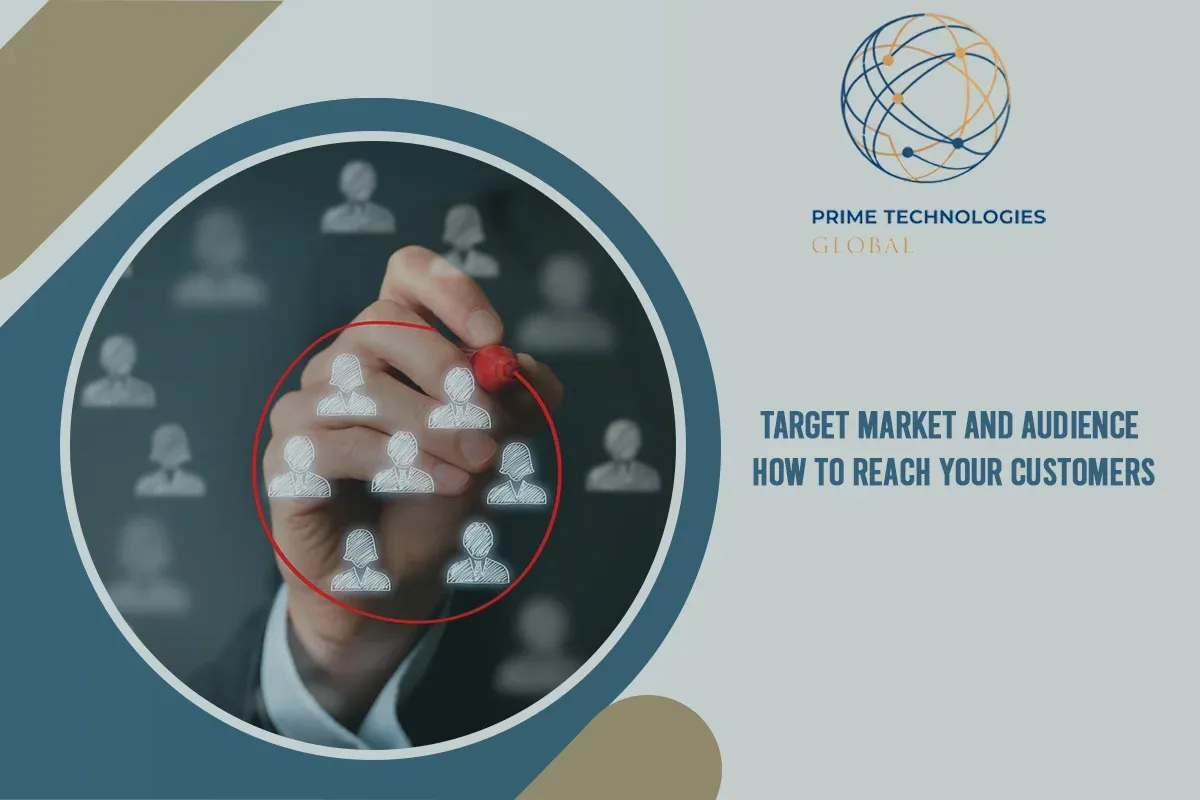
Spending marketing dollars on campaigns that reach thousands of people but generate few qualified leads is one of the most expensive mistakes a business can make. The problem often starts before the campaign launches: marketers confuse their target market and audience, treating two related but different concepts as if they were interchangeable.
Your target market defines the broader group of customers your business is built to serve, while your target audience identifies the specific people or organizations you want to reach with a particular marketing message. Understanding both helps you make smarter decisions about positioning, content, advertising, product development, and sales.
This guide explains what is a target market, what is a target audience, how the two differ, and how businesses can use market research, audience analysis, and buyer personas to build a more effective marketing strategy. Whether you are a B2B marketer, small business owner, or growth manager, you will learn how to turn broad customer data into focused campaigns that support measurable growth.
What Is a Target Market?
A target market is the broad group of consumers or businesses that a company intends to serve with its products or services. It defines the commercial opportunity for the business and influences product development, pricing, positioning, distribution, and long-term growth decisions.
Target markets can be defined using characteristics such as:
- Age
- Gender
- Income level
- Geographic location
- Occupation
- Industry
- Company size
- Business revenue
- Purchasing power
- Customer needs
- Common problems or use cases
For B2B companies, the target market is often described through firmographic characteristics. For example, a software company might target mid-sized e-commerce businesses that need better inventory management.
For B2C companies, demographic and behavioral factors may play a larger role.
What Is a Target Audience?
A target audience is a specific segment of your target market that receives a particular marketing message, advertisement, offer, or piece of content.
If your target market defines the broader customer opportunity, your target audience defines who you want to communicate with right now.
A useful target audience definition includes more than basic demographics. It considers characteristics such as:
- Interests
- Motivations
- Pain points
- Buying behavior
- Search intent
- Content preferences
- Social media behavior
- Purchase stage
- Brand preferences
- Previous interactions with your company
This makes the target audience more specific and campaign-oriented than the target market.
Target Audience Examples
A business can have multiple target audiences even when it has one core target market.
For example, a B2B software company may sell to growing businesses but create different campaigns for:
- CEOs interested in business growth
- CFOs focused on cost control
- IT managers concerned with security
- Operations managers looking for efficiency
- Procurement teams evaluating vendors
The product may remain the same, but the message, pain point, content format, and call to action can change.
Target Market vs Target Audience: Key Differences
The easiest way to understand the target market and audience is to think about scale. Your target market is the larger pool of customers you want to serve. Your target audience is the specific segment you want to influence with a particular marketing activity.
|
Feature |
Target Market |
Target Audience |
|
Scope |
Broad |
Narrow |
|
Primary focus |
Overall customer opportunity |
Specific marketing communication |
|
Purpose |
Business and product strategy |
Campaign and content strategy |
|
Typical data |
Demographics, geography, income, industry, company size |
Interests, behavior, intent, pain points, engagement |
|
Time horizon |
Relatively long-term |
Can change by campaign |
|
Use |
Product development, pricing, positioning |
Ads, SEO content, email, social media, landing pages |
|
Goal |
Product-market fit and sustainable growth |
Engagement, leads, sales, or another campaign outcome |
|
Example |
Small and midsize e-commerce businesses |
E-commerce founders searching for inventory software |

Why Target Market and Audience Identification Matters
A clear understanding of the target market and audience creates a stronger connection between business strategy and marketing execution.
1. Better Resource Allocation
Every business has limited resources. Marketing budgets, sales capacity, content production, advertising spend, and employee time cannot be unlimited.
A clearly defined market helps determine where resources should go, while audience segmentation determines how those resources should be deployed.
2. Stronger Brand Positioning
A company trying to appeal to everyone often produces generic messaging. Generic messaging creates weak differentiation.
When you know your target market, you can position your product around the problems that matter most to that market. When you understand your target audience, you can adapt the message to the specific motivations of the people receiving it.
3. More Relevant Customer Experiences
Audience segmentation allows marketers to adjust:
- Headlines
- Offers
- Images
- Landing pages
- Email messaging
- Calls to action
- Content formats
- Product recommendations
4. Better Marketing Strategy ROI
Your marketing strategy ROI improves when more of your marketing activity reaches people who are genuinely capable of becoming customers.
That does not mean narrower targeting automatically guarantees cheaper advertising. Instead, effective targeting improves the probability that your messaging, offer, and customer experience match the people most likely to respond.
This can contribute to:
- Higher-quality leads
- Better conversion rates
- Less wasted ad spend
- More relevant content
- Improved customer retention
- Greater customer lifetime value

Top Benefits of Defining Your Target Market and Audience
Higher Conversion Potential
People are more likely to respond when marketing addresses a problem they actually experience.
A message aimed at “business owners” is broad. A message aimed at “SaaS founders struggling to generate qualified enterprise leads” is much more specific.
The second message gives the marketer a clearer problem, audience, and value proposition.
More Effective Product Development
Your target market should influence what you build. Gartner recommends using customer knowledge, market segmentation, voice-of-customer information, and customer personas to inform product planning and product decisions.
This means customer research should not stop with the marketing department. Product teams, sales teams, and leadership can all use these insights.
Stronger Customer Loyalty
Relevant communication can make customers feel understood. McKinsey research found that 71% of consumers expect personalized interactions, while 76% report frustration when those expectations are not met. The same research found that faster-growing companies derive 40% more revenue from personalization than slower-growing companies.
The lesson is not simply to personalize everything. It is to understand which customers need what message and at what stage of their journey.
Better Competitive Positioning
A narrow, well-defined segment can give a smaller company an advantage. Instead of competing with larger companies for every possible customer, you can become highly relevant to a specific customer group.
Forrester's research on relative targeting similarly recommends prioritizing segments based on attractiveness, strategic fit, and the organization's ability to win rather than attempting to market to everyone.
How to Find Your Target Market And Audience
Finding your target audience requires more than choosing an age range and location. The best approach combines market research, customer data, behavioral information, and direct feedback.
Step 1: Define Your Target Market First
Before asking how to find your target audience, establish your broader market.
Ask:
- Who has the problem my product solves?
- Who has the ability to pay?
- Which customers benefit most?
- Which segments are currently underserved?
- Which customers are most profitable?
- Where can we realistically compete?
This creates the foundation for your target market strategy.
Step 2: Analyze Existing Customers
Look at your best current customers.
Identify patterns involving:
- Industry
- Location
- Company size
- Revenue
- Purchase frequency
- Average order value
- Product usage
- Acquisition source
- Retention
- Customer lifetime value
The goal is not to copy every customer characteristic. It is to discover characteristics associated with customers who create the most business value.
Step 3: Conduct Target Audience Research
Target audience research combines quantitative and qualitative information to understand potential buyers.
Useful sources include:
- Customer interviews
- Surveys
- CRM data
- Website analytics
- Search-query data
- Social media insights
- Sales call recordings
- Customer reviews
- Competitor reviews
- Support tickets
- Industry reports
Step 4: Build Buyer Personas
A buyer persona turns research into a practical representation of a customer. A B2B persona might include:
Marketing Manager Growth-Focused SaaS Company
- Goal: Generate qualified pipeline
- Problem: High cost per lead
- Concern: Proving marketing ROI
- Preferred channels: Google, LinkedIn, industry publications
- Buying trigger: New revenue target
- Objection: Budget and implementation time
Personas should be based on evidence rather than assumptions.
Step 5: Study Search Intent
Search behavior can reveal what your audience actually wants.
For example:
- “What is CRM software?” indicates informational intent.
- “Best CRM for small business” indicates commercial investigation.
- “CRM pricing” indicates stronger buying intent.
- “Buy CRM software” indicates transactional intent.
Matching content to intent helps your digital marketing target audience move from awareness toward conversion.

Step 6: Test and Refine
Your first audience definition is a hypothesis.
Use campaign data to determine whether it works.
Monitor:
- Click-through rate
- Cost per click
- Conversion rate
- Cost per lead
- Lead quality
- Sales-qualified leads
- Customer acquisition cost
- Revenue per customer
- Customer lifetime value
Keep audiences that produce meaningful business outcomes and revise those that do not.

Target Market and Audience: How They Work Together
The most effective marketing strategy does not choose between a target market and a target audience.
It uses both.
Think of the process as a funnel:
Total Market → Target Market → Market Segment → Target Audience → Buyer Persona → Campaign → Conversion
- Your target market establishes the commercial opportunity.
- Your market segments identify attractive groups within that opportunity.
- Your target audience determines who should receive a specific message.
- Your buyer persona helps marketers understand how to communicate with that audience.
- Your campaign turns that understanding into measurable action.
Build a More Precise Marketing Strategy
Understanding the difference between your target market and audience is more than a terminology exercise. It is a foundation for making better decisions about products, positioning, content, advertising, SEO, and customer acquisition.
Your target market tells you where the business opportunity exists. Your target audience tells you who should hear a particular message. Market research, target audience analysis, buyer personas, and continuous campaign testing connect those two levels into a practical growth system.
If you want to turn customer insights into measurable digital growth, Prime Technologies Global can help. Our services span digital transformation, custom software development, SEO growth strategies, and conversion-focused digital solutions designed around your business objectives and ideal customers.
The goal is not to market to more people. It is to reach more of the right people with the right message and give them a compelling reason to become customers.
FAQ’s
Are the target market and audience the same?
No. A target market is the broader group of customers a business intends to serve, while a target audience is a specific segment of that market selected for a particular marketing message or campaign.
What are the 5 most common target markets?
Five common ways businesses define target markets include:
- Demographic markets grouped by age, income, gender, or education.
- Geographic markets grouped by country, region, city, or climate.
- Firmographic markets B2B groups based on industry, company size, revenue, or location.
- Psychographic markets grouped by values, lifestyles, interests, or motivations.
- Behavioral markets grouped according to purchasing behavior, product usage, or engagement.
Who is a target's main audience?
A target's main audience is the specific group most likely to respond to a particular product message, campaign, offer, or communication channel. The main audience should be selected according to the campaign objective and the characteristics of customers most likely to take the desired action.
What are the four types of target audiences?
Four practical categories are demographic, psychographic, behavioral, and intent-based audiences. Marketers can combine these categories to create more precise audience segments for advertising, SEO, content marketing, email, and social media.