
Omnichannel Marketing | Seamless Customer Experience
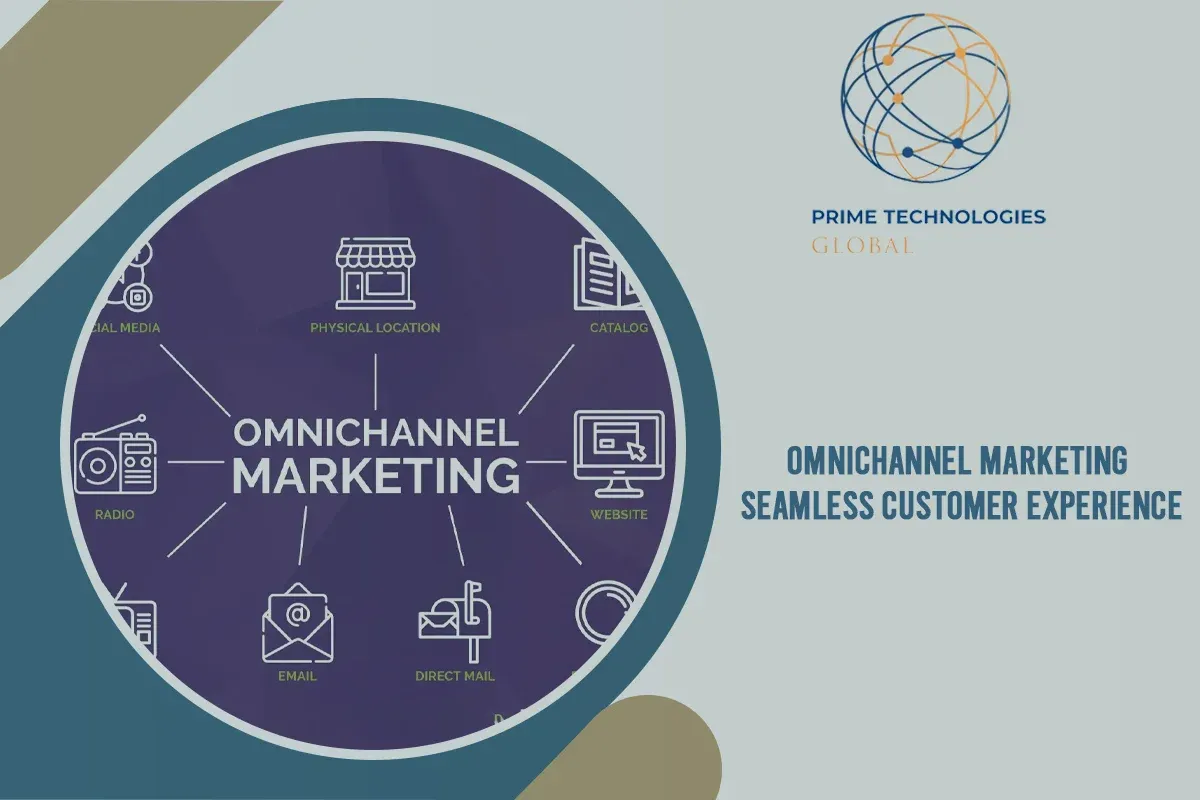
A customer sees your ad on Instagram, opens your app to compare prices, calls your support line with a question, then walks into your store to finish the purchase. If any one of those touchpoints treats them like a stranger, part of that sale is already lost even if the transaction still closes.
That disconnect is exactly what omnichannel marketing is built to fix. Omnichannel marketing is the practice of connecting every channel a brand uses social, email, SMS, search, mobile app, and physical retail into one continuous, context-aware customer experience. Instead of five separate conversations, the customer has one conversation that happens to move across five screens.
This guide covers what omnichannel marketing actually means, how an omnichannel marketing strategy differs from a simple multichannel approach, the data behind why it drives retention and revenue, and a step-by-step framework for building one along with real omnichannel marketing examples you can adapt for your own brand.
What Is Omnichannel Marketing?
Omnichannel marketing is a customer-centric approach that unifies every channel a brand uses, website, email, social media, SMS, mobile app, paid ads, and physical retail into a single, connected customer journey. Instead of managing each channel as its own silo, an omnichannel strategy shares one data layer and one message across all of them.
The distinction that matters most for anyone asking what is omnichannel marketing versus multichannel marketing comes down to connection, not volume. Multichannel marketing means a brand shows up on many channels: website, email, social, in-store but each one runs independently, often with its own data set and its own version of the message. Omnichannel marketing links those same channels so context carries over: what a customer does on one channel changes what they see on the next.
Multichannel vs Omnichannel: The Core Difference
Picture a shopper who adds a jacket to their cart in a mobile app. In a multichannel setup, that action stays inside the app the website doesn't know about it, and neither does the store. In a true omnichannel marketing approach, that same cart follows the customer: an abandoned-cart email references the exact jacket an hour later, and the in-store associate can pull up that same cart on a tablet if the customer walks in to try it on.
|
Dimension |
Multichannel Marketing |
Omnichannel Marketing |
|
Data |
Separate data per channel |
Shared, unified customer profile |
|
Customer view |
Fragmented each channel starts over |
Continuous context carries over |
|
Messaging |
Consistent branding, independent execution |
Coordinated, personalized, and sequenced |
|
Primary goal |
Maximize reach across channels |
Maximize continuity across the journey |
|
Example |
Same sale promoted on email and Instagram |
Cart on app → matching email → in-store lookup |

Why Omnichannel Marketing Matters for Business Growth
An omnichannel marketing strategy isn't a nice-to-have layer on top of a marketing plan; it directly affects three numbers every business tracks: how long customers stay, how much they spend, and how often they come back.
Higher Customer Retention
When channels are connected, customers don't have to re-explain themselves every time they switch from email to chat to a store visit. That continuity reduces friction, and reduced friction is one of the strongest predictors of whether a customer sticks around.
Increased Customer Lifetime Value (CLV)
Shoppers who engage across multiple connected channels tend to spend more per visit and return more often than customers who interact through a single channel, which compounds into meaningfully higher lifetime value over a full customer relationship.
Improved Brand Loyalty
Consistent messaging and a connected experience build familiarity. Familiarity builds trust, and trust is what turns a one-time buyer into a repeat customer who recommends the brand to other people.
Core Pillars of an Effective Omnichannel Marketing Framework
Most omnichannel marketing strategies rest on four structural pillars. Skipping any one of them tends to be the reason a cross-channel effort ends up feeling like multichannel marketing with a new name.
1. Centralized Data & CRM
A single source of truth for customer data prevents the data silos that quietly undermine cross-channel efforts. When sales, support, and marketing all read from the same customer record, no team is working from stale or partial information.
2. Customer Journey Mapping
Mapping the realistic path a customer takes from first ad impression to post-purchase support surfaces the exact touchpoints where handoffs between channels need to be seamless, and where friction is currently costing sales.
3. Personalization at Scale
Dynamic content and real-time behavioral triggers let a brand tailor messaging to where an individual customer actually is in their journey, rather than sending the same generic campaign to a subscriber who already purchased last week.
4. Channel Synergies
Social, search, email, SMS, mobile apps, and physical locations each play a different role. An effective omnichannel digital marketing framework aligns what each channel says and does so they reinforce one another instead of competing for the same attention.

Omnichannel Readiness Checklist
- A 360-degree customer profile that updates in real time across channels
- Audience segmentation built on behavior, not just demographics
- Message consistency audited across every active channel
- Automated, cross-channel workflows that trigger based on customer action
How to Build an Omnichannel Marketing Strategy (Step-by-Step)
Building an omnichannel marketing strategy from scratch is less about adding channels and more about sequencing the right foundational work first.
- Understand your audience. Build buyer personas from real customer analytics, not assumptions the segments that matter are the ones your own data actually shows.
- Map the customer journey. Trace the common paths customers take from awareness to purchase to support, and flag the exact points where they currently lose context switching channels.
- Invest in the right tech stack. A CRM, a marketing automation platform, and an analytics layer need to talk to each other; disconnected tools recreate the silos an omnichannel approach is meant to remove.
- Create consistent, dynamic content. Brand voice, visuals, and offers should match across every channel, while still adapting format to the channel a text message and an email shouldn't read identically, but they should sound like the same brand.
- Test, measure, and optimize. Track cross-channel KPIs not just channel-by-channel metrics and revisit the strategy on a regular basis rather than treating it as a one-time setup.

Omnichannel Marketing Examples in Action
A few familiar patterns show what an omnichannel approach looks like once it's actually implemented, rather than just planned.
Loyalty Apps That Sync With In-Store Purchases
A coffee or retail loyalty app that lets a customer order ahead, pay from their phone, and earn rewards that are redeemable in-store with purchase history and preferences following them into every channel is one of the most commonly cited omnichannel marketing examples, because the reward and the recognition travel with the customer instead of staying locked in one channel.
Buy Online, Pick Up In-Store (BOPIS) With Real-Time Inventory
Retailers that let a customer reserve an item online and pick it up in a physical location with accurate, real-time stock counts shared between the two remove one of the most common points of friction in retail: driving to a store only to find the item isn't actually there.
Support That Remembers the Conversation
A customer who starts a question over chat and finishes it by phone shouldn't have to repeat themselves. Brands that pass conversation context between support channels turn a frustrating handoff into a non-event, which is a smaller detail than a loyalty app but often has a larger effect on whether that customer buys again.

Common Challenges in Omnichannel Marketing Implementation
Data Silos
Sales, support, and marketing platforms are often set up independently, which means each team can end up working from a different, incomplete picture of the same customer.
Attribution Complexity
A purchase that starts with a social ad, continues through an email, and closes in-store is difficult to credit to a single channel. Single-touch attribution models systematically undercount the channels that influence a sale without closing it.
Departmental Alignment
Omnichannel marketing strategies tend to stall when sales, support, and marketing teams are measured on separate, disconnected goals rather than on the shared customer outcome.
Practical Fixes
- Adopt a unified Customer Data Platform (CDP) as the shared source of truth
- Shift from single-touch to multi-touch attribution models (linear, time-decay, or data-driven)
- Set shared cross-channel KPIs so marketing, sales, and support are optimizing for the same outcome
Conclusion
Executing an omnichannel marketing strategy is no longer optional; it has become the baseline expectation of modern shoppers, who move between phones, laptops, social feeds, and physical stores before a single purchase is complete. The brands that win aren't the ones present on the most channels; they're the ones where a customer's context, history, and preferences travel with them no matter which channel they choose next. Centralizing customer data, mapping the real journey rather than the assumed one, personalizing at scale, and aligning teams around shared outcomes turns a scattered multichannel presence into a connected experience that measurably improves retention, lifetime value, and loyalty.
Scale Your Marketing With Prime Technologies Global
Building and managing a connected, high-performing omnichannel marketing strategy takes the right data foundation, the right technical execution, and a team that has done it before.
Prime Technologies Global helps businesses unify their digital presence, connect cross-channel marketing automation, and build high-converting growth strategies tailored to their audience from SEO to custom software to full omnichannel digital marketing frameworks. Ready to turn disconnected channels into one connected customer experience? Contact Prime Technologies Global today.
FAQ’s
What is an example of an omnichannel marketing strategy?
A retail loyalty app is one of the clearest examples: a customer orders ahead and pays through the app, earns rewards redeemable in-store, and the brand remembers their favorite order and preferences no matter which channel they use next. The point isn't the app itself it's that the customer's history and rewards move with them across channels instead of resetting in each one.
What are the four C's of omnichannel?
The four C's most commonly cited are Consistency, Convenience, Customization, and Connection: a consistent brand experience across every channel, convenient and low-friction transitions between touchpoints, customization based on customer signals and history, and connected systems that maintain one unified view of the customer. Different sources phrase this framework slightly differently, but continuity of experience is the throughline across all of them.
What is the 3-3-3 rule in marketing?
The 3-3-3 rule is a practical guideline for capturing attention in fast-moving formats like email and ad creative: roughly three seconds to earn someone's attention, three lines to deliver the core message, and a call to action that takes no more than three steps to complete. It's a useful gut-check for omnichannel campaigns, since most channel-specific content is consumed quickly, often on a phone, where brevity outperforms length.
What is an omnichannel approach in marketing?
An omnichannel approach in marketing means treating every channel social, email, SMS, search, app, and physical retail as part of one connected customer experience rather than as independent campaigns. The customer's actions on one channel inform what they see on the next, so the experience feels like a single ongoing relationship instead of a series of disconnected interactions.