
Answer Engine Optimization (AEO): Dominating AI Search
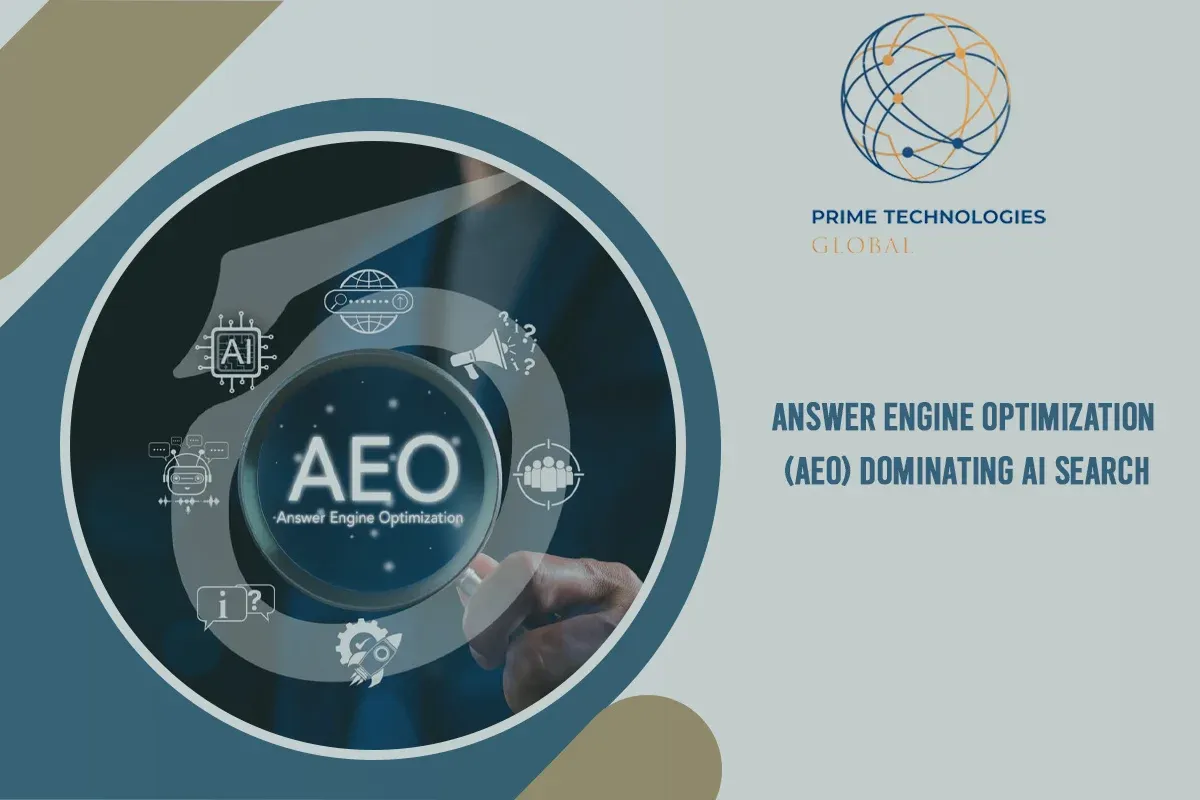
Search no longer starts with a list of blue links. Marketing managers and B2B founders now compete for placement inside conversational answers generated by ChatGPT, Perplexity, Google AI Overviews, and Microsoft Copilot. Answer engine optimization (AEO) is the discipline built for this shift: structuring content so large language models select it, trust it, and cite the brand by name. This guide breaks down what AEO is, how it differs from SEO and GEO, and the exact steps needed to earn AI citations consistently.
What Is Answer Engine Optimization (AEO)?
Answer engine optimization (AEO), sometimes called answer engine optimisation, is the practice of formatting and structuring web content so AI-driven answer engines can extract, summarize, and cite it directly. Unlike traditional keyword ranking, AEO targets the exact passage a model surfaces inside a conversational response, not a page position.
The AEO definition rests on three requirements: extractable answers, verifiable facts, and explicit entity naming. Content built for answer engine marketing succeeds when a model can lift a self-contained answer without needing outside context.
Primary target platforms for AEO content include:
- ChatGPT and its browsing/search mode
- Perplexity AI
- Google AI Overviews and Gemini
- Microsoft Copilot
Search behavior data referenced by Gartner and Capgemini points to a measurable shift toward generative answers over traditional organic results, and AI referral traffic reportedly converts at a meaningfully higher rate than standard organic sessions (verify current figures before publishing).
AEO vs. SEO vs. GEO: Understanding the Search Ecosystem
AEO, SEO, and GEO solve different problems inside the same search ecosystem. SEO ranks full pages on Google and Bing. AEO gets modular facts and Q&A pairs extracted as a direct answer. GEO shapes how language models understand and represent a brand as an entity across the broader AI ecosystem.
|
Strategy |
Primary Goal |
Target Engines |
Success Metric |
|
Traditional SEO |
Rank links on page 1 |
Google, Bing |
Organic impressions, clicks, SERP position |
|
AEO |
Get cited as the source answer |
ChatGPT, Perplexity, Gemini |
Citation frequency, AI referral traffic |
|
GEO |
Shape AI understanding of entities |
LLMs, generative search engines |
Share of voice, entity accuracy |
Marketing teams running AEO in SEO programs typically treat GEO as the entity layer underneath both — the knowledge graphs and structured data that let a model recognize a brand as a distinct, trustworthy entity in the first place.

How AI Answer Engines Select and Cite Sources
Answer engines rely on retrieval-augmented generation (RAG) to ground responses in live web content instead of relying solely on training data. A model issues a live query, retrieves candidate passages, and drafts a response using the facts those passages contain — which is exactly how answer engine optimization works at the retrieval layer.
Two properties push a passage toward selection:
- Fact density. Content that places a verifiable statistic every 150–200 words clears AI citation thresholds more reliably than conversational filler (verify sourcing before publishing).
- Information gain. Original data, proprietary research, and primary statistics a model cannot synthesize from a dozen other pages earn preferential citation.
A third factor shapes selection beyond fact density and information gain: passage independence. A model favors a paragraph that reads correctly in isolation over one that depends on surrounding context, because isolation is exactly how the passage gets lifted into a chat response. Testing individual paragraphs by reading them outside the full article is a fast way to check whether a passage is structured for extraction.
Citation authority also compounds over time. A domain that earns repeated citations on one topic builds a pattern models learn to trust for that topic specifically — the practical mechanism behind AEO in marketing programs that track share of voice across months rather than single articles.

5 Practical Steps to Optimize Content for Answer Engines
Optimizing for AEO does not require rebuilding a content library from scratch. It requires reformatting existing assets around five structural principles that make a passage easy for a model to lift cleanly.
Lead with the direct answer
Answer the core question inside the first 40–60 words of a section, then expand into supporting detail — the inverted pyramid, applied to AEO content.
Write question-based headers
Match H2s and H3s to real conversational queries ("How does answer engine optimization work," "What is the cost of…") instead of generic labels.
Format data for extraction
Use comparison tables, structured lists, and definition callouts so an answer engine optimization tool or crawler can parse clean data without guessing at meaning.
Name entities explicitly
Replace vague pronouns like "it" or "our platform" with the exact proper noun — for example, "Prime Technologies Global's content pipeline" instead of "our process."
Signal recency
Update published pieces on a regular cadence and expose an explicit dateModified value so crawlers can confirm the content is current.

Technical Foundations & Schema Markup for AEO
Schema markup gives AI crawlers a machine-readable map of a page's content, which is the technical foundation underneath every AEO tactic above. Three schema types carry the most weight for AEO in digital marketing:
- FAQPage markup — creates explicit question-answer pairs a model can lift verbatim.
- Organization and sameAs markup — links a brand's identity to authoritative knowledge graphs.
- Article and HowTo schema — guides models through procedural steps and page metadata.
Crawlability matters as much as markup. AI crawlers including GPTBot, PerplexityBot, and Google-Extended need unblocked access to main content — a robots.txt misconfiguration silently removes a page from answer engine consideration.
E-E-A-T signals close the loop: linking author credentials through Person schema with knowsAbout properties gives a model an explicit trust signal to weigh alongside fact density and information gain.
Validating markup before publishing matters as much as writing it. A malformed FAQPage schema block can silently fail rich-result eligibility while still passing a casual visual check, so every schema addition should run through a structured data testing tool before a page goes live. Teams running AEO services at scale typically build this validation step into the same editorial checklist used for fact-checking, rather than treating it as a separate technical audit.
Measuring AEO Success: Tracking AI Visibility
Traditional click-through tracking breaks down once a user gets a complete answer inside a chat window and never visits the source page. Measuring AEO success means tracking different signals than a standard SEO dashboard.
- Track referral traffic from domain origins such as chatgpt.com, perplexity.ai, and google.com (AI Overviews) inside Google Analytics.
- Run recurring prompt audits across target keywords to monitor share of voice and citation presence over time.
- Evaluate brand sentiment and direct attribution inside AI conversational journeys, not just click volume.

Dominate the Next Era of Search with Prime Technologies Global
The shift from ranked links to cited answers rewards brands that treat AEO as infrastructure, not a one-time content project. Combining a solid SEO foundation with fact-dense, entity-clear, schema-backed content is what separates a brand that gets summarized anonymously from one that gets named as the source.
Prime Technologies Global helps businesses build that infrastructure — auditing current search footprints, implementing high-converting schema markup, and producing the fact-dense content answer engines are built to cite. Our AEO services span strategy, technical implementation, and ongoing prompt-level visibility tracking, giving clients a single team accountable for both SEO and answer engine performance.
Ready to see where a brand currently stands with ChatGPT, Perplexity, and Google AI Overviews? Contact Prime Technologies Global today for an AEO visibility audit and a roadmap built around the platforms a target audience actually uses.
FAQ’s
What is the difference between SEO and AEO?
SEO optimizes full web pages to rank in traditional search results and drive clicks. AEO optimizes modular facts, definitions, and Q&A content so AI answer engines like ChatGPT and Perplexity can extract and cite it directly inside a conversational response, often without a click at all.
What are the 4 pillars of SEO?
The four widely cited pillars of SEO are technical SEO (crawlability, site speed, indexing), on-page SEO (content, keywords, headers), off-page SEO (backlinks, brand mentions, authority), and user experience (Core Web Vitals, mobile usability, engagement signals).
What is AEO in search marketing?
In search marketing, AEO is the practice of structuring content so answer engines — AI platforms that generate direct conversational responses — select, summarize, and attribute it to the source brand, shifting the KPI from ranking position to citation frequency.
What are the 4 types of SEO?
The four common types of SEO are on-page SEO, off-page SEO, technical SEO, and local SEO. Some frameworks add a fifth category, content SEO, but the four listed above form the standard classification used across most agency reporting.